Copenhagen takes its festivals seriously.
The city that gave the world natural wine, the New Nordic food movement, and Noma has developed a cultural calendar to match – events that span the full year, reflect the city’s values, and collectively produce one of the most eventful and most enjoyable cities in Europe to be in at almost any point across the calendar.
Jazz fills the city for ten days in July. A rolling street party takes over entire neighbourhoods in June and ends on an island in a rave that draws tens of thousands. The darkness of February is interrupted by a two-week light art festival that transforms the canals and old town into an outdoor gallery. The world’s most important documentary film festival runs in March. Christmas is celebrated in Tivoli Gardens with a sincerity and a visual beauty that most European markets cannot approach.
This guide covers the essential festivals in Copenhagen, what they are, when they happen, and what makes each one worth planning a visit around.
Key Takeaways
- Copenhagen’s festival calendar spans every month of the year, with the greatest concentration of events between May and August.
- The Copenhagen Jazz Festival in July is consistently cited as one of the finest music festivals in Europe – over 1,100 concerts across 100+ venues and outdoor stages, spread across ten days.
- CPH Distortion in June is Scandinavia’s largest street party and electronic music festival, combining free neighbourhood block parties with ticketed island raves.
- Roskilde Festival – 40 kilometres from Copenhagen – is Scandinavia’s largest and most celebrated music festival, held in late June and early July, and merits the short journey from the city.
- Most Copenhagen festivals combine genuine cultural significance with the Danish talent for making celebration feel relaxed, welcoming, and entirely its own.
Spring (March to May)
CPH: DOX – Copenhagen International Documentary Film Festival
When: March, approximately two weeks
CPH:DOX has grown, since its founding in 2003, into one of the world’s most important documentary film festivals. It’s an event that approaches the documentary form as a serious art and brings the most urgent films, filmmakers, and ideas from across the globe to Copenhagen for two weeks each March.
The programme spans over 200 films across twelve categories, with screenings at cinemas across the city supplemented by talks, exhibitions, and industry events. What distinguishes CPH:DOX from comparable festivals is the breadth of its vision. It embraces the documentary as a form capable of exploring everything from political crisis to experimental art, and the selections reflect a curatorial intelligence that gives the festival a genuine identity rather than simply a collection of films.
For visitors arriving in Copenhagen in March, CPH:DOX provides access to films that may not reach wider distribution for months and conversations about the world that are not happening elsewhere.
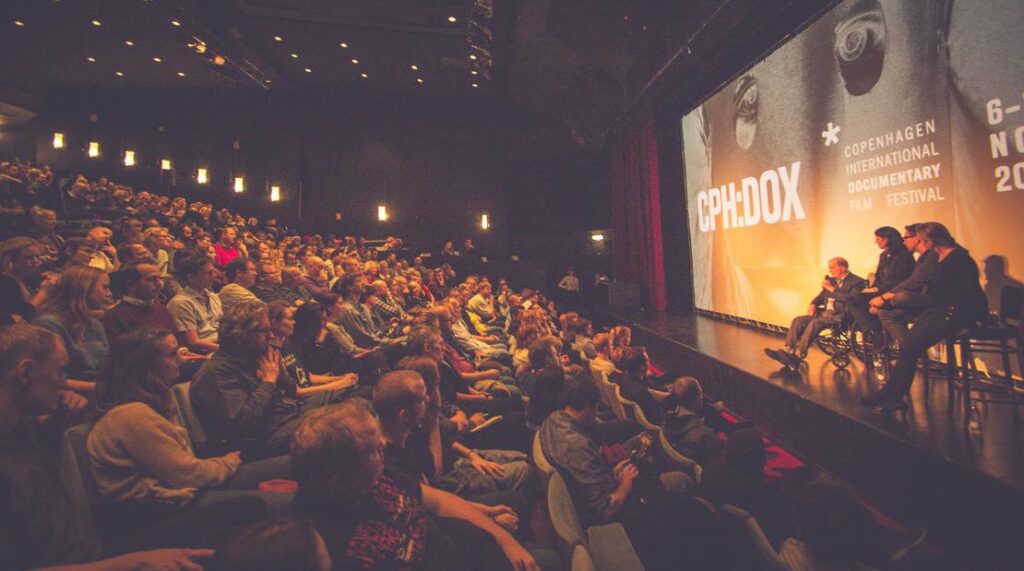
Credit: CPH:DOX | dafilms.com
Copenhagen Light Festival
When: February, two weeks
The Copenhagen Light Festival interrupts the darkest month of the Danish year with a walking tour of light art installations spread across the city’s most atmospheric locations: the canals of Christianshavn, the Old Town around Strøget, Nyhavn harbour, and various parks and public squares.
International and Danish artists contribute works that range from intimate light sculptures placed alongside the water to building-scale projections and interactive installations that respond to visitors’ movement. The installations are visible from dusk, and the walking route – approximately 3.5 kilometres of the inner city – takes around two hours to complete at a thoughtful pace.
The festival is free to experience. Walking the route in the cold February air, with the canal reflections and the lit bridges of Copenhagen making the dark beautiful, is one of those experiences that belongs specifically to this city in this season.
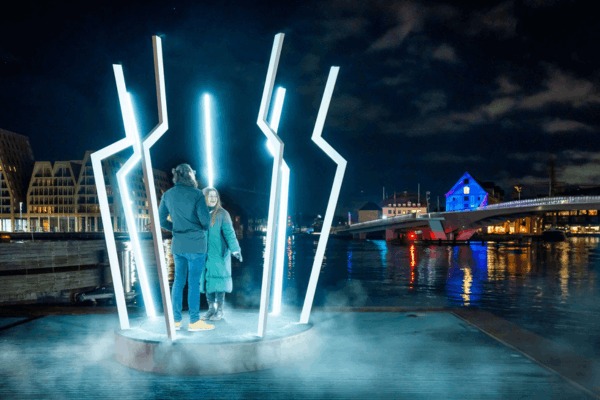
Credit: Copenhagen Light Festival
Copenhagen Sakura Festival
When: Late April (2026 dates: 18–19 April), Langelinie Park
Along the waterfront at Langelinie Park – immediately adjacent to the Little Mermaid – the Sakura Festival celebrates the cherry blossom season with a weekend of Japanese culture: taiko drumming, tea ceremony, cosplay, traditional dance, and the specific light that comes through blossoming cherry trees in late April.
The festival is small, free, and specifically Danish in the best sense: enthusiastic, well-organised, and entirely genuine in its celebration of Japanese culture. The cherry trees along Langelinie provide one of Copenhagen’s most photogenic annual moments, and the festival coincides with their peak bloom.
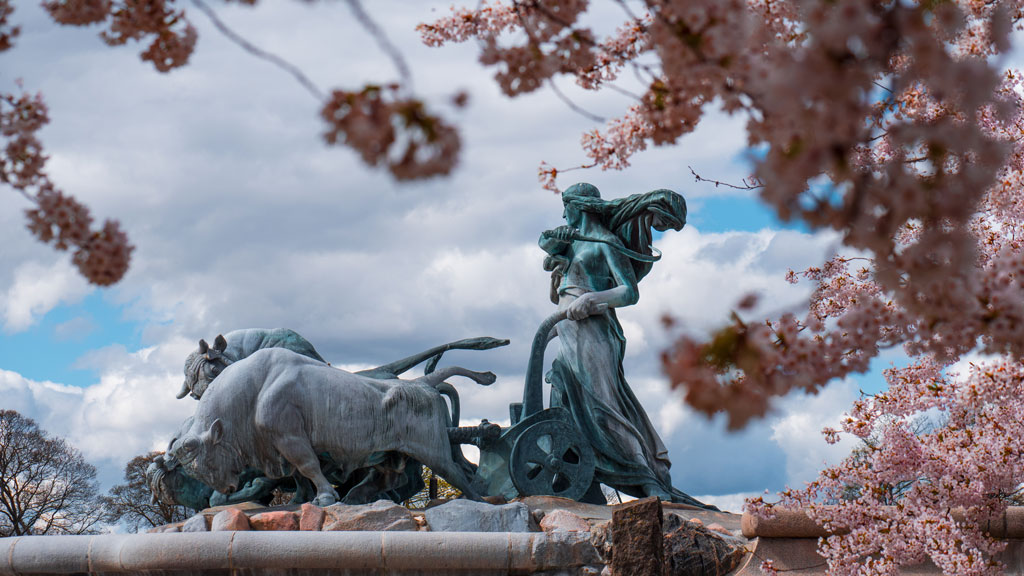
Credit: Copenhagen Sakura Festival
Summer (June to August)
CPH Distortion
When: Early June (2026 dates: 3–7 June)
CPH Distortion is the festival that most completely expresses Copenhagen’s relationship with street culture, electronic music, and the particular quality of Danish sociability that makes the city feel, at its best, like a community rather than a collection of individuals.
The format spans five days. The first four days bring free neighbourhood block parties to districts including Nørrebro, Vesterbro, and the inner city – sound systems appearing in streets, squares, and car parks, music playing from early afternoon until late, thousands of local people pouring out of their apartments to dance in their own neighbourhoods. The final day – Distortion Ø – moves to Refshaleøen, the former industrial island that has become Copenhagen’s creative frontier, where a full-scale ticketed festival with multiple stages and a capacity of tens of thousands provides the rave finale.
The neighbourhood days are free and family-friendly in the afternoon before transitioning into something more intense as the evening progresses. The Refshaleøen finale is one of the best dance music events in Europe. It’s the combination of the industrial waterfront setting, the quality of the international bookings, and the city’s own relationship with electronic music that produces something that feels genuinely extraordinary.
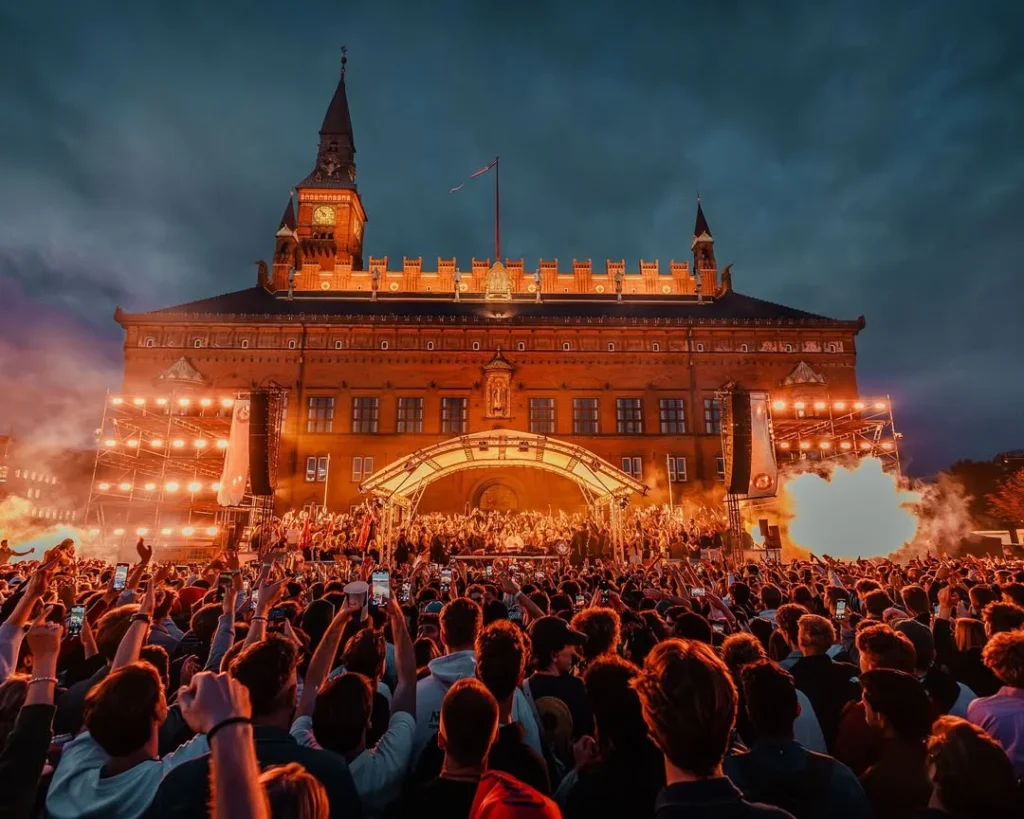
Credit: Euro Travelo
Roskilde Festival
When: Late June to early July (2026 dates: 27 June – 4 July), Roskilde – 40 km from Copenhagen
Roskilde Festival is Scandinavia’s largest music festival and one of the most celebrated in Europe. It’s an eight-day event held in the fields outside Roskilde, approximately 40 minutes from Copenhagen by train, that has taken place annually since 1971.
The festival combines the scale and ambition of Glastonbury – 130 acts across eight stages, camping for up to 130,000 people – with a specifically Nordic organisational culture: thoughtful, sustainable, and run entirely by volunteers. All profits since 1972 have been donated to humanitarian and cultural causes; the festival has given over a billion Danish kroner to good causes across its history.
The line-up spans rock, pop, hip-hop, electronic, world music, and experimental genres, with the Orange Stage – one of the largest festival stages in Europe – hosting the headline acts. Day tickets are available for those who want to visit from Copenhagen without committing to the full camping experience; the return journey by train is straightforward and takes approximately 35 minutes.
Roskilde is not technically a Copenhagen festival, but it is inseparable from the Copenhagen summer experience and merits the short journey absolutely.
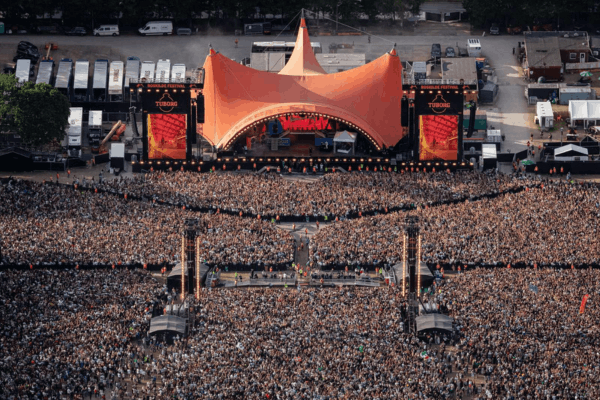
Credit: YOUROPE
Copenhagen Jazz Festival
When: Early to mid July, ten days
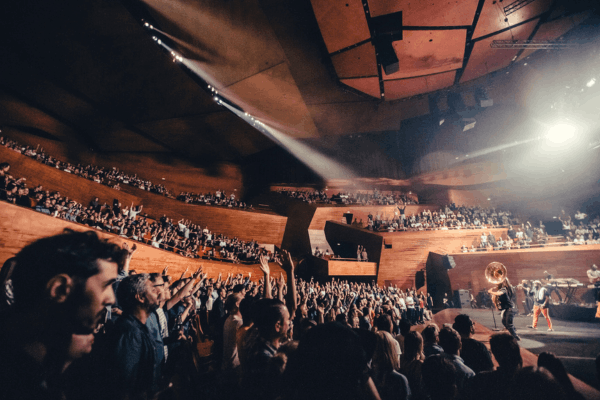
The Copenhagen Jazz Festival is the finest musical festival in the city and one of the finest jazz festivals in Europe. It lasts ten days each July, during which over 1,100 concerts take place across more than 100 venues and outdoor stages across the city.
The scale is extraordinary and, for first-time visitors, initially difficult to comprehend. Jazz is not confined to clubs or concert halls during the festival. It spills into public squares, harbour terraces, hotel lobbies, cafés, and parks. Walking through Copenhagen in early July, you encounter live music around almost every corner, from solo guitarists in courtyards to full orchestras on the waterfront at Nyhavn.
The programme spans traditional bebop to contemporary free jazz, incorporating international stars alongside Copenhagen’s own thriving jazz community. Many concerts are free and outdoors; the Nyhavn concerts and the performances in Kongens Have (the King’s Garden) are among the most atmospheric. Ticketed evening performances at jazz clubs, including Jazzhus Montmartre – one of Europe’s most historically significant jazz venues – provide a more intimate counterpoint to the outdoor programme.
For visitors who care about jazz, the Copenhagen Jazz Festival is a reason to build a trip around.
Credit: Copenhagen Jazz Festival
Copenhagen Pride
When: Mid-August (parade typically the first Saturday, 2025 date: 16 August)
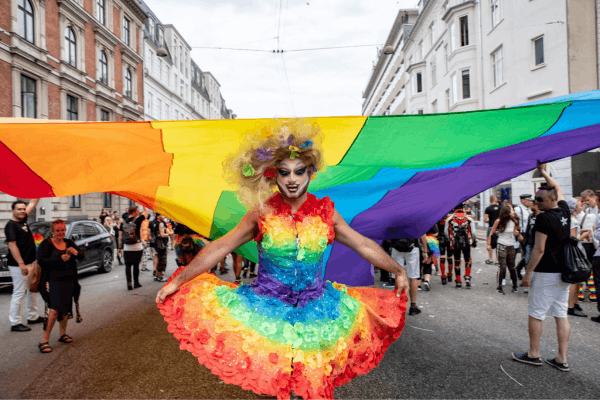
Copenhagen Pride is one of the warmest and most welcoming Pride weeks in Europe – a city-wide celebration that culminates in a Saturday parade from Frederiksberg to City Hall Square, drawing crowds of hundreds of thousands and reflecting the specifically Danish quality of acceptance and solidarity that gives the event its character.
The week leading up to the parade includes concerts, club nights, art exhibitions, and cultural events across the city. The parade itself is vibrant, joyful, and by the consistent testimony of those who attend, one of the most moving of all Copenhagen’s festivals in the directness of what it celebrates and the warmth with which the city embraces it.
Credit: The Copenhagen Post
Copenhagen Beer Week
When: August, one week
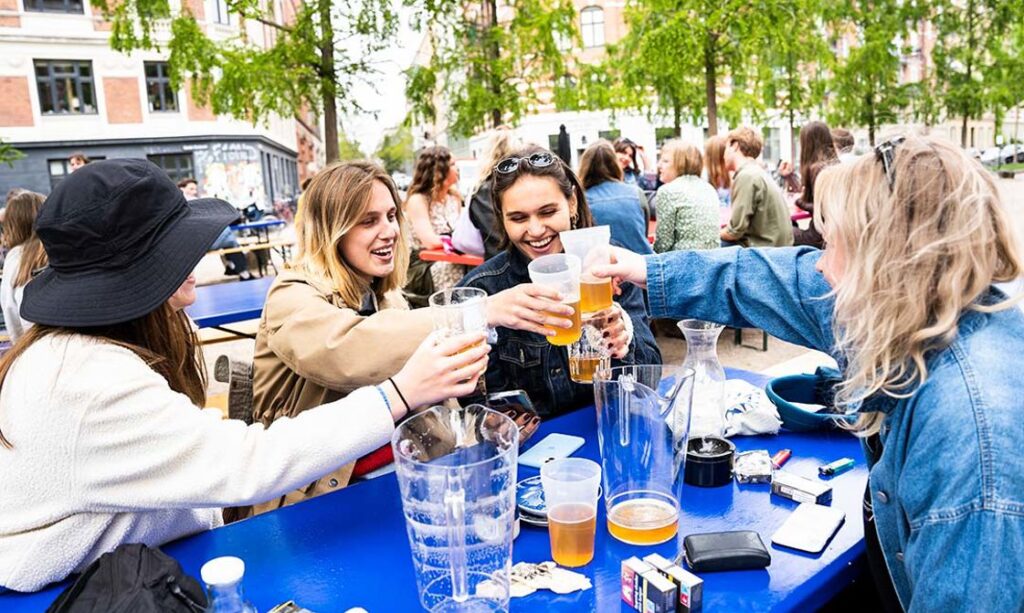
Denmark has become one of Europe’s most exciting craft beer nations, and Copenhagen Beer Week brings the full breadth of that scene into focus for one week each August.
Events are held across restaurants, bars, museums, and breweries throughout the city, with the weekend market at Israels Plads, where dozens of Danish breweries gather to pour their most interesting and experimental beers, as the centrepiece. The week is particularly valuable for visitors who want to understand the depth of the Danish craft beer movement beyond the obvious names, encountering small-batch producers whose beers rarely circulate outside the country.
Credit: Danske Ølentusiaster
Autumn (September to November)
Copenhagen Fashion Week
When: Twice yearly – January/February and August
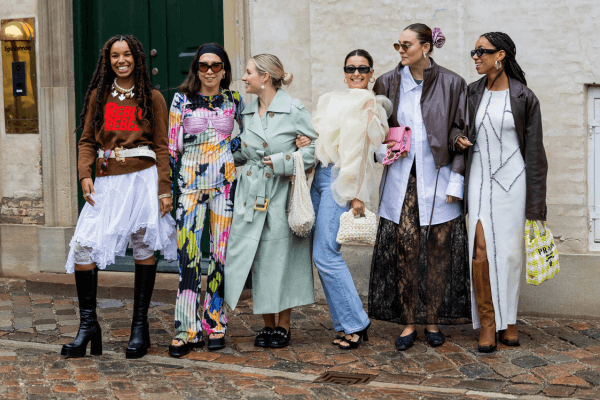
Copenhagen Fashion Week has grown from a regional Scandinavian event into one of the four or five most significant fashion weeks in the world, reflecting the emergence of Copenhagen as the global capital of Scandinavian design and sustainable fashion.
The week’s influence on the city is palpable: designers, buyers, models, and fashion media converge on Copenhagen for five days of shows, presentations, and events, many of which are partially open to the public. Venues across the city, like museums, warehouses, or outdoor locations, are all used for shows, and the street outside the main venues during fashion week is itself a spectacle.
Credit: FASHION Magazine
Golden Days Festival
When: September, approximately two weeks
Golden Days is Copenhagen’s most intellectually ambitious festival – a two-week cultural event that each year explores a specific theme through performances, exhibitions, guided walks, talks, and events across the city.
The festival focuses consistently on history, heritage, and how the past speaks to the present. Past themes have encompassed individual decades, specific social movements, and broader cultural questions explored through a combination of scholarly rigour and accessibility. For visitors who want to understand Copenhagen’s relationship with its own history and with the broader currents of European culture, Golden Days is the festival that does this most directly.
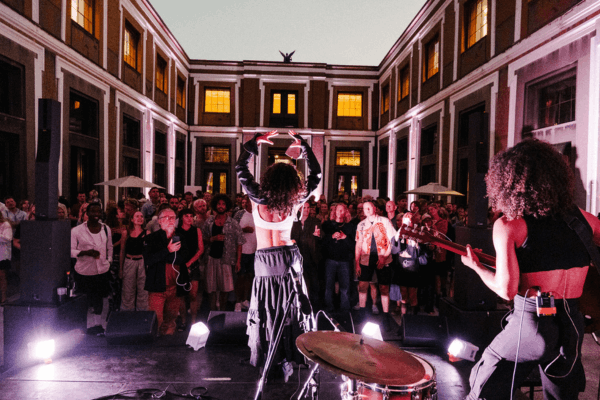
Credit: Golden Days
Copenhagen Architecture Festival
When: May
Denmark and Copenhagen specifically have shaped global architecture and design more disproportionately than almost any country of comparable size. The Copenhagen Architecture Festival – ten days each May of talks, tours, open studios, film screenings, and exhibitions – provides direct access to the city’s architectural culture.
Highlights include open-house events at normally inaccessible buildings, guided walks through specific architectural periods, and conversations with architects whose work has shaped the contemporary city. For visitors drawn to Copenhagen by its design reputation, the Architecture Festival is the event that gives that reputation its most specific and most engaging expression.
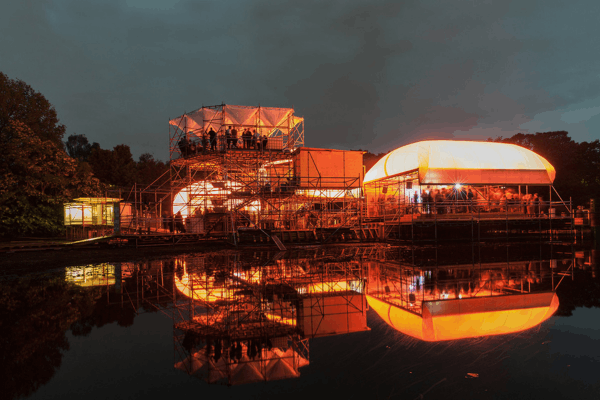
Credit: Copenhagen Architecture Festival
Kulturnatten – Culture Night
When: October, one night (first Friday of October)
Kulturnatten is Copenhagen’s most democratic cultural event – a single Friday night in October during which more than 250 museums, galleries, theatres, government buildings, churches, and cultural institutions open their doors until midnight, with a single Culture Night pass providing access to all of them and covering public transport across the night.
The experience of moving through Copenhagen on Culture Night, from the National Museum to the Danish Parliament to private studios and libraries that are normally closed to the public, is one of the most specific and complete ways to understand what this city values and how it presents itself. The pass covers two children under twelve per adult, making it an exceptionally good value family event as well as one of the finest solo or couples evenings in Copenhagen’s calendar.
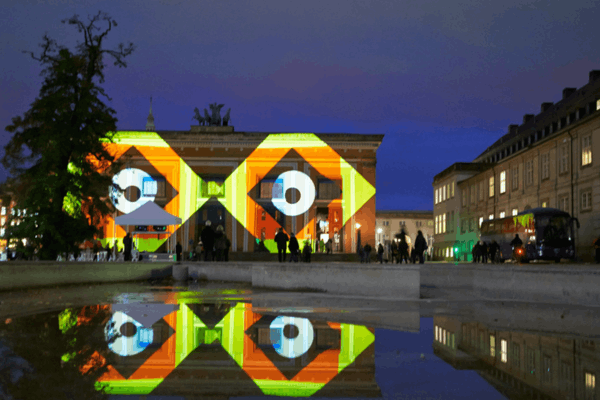
Credit: Culture Night – København
Winter (December to February)
Christmas in Tivoli
When: Mid-November to just before Christmas
Tivoli Gardens in November and December is one of the finest Christmas experiences in Europe, and it is difficult to overstate how much it exceeds its reputation.
Tivoli garden is already one of the most beautiful in the world and is decorated with hundreds of thousands of lights, the rides and attractions continue to operate, Christmas concerts take place on the main stage, and the market stalls sell gløgg, æbleskiver (Danish doughnuts), and the full range of Nordic Christmas food and craft. The combination of the Victorian architecture, the elaborate illuminations, the cold air, and the quality of what is for sale gives Christmas at Tivoli a warmth and a visual richness that the word “Christmas market” rarely prepares visitors for.
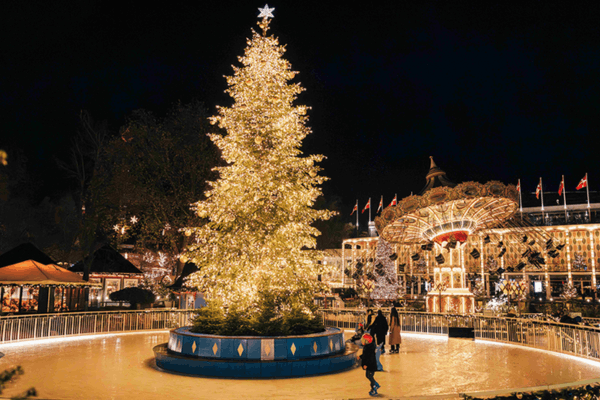
Credit: VisitCopenhagen
J-Day – The Great Danish Beer Holiday
When: First Friday of November
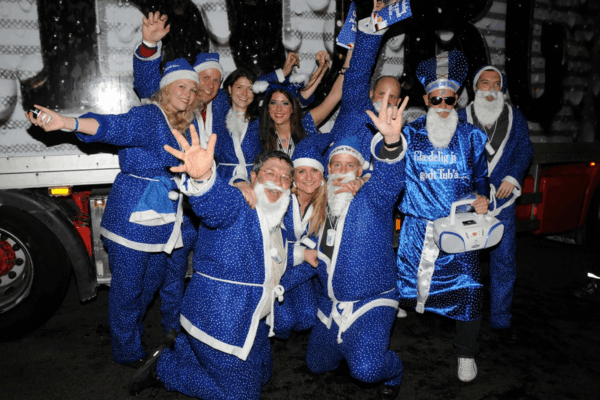
J-Day is one of the more specifically Danish cultural events in Copenhagen’s year. It’s a nationwide celebration that takes place each November on the day that Tuborg releases its annual Julebryg (Christmas beer).
At the stroke of 8:59 pm, the beer is delivered simultaneously to bars across Denmark. In Copenhagen, the largest celebrations concentrate in the Latin Quarter and around Strøget, where crowds gather to receive the first deliveries. The event is part tradition, part carnival, entirely Danish, and a genuine expression of the city’s relationship with beer, celebration, and the ritual of marking seasonal change.
Credit: HASSE FERROLD
3 Days of Design
When: June
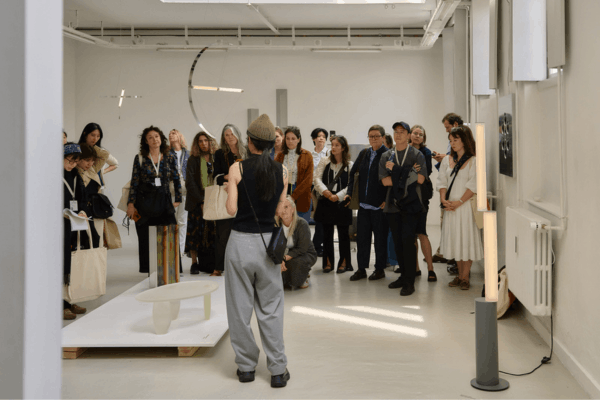
3 Days of Design is the most concentrated access to Copenhagen’s design industry available during a single visit. It’s three full days of open studios, showroom events, design installations, and talks across the city’s design studios, furniture manufacturers, and architecture practices.
The event is increasingly international in its audience, as Copenhagen’s status as a global design destination has grown. For visitors who want to understand Danish design in practice rather than simply observe its outputs in museums, 3 Days of Design provides direct encounters with the studios, designers, and makers who are currently shaping what the city, and by extension, global design culture, looks like.
Credit: 3daysofdesign
Conclusion
The festivals in Copenhagen are not supplements to a visit. They are, for many visitors, the reason for it.
The Copenhagen Jazz Festival turns the city into one extended concert. CPH Distortion turns it into a city-wide street party. Golden Days turns it into a history seminar that genuinely wants to be attended. The Christmas lights in Tivoli turn it into something that stays with you in a way that is difficult to articulate but entirely undeniable.
Copenhagen is always worth visiting. During its festivals, it becomes something more.
To experience Copenhagen’s cultural life, festivals, and extraordinary food and design scene as part of a curated Nordic journey, explore our private Copenhagen tours.
FAQ
What is the largest festival in Copenhagen?
Copenhagen Jazz Festival is the city’s largest festival, held annually in July with over 1,000 concerts across 100+ venues over ten days. Distortion street party festival (May/June) attracts 100,000+ participants. Roskilde Festival, Northern Europe’s biggest music festival, is located 30km outside Copenhagen, drawing 130,000 attendees annually.
What are the major festivals in Denmark?
Major Danish festivals include Roskilde Festival (music, June/July), Copenhagen Jazz Festival (July), Distortion (street party, May/June), NorthSide Festival (Aarhus music festival), Smukfest (August music festival), Tinderbox (Odense), Strøm Festival (electronic music), and Aarhus Festival (cultural events). Christmas markets nationwide also attract significant attendance.
Where is Roskilde Festival 2026?
Roskilde Festival 2026 will be held at its permanent location in Roskilde, Denmark, approximately 30 kilometres west of Copenhagen. The festival grounds on Dyrskuepladsen have hosted the event since 1972. Dates for 2026 typically fall in late June/early July. Check the official Roskilde Festival website for confirmed dates.