Copenhagen is a city that rewards the visitor who looks sideways.
The main itinerary of the Nyhavn canal, Tivoli, and the Little Mermaid is genuinely worth doing. But it gives you a specific and relatively narrow version of a city that is considerably deeper and more peculiar than those familiar images suggest. The Copenhagen that locals actually inhabit is full of oddities: a church whose foundations contain human skulls displayed in glass cases, a community of free-spirited residents who have built a separate city within the city and declare themselves outside Danish law, a mountain of crushed building waste that has been transformed into an artificial ski slope visible from the harbour, and a rooftop swimming pool where the changing facilities are an architectural event in themselves.
This guide covers Copenhagen’s finest hidden gems and the discoveries that make a return visit feel as good as the first.
Key Takeaways
- Copenhagen’s best hidden gems span every category: unusual architecture, secret churches, free outdoor swimming, alternative communities, and neighbourhood discoveries that most tourists never reach.
- Freetown Christiania – the alternative community occupying a former military base – is not technically hidden, but it is consistently misunderstood as a simple curiosity rather than a living community worth spending real time in.
- The Copenhagen hidden gem scene is highly seasonal in places: CopenHill ski slope and the harbour baths are at their best in specific seasons, while the Church of Our Saviour spire is open only in summer.
- Many of Copenhagen’s finest hidden gems are free or very low cost – Grundtvigs Kirke, the Church of Our Saviour interior, the harbour baths, and most of the neighbourhood walks cost nothing.
- Nørrebro is consistently cited by Copenhagen locals as the neighbourhood that most rewards unhurried exploration – its independent cafés, cemeteries, street markets, and parks give it a depth that Indre By’s more touristy streets cannot match.
Architecture & Sacred Spaces
Grundtvigs Kirke
In the Bispebjerg neighbourhood, which is a residential area of northwest Copenhagen that most visitors never reach, Grundtvigs Kirke is one of the most extraordinary church buildings in northern Europe and one of the most dramatically kept secrets in a city full of architectural ambition.
The church was designed by Peder Vilhelm Jensen-Klint beginning in 1913 and completed by his son Kaare Klint in 1940, and the result is something that has no direct equivalent in European ecclesiastical architecture: a massively scaled Expressionist building built entirely from yellow brick, with a facade that creates the visual effect of an enormous organ, the stepped gabled frontage rising to a point that dominates the surrounding neighbourhood for kilometres.
The interior is even more extraordinary. It’s a vast nave of pale yellow brick with an almost hypnotic vertical rhythm, entirely free of conventional ornament, that achieves a spiritual atmosphere through pure architectural proportion. The silence inside the church is absolute regardless of the season.
Free to enter. Accessible by bus from the city centre; the journey takes approximately twenty minutes.
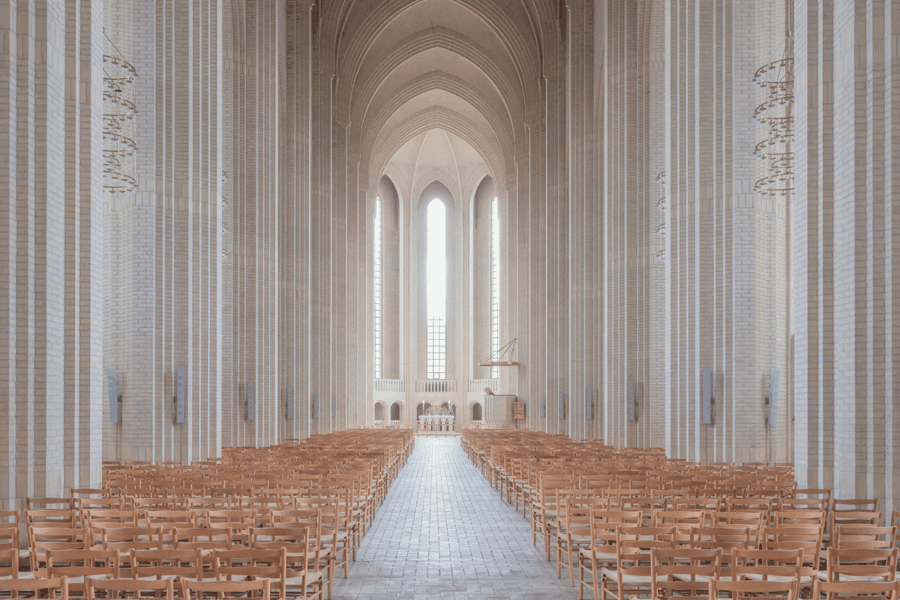
Credit: Grundtvig’s Church Copenhagen captured by Ludwig Favre – Thisispaper
The Church of Our Saviour Spire (Vor Frelsers Kirke)
In Christianshavn, the baroque Church of Our Saviour is known to most visitors for its distinctive external spiral staircase that winds up the outside of the church spire to a viewing platform at its tip.
What is less known, and what makes the climb worthwhile as an architectural as much as a panoramic experience, is the specific character of the spire itself. The external staircase narrows dramatically as it ascends, the steps decreasing in width until the last section requires careful negotiation. The gilded figure of Christ at the very top, reachable only in the warmest months when the platform is open, provides a view across Copenhagen and the surrounding water that the more obvious viewpoints in the city cannot replicate.
The church’s interior crypt, opened to the public in 2015, displays the human skulls and bones of parishioners buried beneath the church over centuries. They are preserved in glass cases in a crypt that was constructed from their own skeletal remains. It is not for the squeamish, but it is genuinely extraordinary as a historical object.
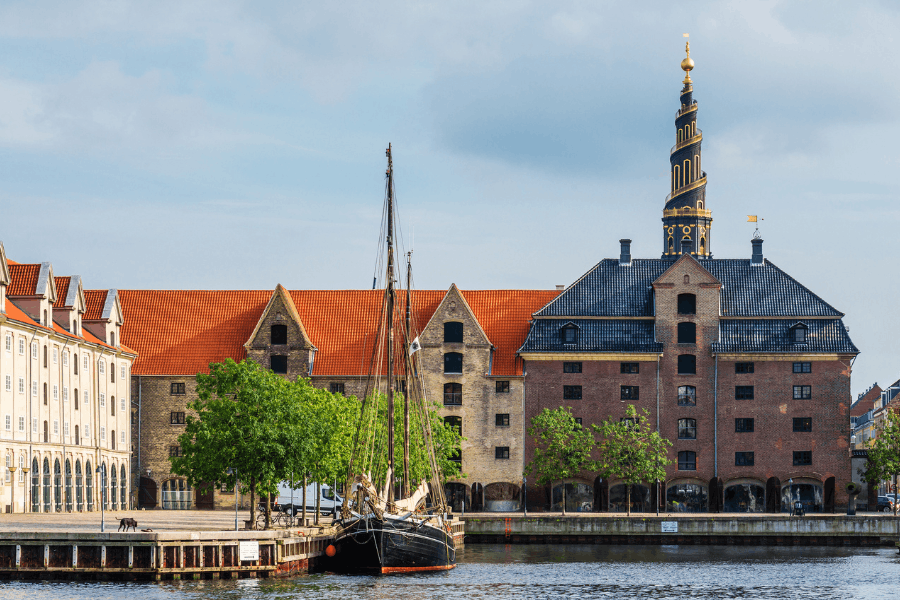
Credit: US Travel
Marble Church – Frederiks Kirke
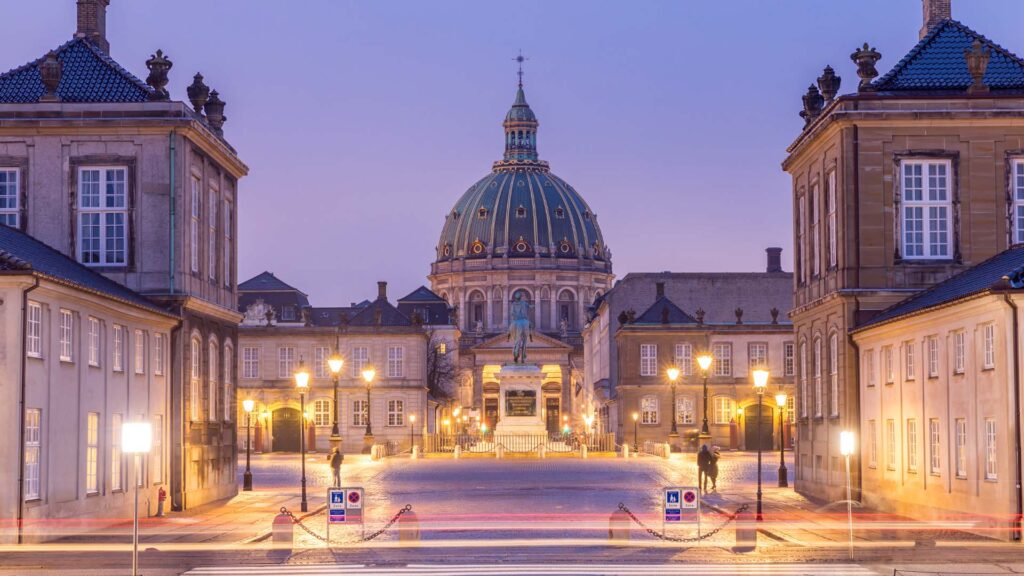
The Marble Church on Frederiksgade is directly opposite Amalienborg Palace and is one of Copenhagen’s finest and most consistently overlooked buildings: a neoclassical domed church modelled on St Peter’s in Rome, begun in 1749 and completed in 1894 after a financial crisis interrupted construction for a century and a half.
The copper dome is among the largest in Scandinavia. The interior is warm gold and has cream tones, a circular nave lit by the dome above, a quality of scale and proportion that the city’s Gothic churches do not provide.
Guided dome tours are available and give access to the top of the dome for views across the Amalienborg palace complex and the harbour below. The church is freely accessible for prayer and tourism during the week.
Credit: Nordic Visitor
An Alternative Community
Freetown Christiania
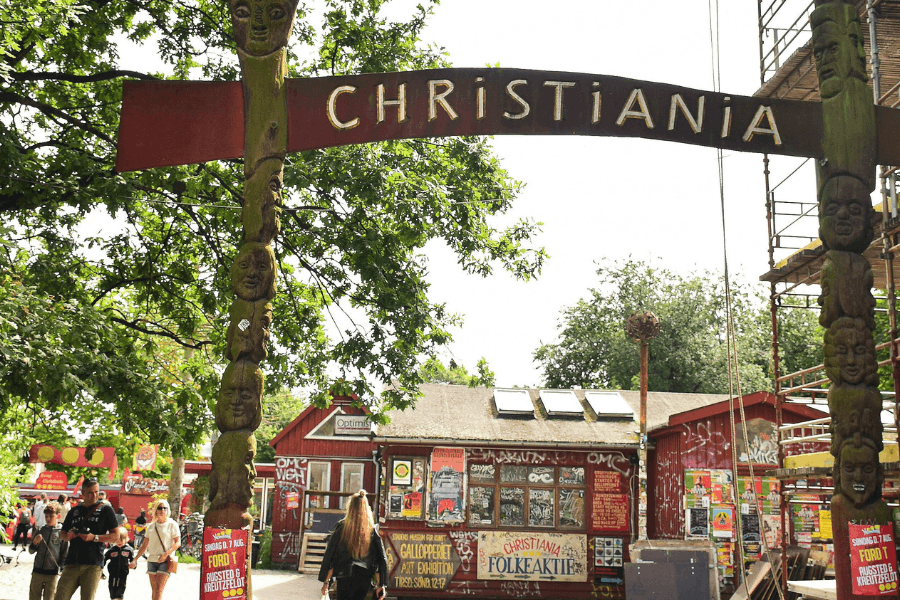
Christiania is not technically hidden as it receives thousands of visitors annually but it is consistently misunderstood, and understanding it properly makes it one of the most interesting places to spend time in Copenhagen.
Established in 1971 by a group of activists and squatters who occupied a former military base on the island of Christianshavn, Christiania has operated since then as a self-governing community of approximately 900 residents, outside the normal rules of Danish property law and, until recently, outside many other aspects of Danish regulation. The community has its own rules (no cars, no hard drugs, no weapons, no photography on Pusher Street), its own economy, and its own extraordinary physical character: 34 hectares of lakes, ramparts, and green space lined with handmade houses, studios, workshops, and cafés that have been built by residents over fifty years without architectural oversight or planning permission.
Christiania is not a theme park or a curiosity. It is a living community that has survived attempts to close it, been granted legal status in 2013, and continues to function as a genuinely alternative model of urban life. Walking through it slowly, eating at Morgenstedet (the community’s vegetarian restaurant), and spending time by the lakes rather than simply photographing Pusher Street gives a very different picture.
Credit: Contiki
Unexpected Outdoor Experiences
CopenHill in Amager Bakke
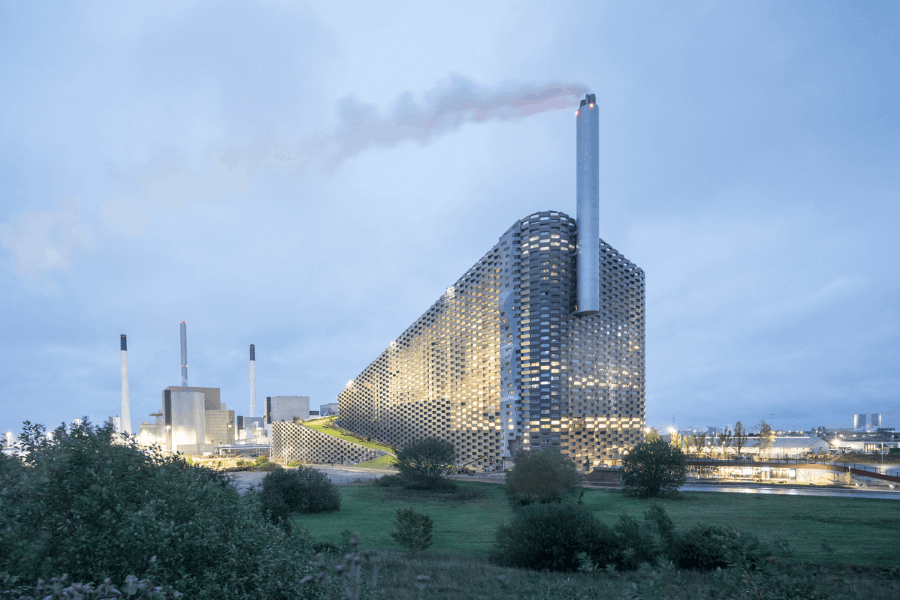
In the island southeast of the city centre of Amager, CopenHill is the power plant designed by Bjarke Ingels Group (BIG) that converts Copenhagen’s waste to energy while providing a ski slope, hiking trail, climbing wall, and rooftop restaurant on its roof.
The building is extraordinary on its own terms: a power plant designed as a public amenity, its sloped roof covered in artificial skiing surfaces, a hiking trail winding up the outside, and a 85-metre-tall glass facade through which the turbines are visible. The chimney emits rings of steam rather than smoke. BIG’s engineers designed it to release carbon dioxide in perfect rings as a visible and slightly absurd reminder of the city’s emissions.
CopenHill is best experienced in winter as a ski slope, in summer as a hiking and running destination with views across the harbour, and on any evening as the rooftop restaurant. It is a building that Copenhagen had no precedent for and has produced something remarkable.
Credit: ArchDaily
Islands Brygge Harbour Baths
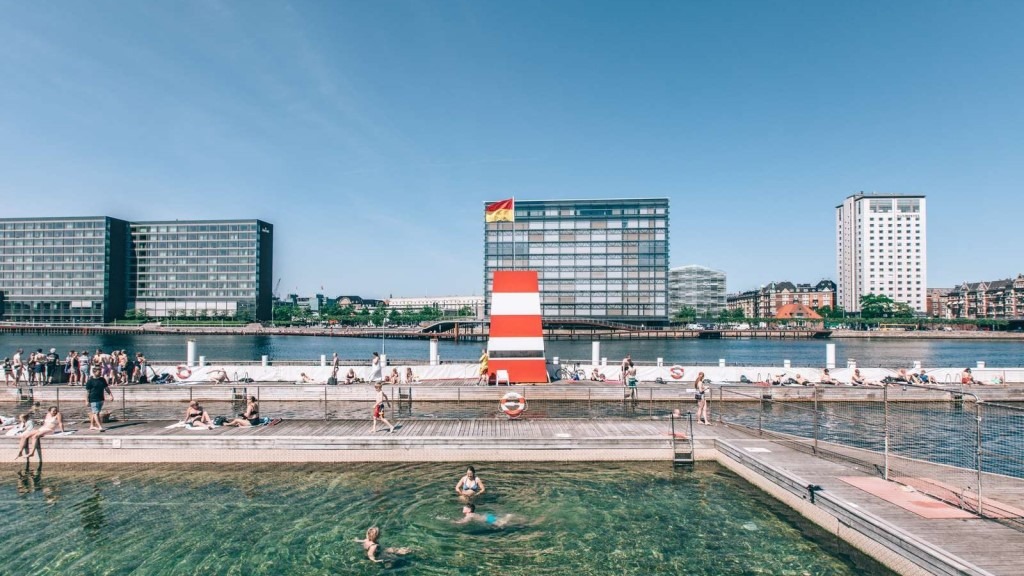
Copenhagen’s harbour water became clean enough for swimming in 2002, and the harbour baths that now dot the waterfront have become one of the city’s most specific summer pleasures.
Islands Brygge Harbour Baths, designed by the same architects as Bjarke Ingels Group (BIG) in 2002, provides five pools, including a children’s pool, a large swimming pool, and jumping platforms, directly in the harbour, free and open to anyone.
The experience of swimming in the middle of a European capital, surrounded by the city’s architecture rather than separated from it by a pool fence, is one that Copenhagen provides and almost no other city does. On a clear summer afternoon, the harbour baths are one of the most enjoyable places in Scandinavia.
Credit: VisitCopenhagen
The Frederiksberg Gardens and Frederiksberg Palace
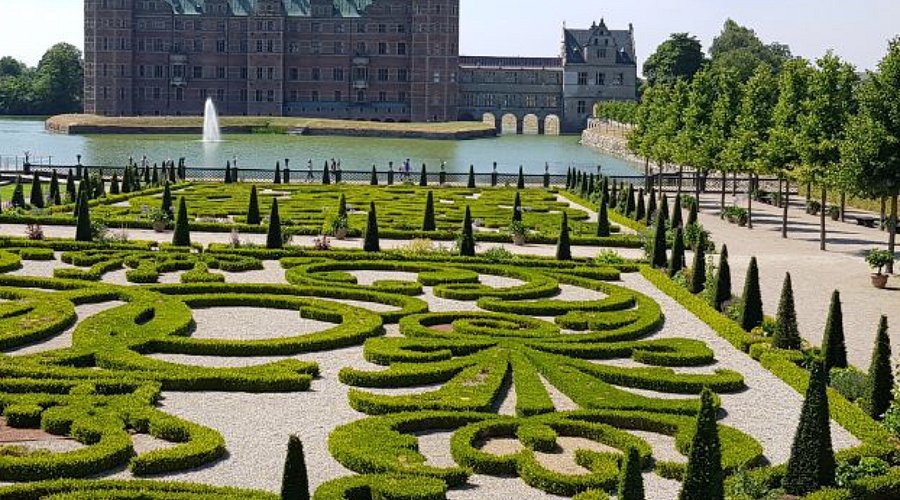
The Frederiksberg Gardens are formally a royal landscape park to the west of the city centre and is one of Copenhagen’s finest and most quietly kept green spaces.
The Chinese Pavilion (dating from 1799, a gift from the king to his queen), the lakes and canals, the formal terraces leading up to Frederiksberg Palace, and the enormous trees that shade the paths in summer give the gardens a character that is considerably more romantic and more varied than the better-known King’s Garden (Kongens Have) near Rosenborg.
The palace itself is used by the Officers’ Academy of the Danish Army and is only partially accessible. There are guided summer tours available but the gardens are open year-round, completely free, and among Copenhagen’s most beautiful walking spaces.
Credit: Tripadvisor
Neighbourhoods & Streets
Nørrebro
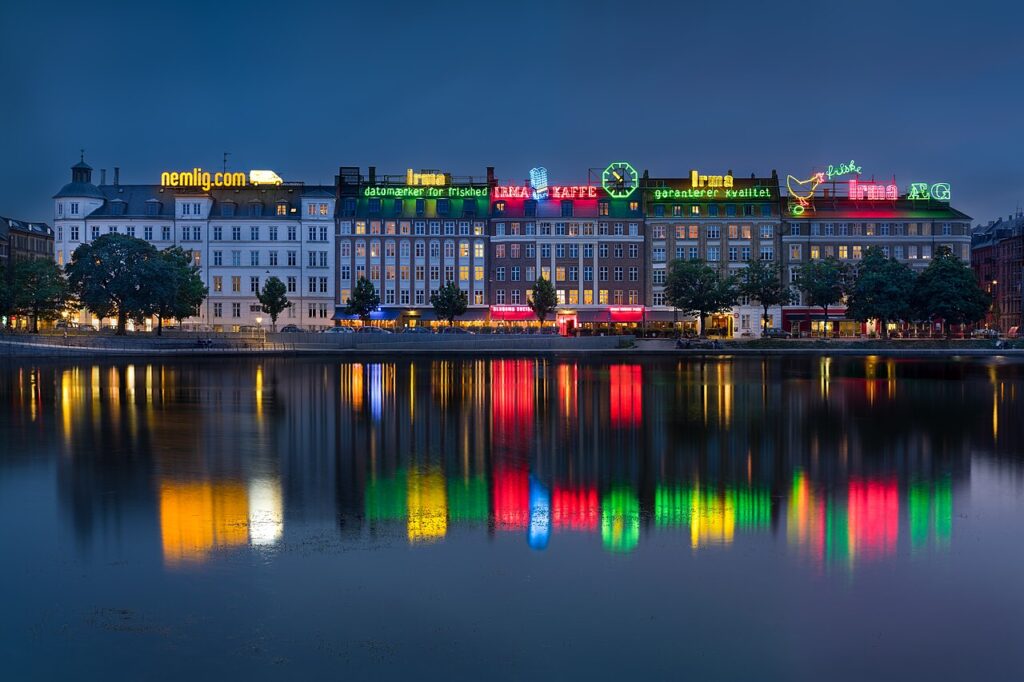
Nørrebro is Copenhagen’s most complex and most consistently rewarding neighbourhood. It’s a working-class and immigrant district that has become one of the most culturally interesting parts of the city without losing the specific density and energy that makes it feel genuinely lived-in.
Jægersborggade is the most concentrated street: independent bakeries, coffee roasters, design studios, ceramic workshops, and the Copenhagen coffee scene’s most cited address (the Coffee Collective’s Nørrebro roastery) in a block that runs for one short stretch between Nørrebrogade and Rantzausgade.
The nearby Assistens Cemetery, where Hans Christian Andersen and Søren Kierkegaard are buried, is one of the most unusual and most pleasant parks in Copenhagen: a working cemetery that also functions as a neighbourhood green space, where locals sunbathe, walk dogs, and read between the graves of some of Denmark’s most significant cultural figures.
Credit: Nørrebro – Wikipedia
The Latin Quarter
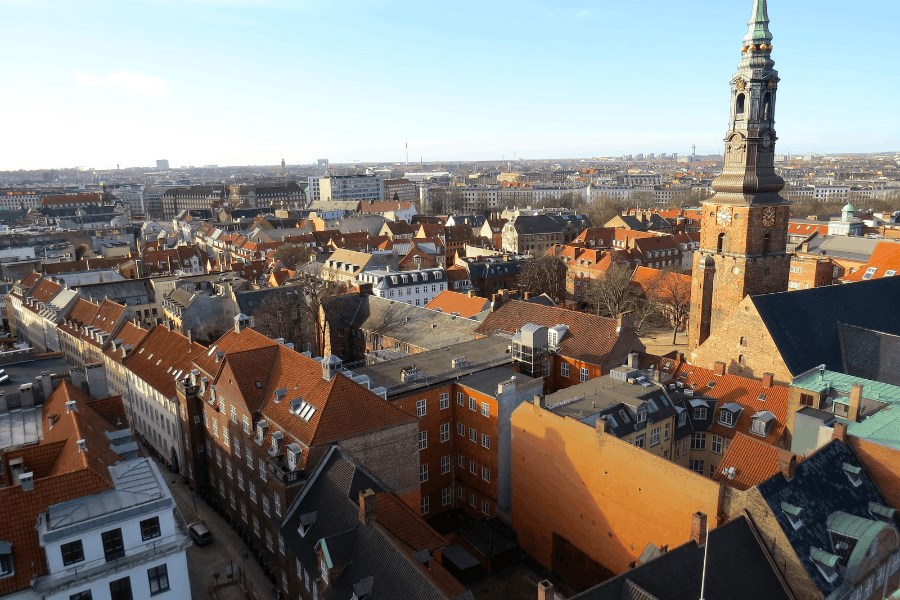
The Latin Quarter around the University of Copenhagen with the streets between Strøget and Nørreport contains Copenhagen’s densest concentration of independent bookshops, antiquarian book dealers, and the specific café culture of a neighbourhood that has housed the university and its attendant life since the 15th century.
The area is generally presented as a shopping district rather than a cultural neighbourhood, but its depth extends beyond the boutiques: the University of Copenhagen’s main building, the Trinity Church with its Round Tower (one of the finest views in the city from its roof), and the medieval street pattern that survived both the great fire of 1728 and the British bombardment of 1807 make the Latin Quarter as historically layered as any part of Copenhagen.
Credit: Latin Quarter, Copenhagen – Wikipedia
Reffen – Copenhagen Street Food
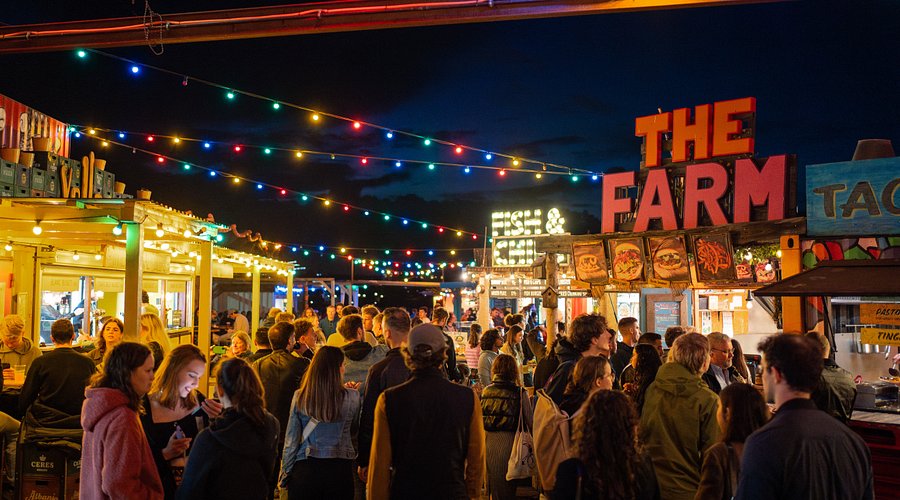
On Refshaleøen lies the former industrial island to the northeast of the city that has become Copenhagen’s most creative neighbourhood. Reffen is a vast outdoor street food market occupying a former shipyard, open from April to October.
The market combines food stalls from dozens of different cuisines, a bar along the waterfront, and a relaxed, generous atmosphere that reflects the character of Refshaleøen more broadly. The view from the market across the harbour to the city is one of the finest in Copenhagen.
Reffen is open in warm weather only, but the islands of Refshaleøen are worth visiting year-round: the Carlsberg Laboratory, the Ørsted machine hall, and the cluster of creative studios and restaurants that have established themselves in the former industrial buildings give the area a depth that extends well beyond the market season.
Credit: Tripadvisor
Unusual Museums & Discoveries
The Museum of Copenhagen
On Stormgade in Christianshavn, the Museum of Copenhagen tells the history of the city across twelve galleries in an old almshouse. It’s a well-maintained historic building whose modest exterior conceals one of the most intelligently curated city history museums in Scandinavia.
The collection spans the Viking Age through the 20th century, with particular strength in the 19th-century history of Copenhagen as a trading and industrial city. The museum is free, small enough to visit in under two hours, and provides the best single account of how Copenhagen became what it is.
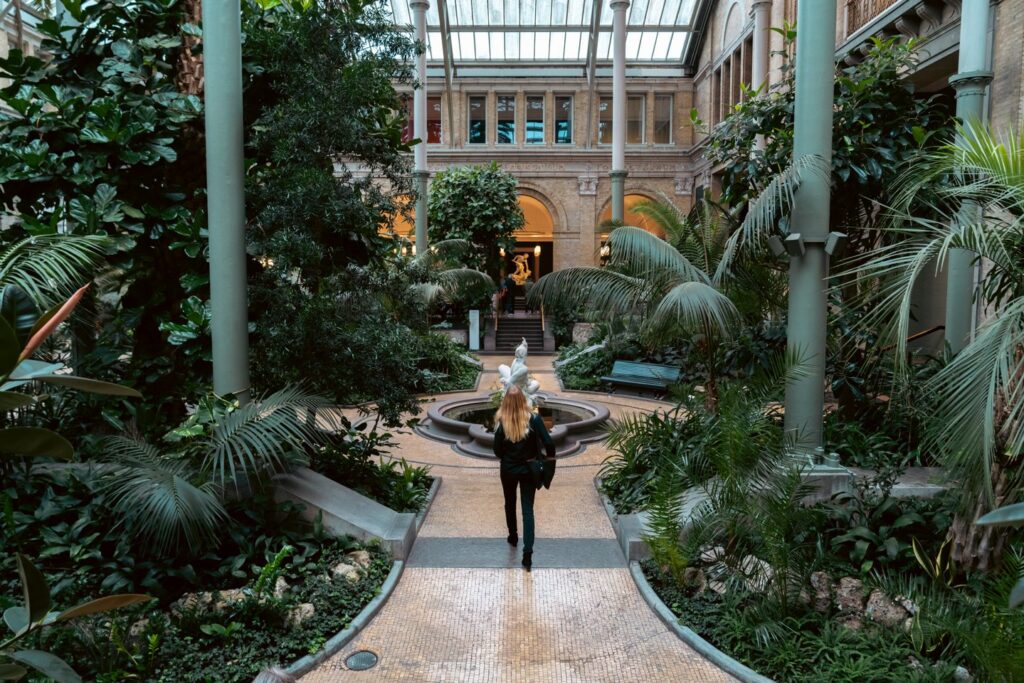
Credit: Visit Copenhagen
The National Museum of Denmark
The National Museum of Denmark on Ny Vestergade is Copenhagen’s most visited large museum, but its Ethnographic Collection, spread across the museum’s upper floors, is one of the finest and most overlooked ethnographic collections in Europe.
The collection encompasses objects from across the pre-colonial and early colonial world, indigenous peoples of the Americas, Oceania, Africa, and Asia, assembled during Denmark’s period as a colonial and trading power between the 17th and 19th centuries. The quality and scope of the collection is remarkable, and the galleries are consistently quieter than the more visited prehistoric and Viking Age sections below.
Free to enter.
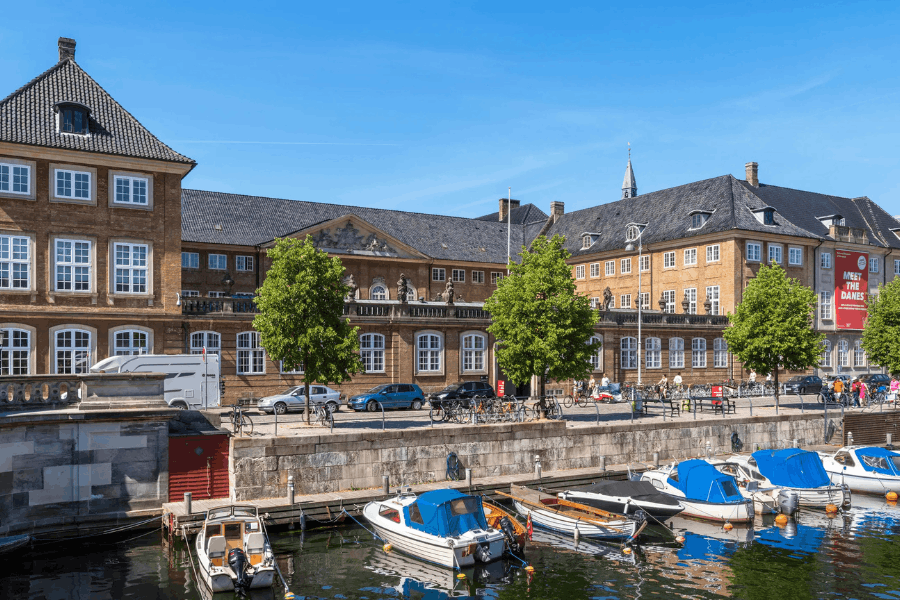
Credit: Condé Nast Traveler
Den Permanente
In Copenhagen’s newest harbour neighbourhood Nordhavn, built on the former container port, Den Permanente is a design store, gallery, and restaurant built around the Scandinavian design tradition and occupying one of the most beautifully restored industrial buildings in the city.
The store carries Danish and Scandinavian design furniture, ceramics, glassware, and textiles curated with the kind of editorial intelligence that reflects a genuine understanding of the tradition rather than simply stocking what sells. The restaurant on the upper level is one of Nordhavn’s finest, with harbour views and a kitchen focused on seasonal Danish cooking.
Den Permanente is not a tourist attraction. It is a place where Copenhagen’s relationship with its design culture is expressed at its most concentrated.
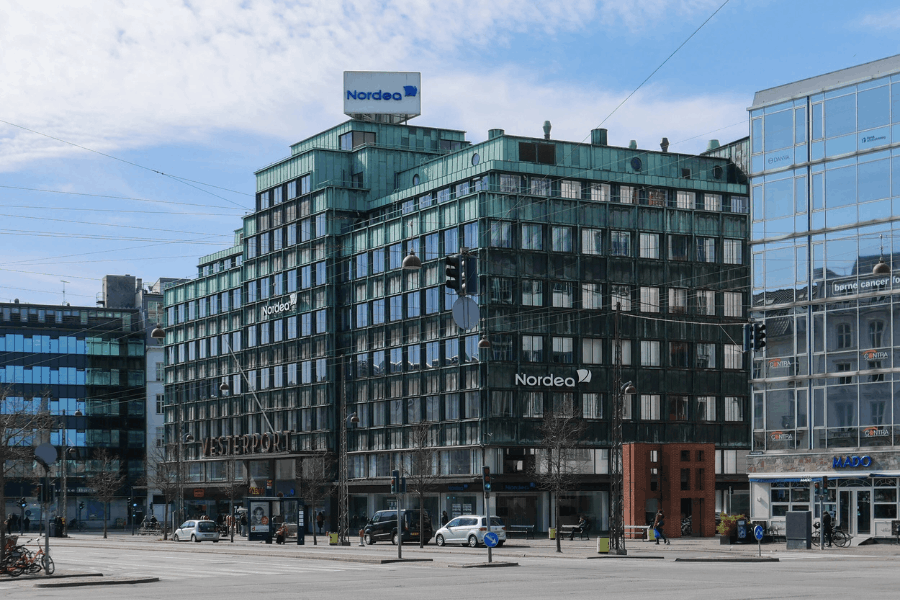
Credit: Den Permanente
Conclusion
The hidden gems in Copenhagen are not merely less-visited versions of the same things.
They are a different city: the yellow-brick interior of Grundtvigs Kirke, which most Copenhageners themselves have never visited. The harbour bath where you swim between the city’s buildings. The former military base that became a self-governing community fifty years ago and is still there, still governing itself. The roof of a power plant where you can ski while the city processes its own waste below.
Copenhagen’s hidden gems are where the city reveals what it is actually interested in, as opposed to what it presents to the world.
To experience Copenhagen’s extraordinary hidden character as part of a curated Nordic journey, explore our private Copenhagen tours.