Finland is not the country most people associate with ghost stories.
It is more commonly associated with saunas, reindeer, and a particular quality of Nordic silence that is variously described as peaceful, meditative, and slightly unnerving. That silence, as it turns out, is ideal for ghost stories. Finland’s long winters, its vast forests and frozen lakes, its castles and fortresses with centuries of violence and siege buried in their foundations – all of this has produced a folklore tradition of considerable richness, and a collection of haunted places that range from a medieval castle where a young woman was reportedly sealed inside a wall, to a Helsinki theatre whose ghost arrived in bricks transported from a fortress bombed in the Crimean War, to an outdoor sculpture park in eastern Finland whose concrete figures are equipped with real human teeth.
This guide covers the most compelling and most accessible haunted places in Finland.
Key Takeaways
- Much of central Helsinki was built on top of former cemeteries, which local ghost tour guides credit for the city’s unusually high density of reported supernatural activity.
- Suomenlinna Sea Fortress – a UNESCO World Heritage Site fifteen minutes by ferry from Helsinki – has centuries of military history, underground tunnels, and a consistently eerie atmosphere that has made it Finland’s most-visited haunted location.
- Olavinlinna Castle in Savonlinna is Finland’s most historically and atmospherically haunted building, with a ghost story – “The Finnish Maiden,” allegedly sealed alive in the castle walls – that has been told for centuries.
- Helsinki’s ghost walks, operated by Happy Guide Helsinki, run year-round and cover the city’s most significant haunted buildings and supernatural legends.
- Several of Finland’s haunted places – the Alexander Theatre ghost, Hotel Katajanokka, the Finnish National Theatre – are active, functioning venues rather than abandoned buildings, which gives them a specific quality of ordinary-life-meets-the-uncanny.
Helsinki
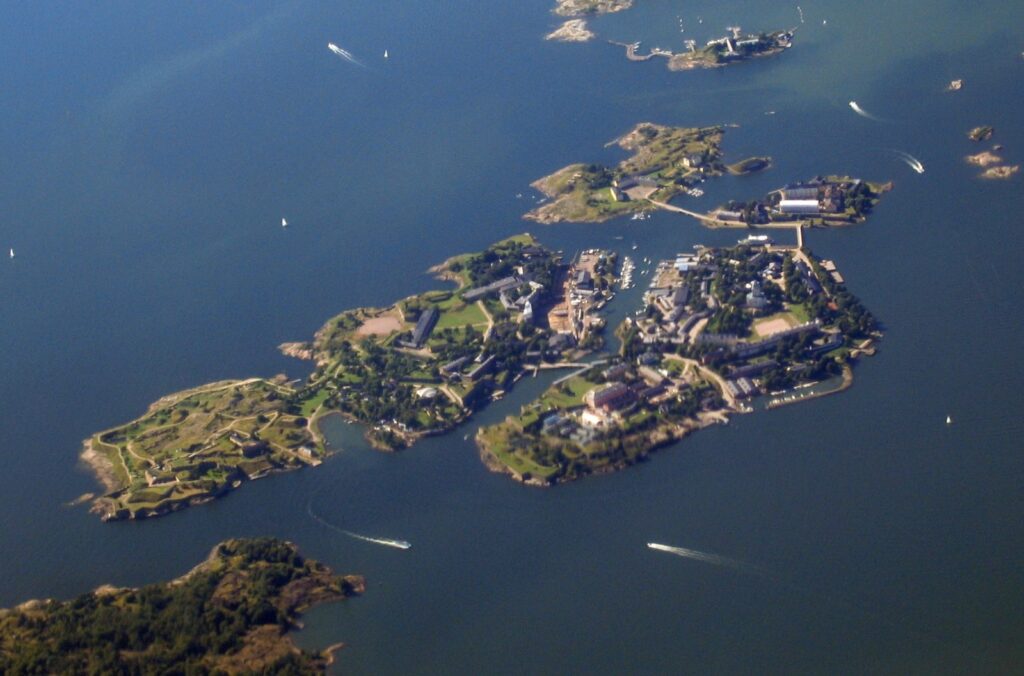
Suomenlinna Sea Fortress
The most atmospherically haunted place in Finland is also one of its finest historical attractions and a UNESCO World Heritage Site.
Suomenlinna (“Fortress of Finland”) was built by Sweden in 1748 on a cluster of islands at the entrance to Helsinki harbour, defended the Russian Empire for a century after Finland’s conquest in 1808, and served as a Finnish military base until 1973. The fortress has seen sieges, surrenders, and two centuries of soldiers living and dying in its stone corridors and underground tunnels.
The tunnels are the element most consistently cited by visitors for their atmosphere: long, dark, and low-ceilinged, some descending into the ground before being blocked or sealed, each carrying the accumulated weight of how many people have passed through them under how many different flags. The headless ghost said to roam the island of Vallisaari, originally part of the Suomenlinna complex, is one of Helsinki’s more persistent supernatural legends.
The fortress is reachable by public ferry from the Market Square in Helsinki, the journey taking fifteen minutes. Guided ghost tours of Suomenlinna are available through Visit Finland’s official programme, departing on specific dates. The fortress has its own year-round guided tour programme through the Suomenlinna Governing Body.
Credit: Wikipedia
The Alexander Theatre – Helsinki’s Phantom of the Opera
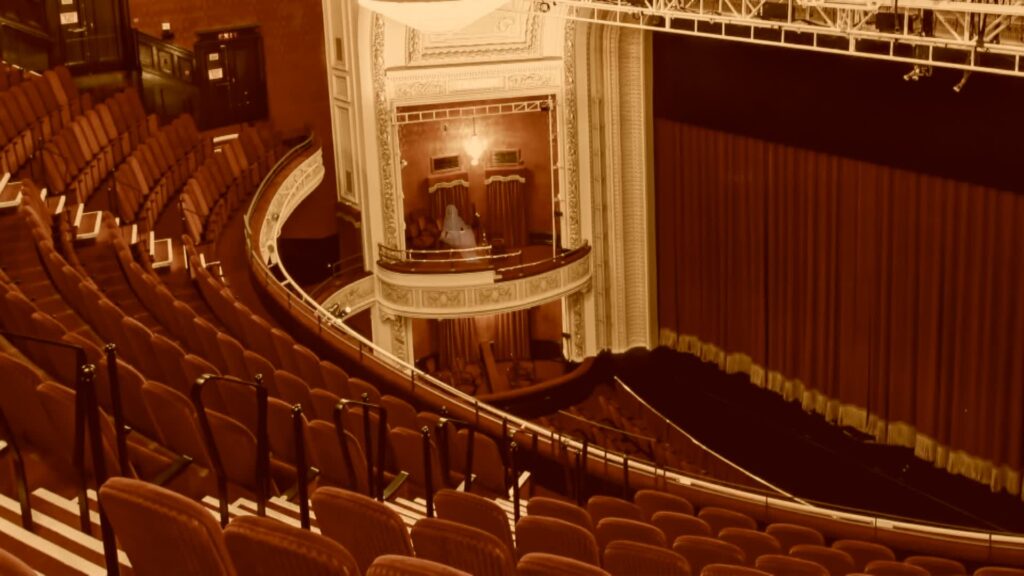
On Albertinkatu in Helsinki, the Alexander Theatre was built in 1879 as a venue for the Russian garrison, using bricks transported from the Bomarsund Fortress on the Åland Islands. It’s a fortress that had been destroyed by British and French naval bombardment during the Crimean War in 1854.
The ghost, local legend holds, came with the bricks.
The supernatural presence at the Alexander Theatre is described consistently as that of a soldier with a fondness for opera. Staff report doors opening by themselves. A director felt a hand on his shoulder during rehearsals and turned to find no one there. Children practising ballet saw army boots hanging in mid-air with nobody attached to them. The ghost’s apparent interest in the performances rather than the obstruction of them has given him a reputation for being benign – a haunting that reflects the building’s theatrical purpose rather than its violent origins.
Credit: Global News
The Finnish National Theatre
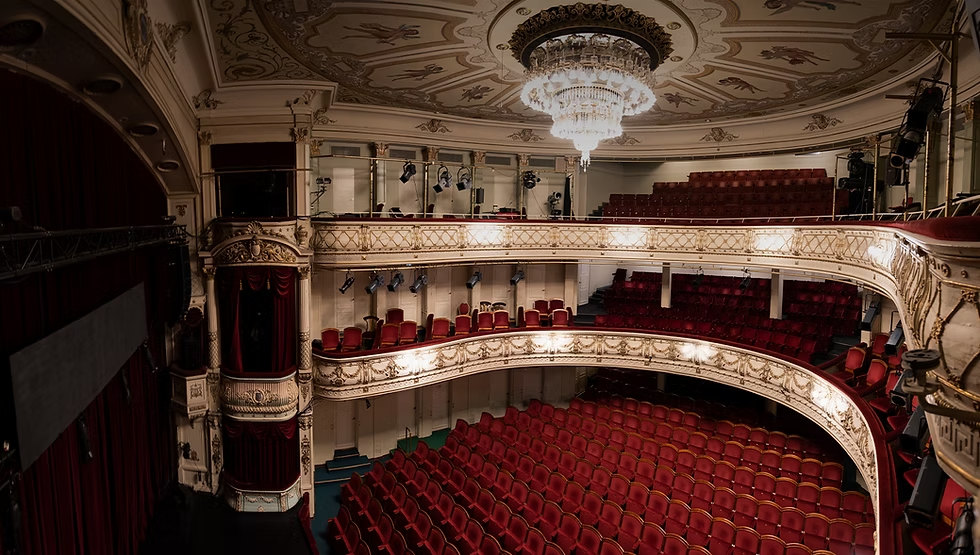
The Finnish National Theatre on the north side of Senate Square is one of the finest examples of Finnish National Romantic architecture in Helsinki, completed in 1902. It is also, by consistent report, home to several ghosts.
The most specific is Urho Somersalmi. He’s a celebrated Finnish actor who murdered his wife with an axe received as a gift from the Finnish Actors’ Union, then took his own life. His ghost is said to sit in the director’s stall during performances and disappear if anyone notices him.
A second ghost, known only as the Grey Lady, walks the backstage corridors in search of a script that was never returned to her. A third presence of unknown identity is reported backstage and in the changing rooms. The theatre’s own history, and the density of passionate human feeling that any long-established theatrical building accumulates, makes the stories feel specific to this place rather than generic.
Credit: Next Travel Finland
Hotel Katajanokka – The Prison Hotel
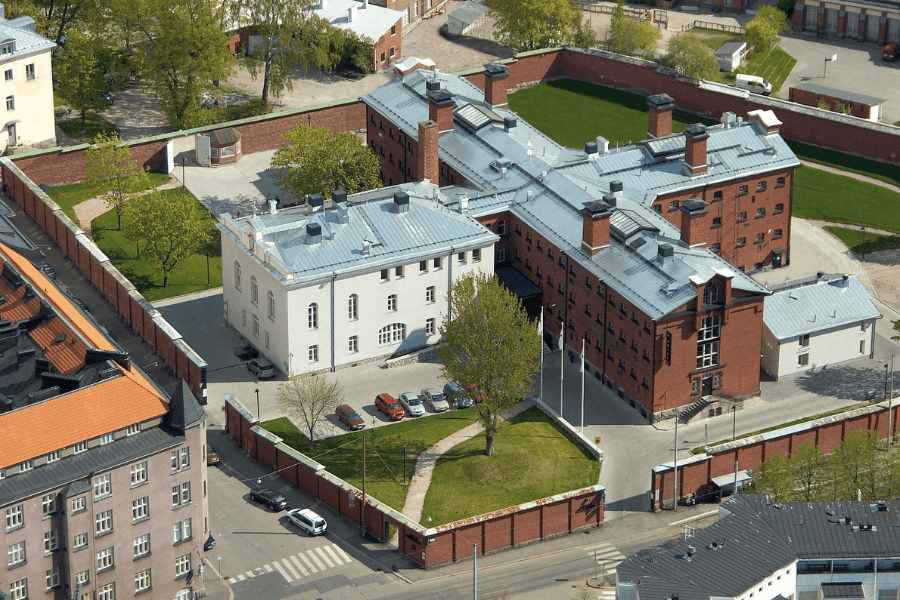
On Katajanokka island near the Uspenski Cathedral in Helsinki, Hotel Katajanokka occupies a former prison that was in continuous use from 1837 until 2002.
The hotel is beautifully designed within the prison’s architecture, preserving the cell doors, corridors, and general structure. The ghost associated with the building is Lavinia – a former prisoner whose presence has been reported by guests as a slamming door, a general unease in specific rooms, and the specific atmospheric quality of a building that has contained considerable human suffering within walls that have not changed.
The hotel embraces rather than avoids its history, and the combination of excellent accommodation with authentic prison architecture and a genuinely unsettling past makes it one of the most distinctive hotel stays in Finland.
Credit: FLOOD
Kappeli Restaurant
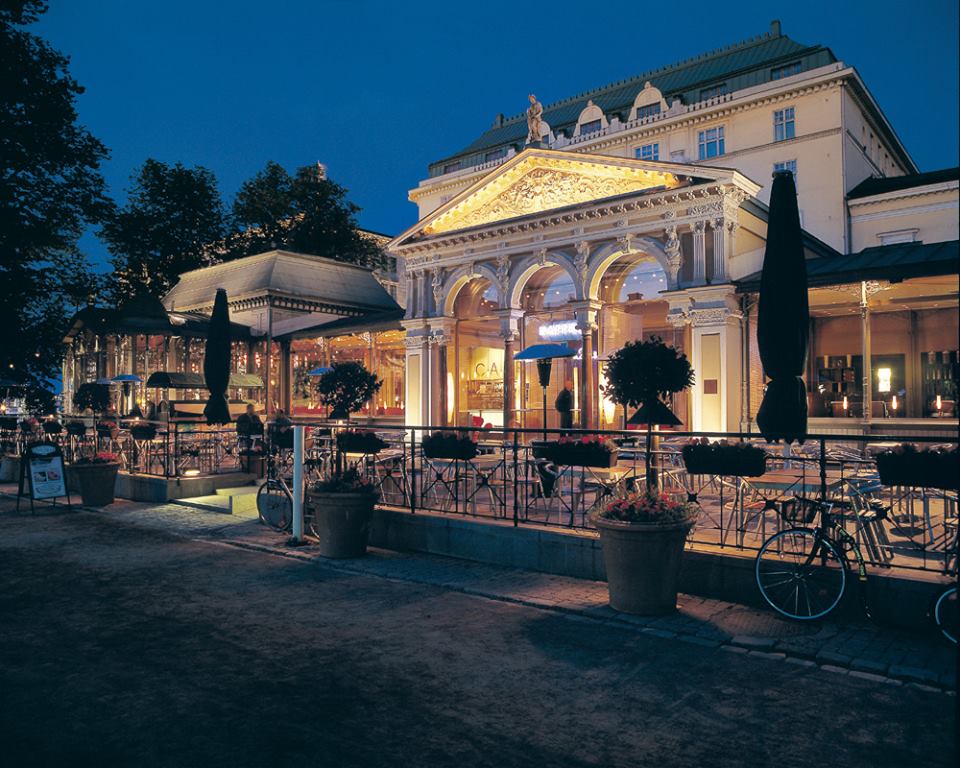
On the Esplanade in central Helsinki, Kappeli is one of the city’s most beautiful and most historic restaurants – a glass pavilion that has been serving Helsinki’s citizens since 1867 and that carries in its cellar the ghost of Josef Wolontis, a restaurant proprietor of the late 19th century who is said to be rather bad-tempered about the establishment that replaced his.
The Helsinki ghost walk operated by Happy Guide Helsinki makes Kappeli a regular stop: the guide’s account of Wolontis has apparently not improved his disposition toward the building’s ongoing relationship with tourism. The restaurant is worth visiting regardless – the Esplanade setting and the Art Nouveau interior are among the finest in Helsinki.
Credit: Discovering Finland
Tuomarinkylä Manor
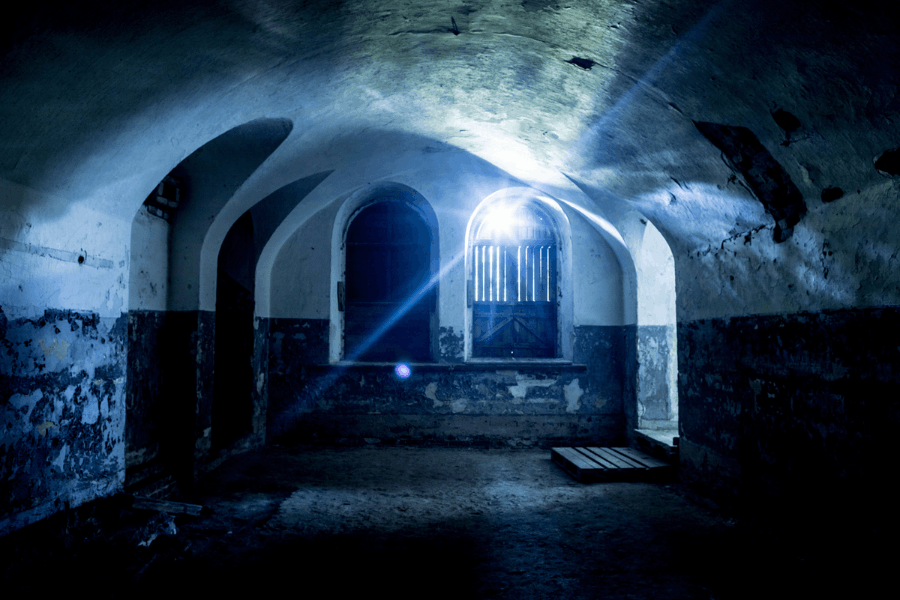
In northern Helsinki, Tuomarinkylä Manor is a late 18th-century house built by military treasurer Johannes Weckström and said to be haunted by the ghost of Natalia Kavaleff, the daughter of a later owner, who appears as an old woman in white in the manor’s attic and park.
The manor is now a farm museum and event venue, which gives the ghost story a pleasingly ordinary domestic context: a haunted manor that also hosts school trips and farm tours. The white lady has been reported by multiple visitors over decades; the park, with its old trees and the specific stillness of a walled garden, has the quality that ghost stories require to feel plausible.
Credit: MyHelsinki
Across Finland
Olavinlinna Castle, Savonlinna
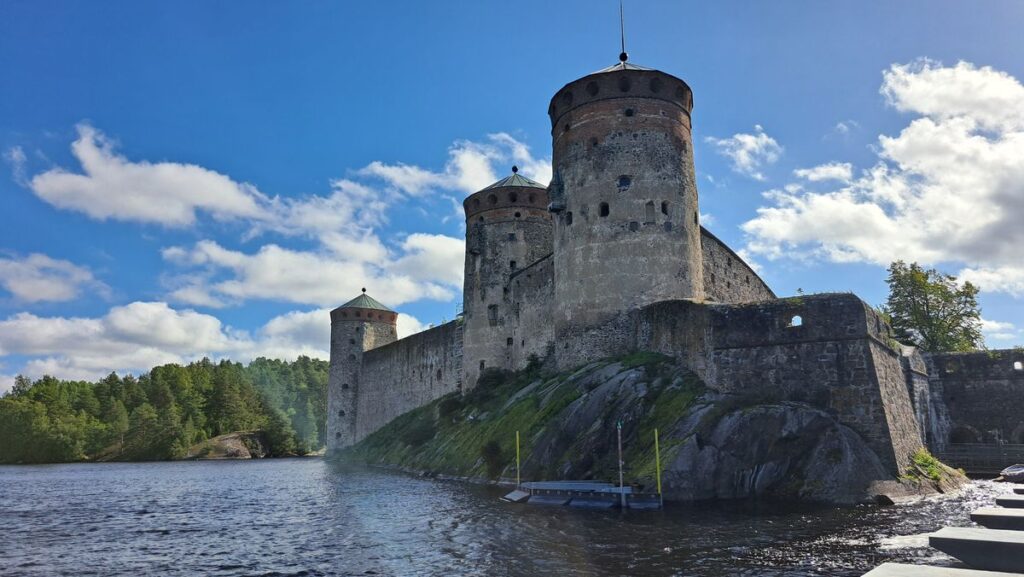
In Savonlinna in the Finnish lake district, Olavinlinna is Finland’s most famous medieval castle, a 15th-century fortress built on a small island in the Saimaa lake system, and the most compelling haunted location outside Helsinki.
Two ghost stories define the castle.
The first involves “The Finnish Maiden”. She’s a young woman said to have been walled alive inside the castle as punishment for treason or for a love affair with an enemy soldier, depending on which version of the story you encounter. The legend has been told since the medieval period. Whether it is true or invented, the castle’s thick stone walls carry it with a completeness that makes disbelief difficult when you are inside them.
The second involves black rams said to defend the castle from intruders. They are considered Satanic animals, in the original telling, bound to the fortress by a pact with whatever powers were available for such arrangements in the 15th century. The rams have not been seen recently, but the fortress in winter, with its island position and the frozen lake surrounding it, has an atmosphere that renders the story easier to entertain than one might expect.
Olavinlinna is a working historical site and museum, with guided tours available year-round. The Savonlinna Opera Festival, held in the castle courtyard each July, is one of Finland’s most celebrated cultural events and demonstrates that the castle’s supernatural associations have not dampened its appeal as a venue.
Credit: Atlas Obscura
Turku Castle
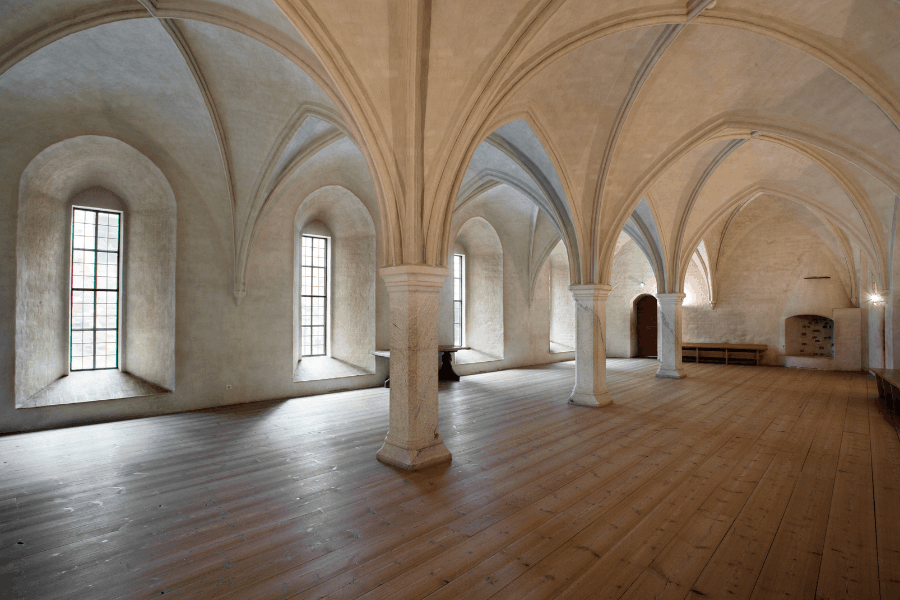
Turku Castle is one of Finland’s oldest buildings, constructed in the 13th century and expanded and modified across seven centuries of Swedish and Finnish history. It is also home to “The White Lady” – a ghost of uncertain identity who wanders the castle’s medieval halls mourning a forbidden love.
The White Lady is one of the most established ghost stories in Finnish castle lore, cited in guide books and local accounts across multiple generations. The castle itself, with its series of authentic medieval chambers and its history of Swedish royal residence, military use, and eventual abandonment and restoration, has the physical depth that good ghost stories require.
The castle is in central Turku, Finland’s oldest city, and is accessible as a day trip from Helsinki.
Credit: Turku Castle – The Association of Castles and Museums around the Baltic Sea
Veijo Rönkkönen Sculpture Park, Parikkala
In Parikkala in eastern Finland, the sculpture park created by artist Veijo Rönkkönen is not conventionally haunted. It does not have ghost stories in the traditional sense.
It is, however, arguably the most unsettling outdoor space in Finland.
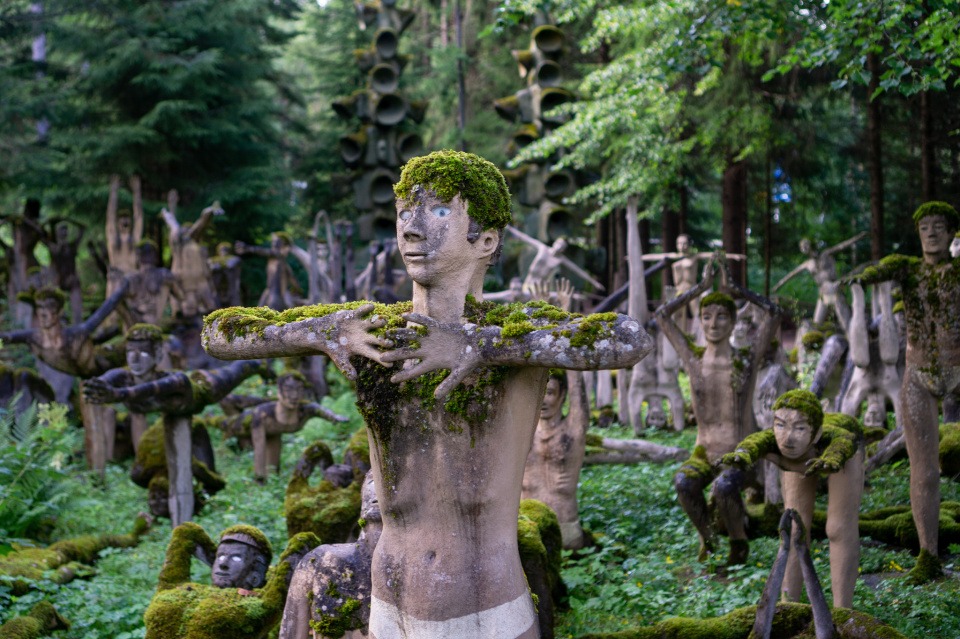
Rönkkönen spent decades creating over 450 concrete sculptures on his private property, arranging them across the gardens and woods in scenes of daily life, yoga poses, and human interaction. The faces of the figures are cast from life, and several have real human teeth embedded in them – Rönkkönen’s own, and those of friends and family. The eyes of the sculptures are glass. The sound effects installed in parts of the park respond to visitors’ movement.
The park was left to the local authority on Rönkkönen’s death in 2010 and is now maintained as a heritage site. Visiting it is one of those experiences that produces an atmosphere difficult to categorise as either entirely comfortable or entirely uncomfortable. It is, in the specific way of the best outsider art, genuinely strange.
Credit: Blipfoto
Kakola Prison, Turku
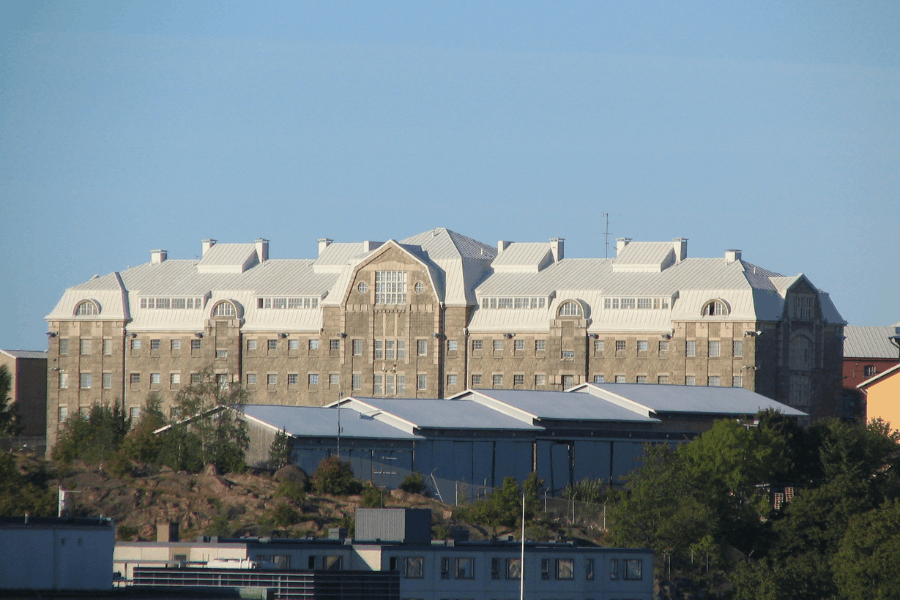
On a hill above Turku, Kakola served as Finland’s most feared high-security prison from 1853 until 2007 – a place whose reputation during its active years was fearsome enough that the hill itself is associated in popular memory with confinement and suffering.
After the prison closed, the complex was redeveloped as a hotel, spa, and restaurant destination, which gives it the Hotel Katajanokka quality of luxury accommodation within authentic incarceration infrastructure. Parts of the original building remain as the atmospheric architecture of what is now a hospitality venue.
Visitors report the specific quality of unease that large institutional buildings associated with long-term confinement tend to carry: not dramatic supernatural activity, but a persistent atmospheric weight that the redevelopment has not entirely dissolved.
Credit: Turku Prison – Wikipedia
Naantali Abbey Ruins
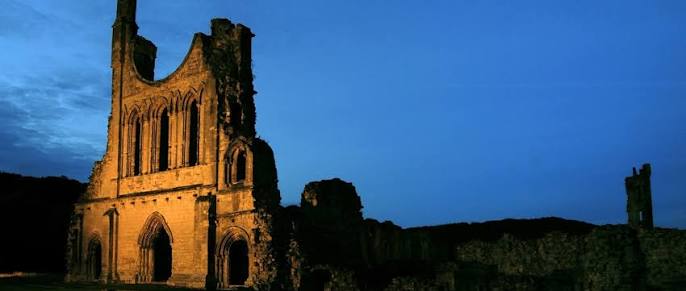
In Naantali near Turku, the ruins of a medieval Bridgettine convent that flourished from the mid-15th century until the Reformation are said to be haunted by the spirits of the nuns who lived and died there.
Visitors have reported hearing what sound like chanted prayers from within the ruins, and seeing figures in what might be described as nun’s habits moving among the old walls. The ruins have the specific atmospheric quality of a religious community’s physical remains: a place where many people prayed, grieved, and died in a very small space over a very long time, and where the accumulated weight of that practice might reasonably be expected to leave some trace.
Credit: English Heritage
Abandoned Kruunuvuori District, Helsinki
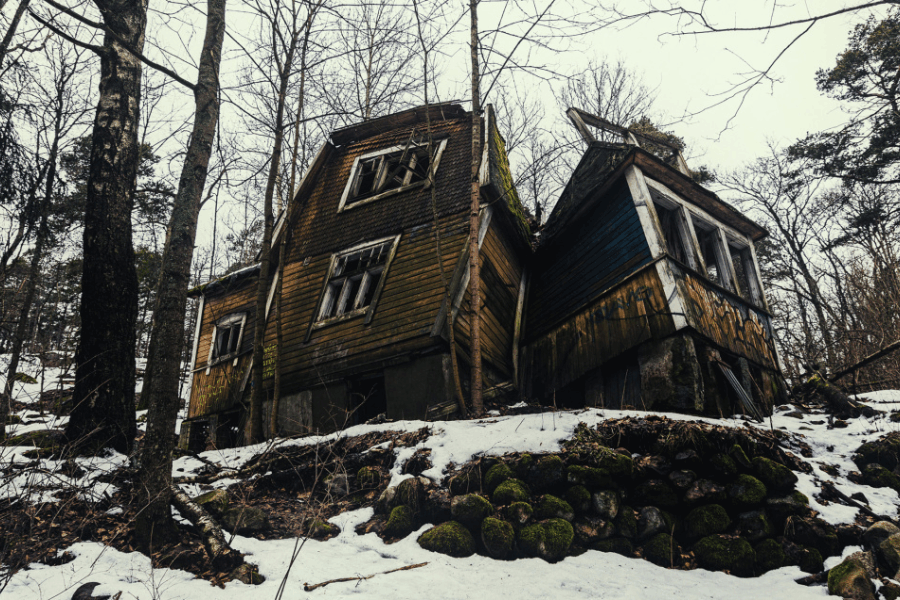
A few kilometres from the Helsinki city centre on the Kruunuvuori peninsula, the ruins of a former wealthy summer colony – dozens of manor houses and villas built in the late 19th and early 20th centuries for Helsinki’s elite, abandoned after the Second World War and left to the forest for decades – provide one of the most genuinely atmospheric abandoned landscapes in Finland.
The buildings are in varying states of collapse. Some have been taken over by vegetation. Others have been painted by urban artists, adding layers of colour to the decay. The combination of the ruin character, the forest, and the history of a wealthy summer world that simply ended and was walked away from gives Kruunuvuori an atmosphere quite different from the conventional haunted building.
It is accessible on foot from the city and requires no organised tour. The informal quality of the access, walking through the forest to find the ruins, without a guide or a ticket office, suits the atmosphere considerably better than a managed visit would.
Credit: Villa Lindberg | AT | Blipfoto
Practical Notes
Helsinki ghost walks are the most convenient way to encounter the city’s supernatural history. Happy Guide Helsinki operates public and private tours year-round, covering the Alexander Theatre, Hotel Katajanokka, Kappeli, and the city’s broader haunted geography. The Visit Finland official ghost walk at Suomenlinna operates on specific dates and should be booked in advance.
The best time for the atmosphere is autumn. Finland’s ruska season, when the leaves turn and the days shorten rapidly, gives the country’s haunted places the specific quality of light and silence that ghost stories require. October in particular has an atmospheric intensity that winter and summer lack.
Most haunted places in Finland are ordinary visitor attractions. They are active cultural venues, hotels, and heritage sites rather than off-limits abandoned buildings. Olavinlinna, Turku Castle, Suomenlinna, the Alexander Theatre, and the National Theatre are all cultural institutions with regular visiting programmes.
Conclusion
Finland’s haunted places are not concentrated in one atmospheric valley or ancient city.
They are scattered across a country that has, beneath its reputation for modernity and design excellence, a history of medieval castles and Reformation convents and 19th-century prison hills and military fortresses on sea islands that have been fought over by every major Baltic power in the past five centuries. The ghost stories that accumulate in such places are not generic; they are specific to the buildings, the people, and the history that produced them.
The White Lady of Turku Castle, the opera-loving phantom of the Alexander Theatre, the concrete figures with real human teeth in Parikkala, each is an expression of something specifically Finnish, in the best tradition of what haunted places are for.
To experience Finland’s extraordinary culture, history, and landscapes as part of a curated Nordic journey, explore our private Helsinki tours.
FAQ
What is the #1 cause of death in Finland?
The leading cause of death in Finland is cardiovascular disease, including heart disease and stroke. Cancer is the second most common cause, reflecting trends seen across many developed countries.
What is dark tourism in Finland?
Dark tourism in Finland includes visiting historic war sites, bunkers, cemeteries, and museums related to the Winter War and Continuation War. These locations offer insight into Finland’s military history and significant historical events.
What is the darkest day in Finland?
The darkest day in Finland occurs around the winter solstice in late December. In northern Lapland, the sun may not rise at all during the polar night, while southern Finland experiences only a few hours of daylight.
What are the 10 most haunted places in the world?
Some of the world’s most famous haunted places include Tower of London, Edinburgh Castle, Aokigahara, the Catacombs of Paris, Eastern State Penitentiary, Bran Castle, Bhangarh Fort, Château de Brissac, Monte Cristo Homestead, and the Stanley Hotel.