Amalienborg Palace doesn’t just house royalty. It embodies a kingdom’s continuity. In a city that seamlessly blends clean-lined modernity with centuries of tradition, this cluster of Rococo mansions offers a glimpse into Denmark’s royal heritage.
You won’t find grand theatrical gestures here. Instead, it’s restrained beauty. Guarded gates, cobbled squares, and a quiet elegance that whispers rather than shouts. Amalienborg is not a relic. It breathes.
Key Takeaways
- Amalienborg Palace is the official residence of the Danish royal family and a stunning architectural gem in Copenhagen.
- The palace consists of four identical rococo-style buildings arranged around an octagonal courtyard.
- It is still an active royal residence, which makes a visit feel immersive and authentic.
- The Changing of the Guard ceremony takes place daily and is a popular cultural experience.
- Visitors can explore parts of the palace through the Amalienborg Museum, offering a curated glimpse into royal life.
- The surrounding Frederiksstaden district adds historical and architectural richness to the visit.
- Amalienborg is located near other key attractions, making it ideal to include in a broader city tour of Copenhagen.
- A walk through the palace square offers one of the most refined and atmospheric experiences in the Danish capital.
A royal residence with four faces
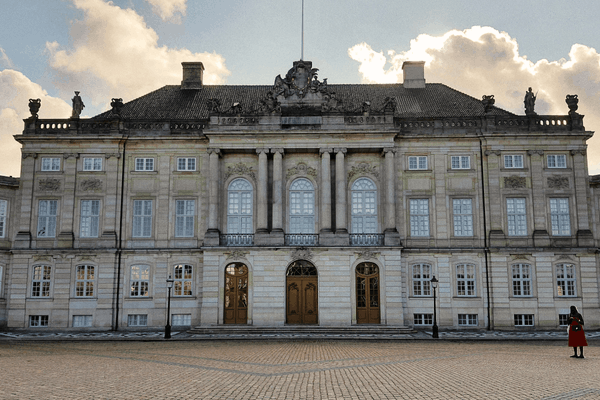
Set around an octagonal square, Amalienborg is made up of four near-identical palaces. Built in the 18th century for noble families, the ensemble became the royal residence after Christiansborg Palace burned down in 1794. Each building has its own role and character.
Christian VII’s Palace houses state rooms and official events. Christian VIII’s Palace is home to the Amalienborg Museum. Frederik VIII’s Palace is the current home of Crown Prince Frederik and his family. Christian IX’s Palace remains the Queen’s residence.
This is not a single monument frozen in time. It’s a functioning royal compound, with all the symbolism, protocol, and intimacy that entails.
Credit: flickch
Architectural grace and geometric balance
Designed by court architect Nicolai Eigtved, the square itself is a masterclass in urban geometry. Stand at its centre, and you’ll see symmetry unfold in every direction.
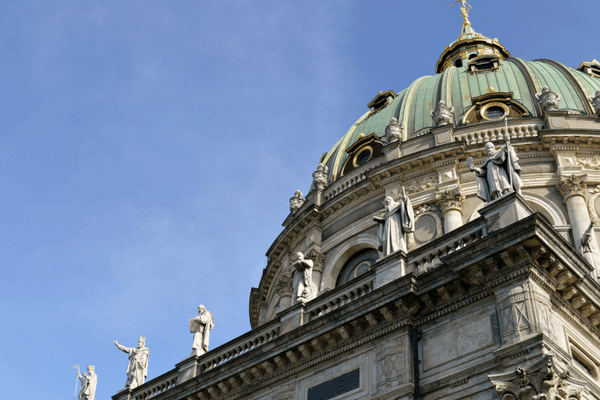
Behind it rises the copper dome of Frederik’s Church (The Marble Church), a visual anchor to the whole ensemble. There’s something serene about the way space, light, and stone align here.
Credit: Tita
Unlike other European palaces that rely on overwhelming scale, Amalienborg charms with proportion. It feels approachable and civilised.
The daily changing of the guard
At noon each day, the Royal Life Guards march from Rosenborg Castle to Amalienborg in full ceremonial uniform. The sound of boots on cobblestone. The glint of bearskin hats. It’s both ritual and reality.
If the royal standard flies above the palace, it means the monarch is home, adding a subtle layer of suspense to the spectacle. The event is precise yet quietly informal. Much like the palace itself.
Step inside the Amalienborg Museum
Housed in Christian VIII’s Palace, the Amalienborg Museum opens a curated window into 150 years of royal life. It’s not about opulence. It’s about the atmosphere. You walk through rooms still used for state dinners. Glimpse private studies. Family portraits. Small details that hint at continuity over showmanship.
There’s a refined Scandinavian restraint to everything. Understated interiors. Historical exhibits that feel lived in, not staged. The museum reminds you that royalty, here, is not theatrical. It’s cultural.

Credit: Tita
A palace woven into the city
Amalienborg isn’t tucked away. It stands openly in Frederiksstaden, a district known for its dignified architecture and embassies. From here, you’re minutes from the Copenhagen Opera House and the Designmuseum Danmark. The area blends diplomacy, culture, and calm.
If you’re exploring nearby, combine your visit with a stroll along the harbourfront or a detour to The Marble Church. Both offer further glimpses into Denmark’s architectural story.
Royal Copenhagen: A Wider Narrative
Amalienborg is just one part of Copenhagen’s royal fabric. Head toward Rosenborg Castle, where the crown jewels are housed in Renaissance splendour. Or explore the dramatic evolution of the Danish monarchy at Christiansborg Palace, home to royal reception rooms and political power alike.
Each royal site tells a different chapter. Together, they reveal how history, function, and aesthetics merge in this capital city.
Planning your visit
Amalienborg is timeless, but your experience doesn’t have to be generic. We recommend approaching it as part of a larger cultural walk through the city’s historic centre. Consider joining one of our private Copenhagen tours to gain insider context and move at your own pace.
Guides can offer insight into not just the history, but the gestures, symbols, and significance behind the architecture and rituals.
Conclusion
Amalienborg Palace is not about grandeur. It’s about grace. Set at the intersection of heritage and modern life, it speaks to a different kind of power that is rooted in continuity, cultural identity, and quiet confidence.
Whether you stand before the guards at noon or trace the curve of the palace square in early morning silence, the experience lingers. It doesn’t ask for attention. It earns it.
To explore this story-rich space with nuance, consider booking a Copenhagen city tour with Amitylux. Royal Copenhagen awaits, and we’d be honoured to show you its more intimate side.
FAQ
What is Amalienborg Palace famous for?
Amalienborg Palace is famous as the official residence of the Danish royal family and for its four identical Rococo palaces surrounding an octagonal square. It’s also well known for the daily changing of the Royal Guard and its central location near the waterfront in Copenhagen.
Is Amalienborg Palace free?
The outdoor palace square at Amalienborg is free to visit and open to the public. However, entry to the Amalienborg Museum inside one of the palaces requires a ticket. The museum offers insight into royal history, interiors, and the lives of Denmark’s monarchs.
Who lives in the Amalienborg Palace?
Amalienborg Palace is home to members of the Danish royal family. Different palaces within the complex are used by the reigning monarch and close relatives. When the Danish flag is flying over a palace, it indicates that a royal resident is currently in residence.
Is Amalienborg Palace worth visiting?
Yes, Amalienborg Palace is worth visiting for its royal history, elegant architecture, and central location. Visitors enjoy watching the guard change, exploring the museum, and experiencing a working royal residence. It’s a key cultural landmark that adds depth to any Copenhagen itinerary.