London unfolds like a living museum where Roman walls stand beside glass towers, where medieval markets buzz with contemporary energy, and where every street corner reveals layers of history, culture, and urban life refined over two millennia. This is a city that rewards both planning and spontaneous wandering, where world-class museums offer free entry and hidden gardens provide quiet respite from the urban pulse.
From the iconic silhouette of Tower Bridge lifting for passing ships to the verdant expanses of royal parks where deer still roam, from theatrical brilliance in the West End to Sunday flower markets overflowing with blooms, London delivers experiences that feel both distinctly British and utterly cosmopolitan. It’s a capital that has spent centuries perfecting the art of welcoming the world while remaining unmistakably itself.
Whether you seek royal pageantry at Buckingham Palace, cutting-edge contemporary art in converted power stations, literary pilgrimages to Poets’ Corner, or simply a perfect pint in a historic pub where centuries of conversations have soaked into wooden beams, London offers discoveries at every turn – a city so rich in possibility that lifelong residents still find neighborhoods unexplored and stories unheard.
Key Takeaways
- London balances iconic landmarks with hidden gems across diverse neighborhoods
- Many world-class museums and galleries offer free admission to permanent collections
- The city spans from Roman foundations to contemporary architecture across 2,000 years of history
- Royal palaces, parks, and ceremonies provide windows into British heritage and tradition
- Each neighborhood offers a distinct character, from creative Shoreditch to elegant Mayfair
1. The British Museum
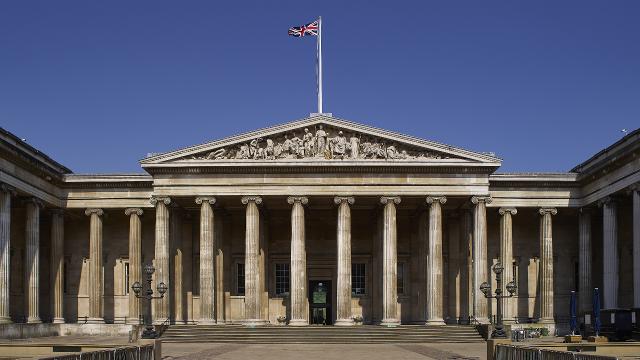
The British Museum houses human history under one roof. There are literally millions of objects spanning two million years of civilization, from Egyptian mummies and the Rosetta Stone to Parthenon sculptures and Anglo-Saxon treasures. What makes this institution extraordinary isn’t just the collection’s breadth but also its radical accessibility: admission to the permanent galleries remains free, a democratic principle that ensures culture belongs to everyone rather than only those who can afford entry.
The building itself captivates Norman Foster’s Great Court, and the transformation enclosed the museum’s central courtyard with spectacular glass and steel, creating Europe’s largest covered public square where natural light floods limestone and visitors orient themselves before diving into specific wings and centuries. The Egyptian galleries alone could take hours to explore, while the Enlightenment Gallery’s preserved 18th-century library design creates time-travel moments in which historical and contemporary museumgoers occupy the same beautiful space.
Navigating eight million objects requires a strategy. The museum offers highlights tours for first-timers seeking the Rosetta Stone, Lewis Chessmen, and Sutton Hoo treasures, while specific-interest tours dive deep into particular cultures or periods. The Reading Room, where Karl Marx researched Das Kapital, now hosts special exhibitions that complement permanent displays.
The museum’s Bloomsbury location places it among London’s most intellectual neighborhoods, with universities, bookshops, and dignified Georgian squares creating an atmosphere where learning feels natural. Plan at least half a day, though true enthusiasts could return repeatedly without exhausting discoveries. This isn’t just London’s treasure, but whole humanity’s, preserved and shared with characteristic British seriousness about public education.
Credit: Visit London
2. Tower of London
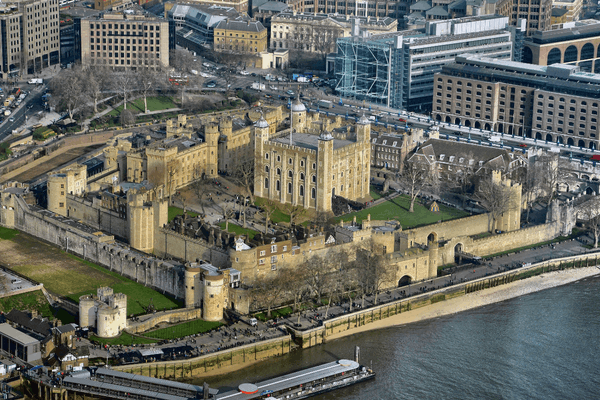
Nearly a thousand years of British history concentrates within the Tower of London’s medieval walls. It’s a UNESCO World Heritage Site that has served as a royal palace, fortress, prison, and execution ground across centuries of dramatic royal intrigue. The Crown Jewels alone justify visits, their extraordinary opulence displayed in vaults where moving walkways ensure everyone glimpses coronation regalia still used by the British monarchy today.
But the Tower offers far more than sparkle. The White Tower, built by William the Conqueror in the 1070s, houses the Royal Armouries collection, including armor and weapons that tell stories of medieval warfare and royal pageantry. The Yeoman Warders (Beefeaters) who guard the Tower lead tours filled with dark humor and historical detail, bringing Anne Boleyn’s execution, the Princes in the Tower mystery, and Guy Fawkes’ interrogation to vivid life through practiced storytelling.
The Tower sits on the north bank of the Thames, where Tower Bridge provides an iconic backdrop and riverside walks extend in both directions. Seven ravens live on the grounds, and legend claims Britain will fall if they ever leave, so their wings are carefully clipped and their comfort ensured. Watching them hop among tourists creates surreal moments where medieval superstition persists in contemporary London.
Crowds intensify at midday, making early-morning or late-afternoon visits more pleasant for viewing the Crown Jewels without extensive queues. Audio guides provide additional context beyond Beefeater tours, and special exhibitions explore specific periods or themes in depth. This is essential London, where history isn’t merely preserved but remains viscerally present in stone walls that have witnessed nearly everything.
Credit: Wikipedia
3. Westminster Abbey
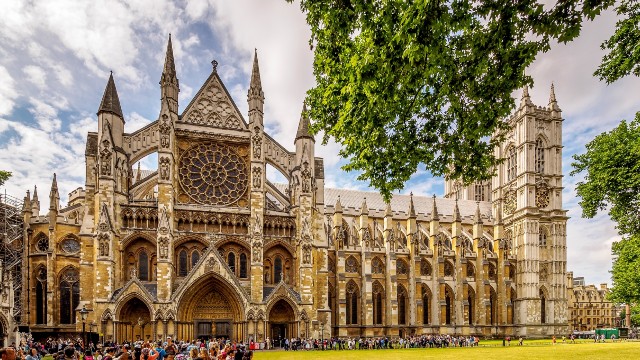
Westminster Abbey transcends its function as a working church to become Britain’s national stage. It’s the coronation site for every monarch since William the Conqueror, the wedding venue for princes and princesses, and the final resting place for kings, queens, poets, scientists, and statesmen whose contributions shaped the nation. Walking these aisles means treading where nearly every significant British ceremony has unfolded for almost a millennium.
The architecture alone stuns where Gothic vaulting soars overhead, medieval stained glass filters colored light across stone floors worn smooth by centuries of footsteps, and the sheer scale creates that particular sense of insignificance-made-sacred that great cathedrals provide. The Coronation Chair, used for every coronation since 1308, sits in St. George’s Chapel is built from weathered oak that has held nearly forty monarchs as they received their crowns.
Poets’ Corner gathers literary giants such as Shakespeare, Dickens, Austen, Brontë sisters, Tennyson, and Eliot. Some are buried here, others commemorated through monuments that recognize their contributions to English letters. Scientists rest nearby: Darwin, Newton, Hawking. The Lady Chapel’s fan-vaulted ceiling represents perpendicular Gothic at its finest, while the Chapter House preserves medieval floor tiles untouched since the 13th century.
The Abbey functions as a living church, with daily services open to all. Attending Evensong provides free entry and the opportunity to hear the choir whose voices have echoed here for generations. Self-guided audio tours explain the Abbey’s layers of history, though the building’s beauty speaks for itself. This is where British pageantry, spirituality, and national identity converge in stone and ceremony.
Credit: Visit London
4. The Tate Modern
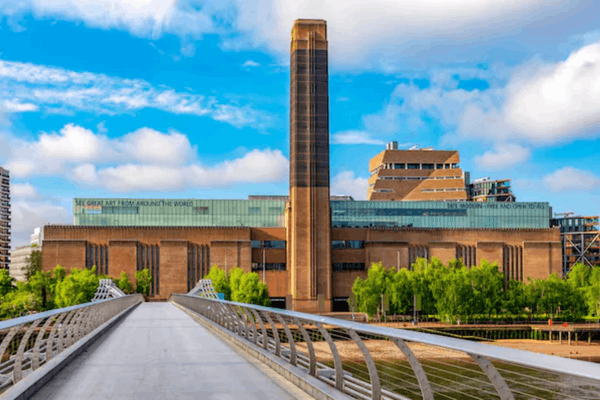
Housed in the monumental Bankside Power Station, Tate Modern transformed London’s contemporary art landscape when it opened in 2000, converting Giles Gilbert Scott’s industrial cathedral into Britain’s national museum of modern and contemporary art. The Turbine Hall, a vast central space that once housed electricity generators, now hosts large-scale installations that challenge, provoke, and occasionally delight visitors as they cross its expanse.
The permanent collection spans movements that define modern art: Surrealism, Abstract Expressionism, Pop Art, Minimalism, and contemporary work that continues pushing boundaries. Rothko’s Seagram Murals occupy a dedicated room where contemplative viewing feels almost spiritual. Warhol, Hockney, Bourgeois, Picasso: the roster reads like art history’s greatest hits, yet curators arrange works thematically rather than chronologically, creating unexpected connections across periods and movements.
The building’s tenth-floor viewing terrace provides stunning Thames views toward St. Paul’s Cathedral and the City. It’s free to access and particularly magical at sunset when London’s skyline glows golden. The Switch House extension, opened in 2016, added more gallery space and additional viewpoints, ensuring Tate Modern continues evolving alongside the art it displays.
Free admission to permanent collections makes world-class contemporary art accessible to everyone, though special exhibitions (ticketed) often showcase major retrospectives or cutting-edge work. The Southbank location places you among theaters, markets, and riverside walks. It’s an arts district where culture saturates every corner. Tate Modern proves that London’s museums extend far beyond dusty antiquities into living, breathing engagement with contemporary creativity.
Credit: The Telegraph
5. Hyde Park and Kensington Gardens
London’s most famous royal park, Hyde Park, sprawls across 350 acres of urban green space where Londoners and visitors alike escape the city’s intensity without leaving its center. The Serpentine Lake invites boating in summer, while the Diana Princess of Wales Memorial Fountain creates gentle water features where children splash, and adults contemplate a design that honors the People’s Princess through fluid accessibility.
Speakers’ Corner, established in 1872, continues its tradition of free speech. Every Sunday, anyone can stand on a soapbox and address whoever stops to listen, fostering that particular British tolerance for public discourse, regardless of viewpoint. The tradition persists as a living reminder of democratic principles, even if smartphones and social media have somewhat diminished the crowds these impromptu orators once drew.
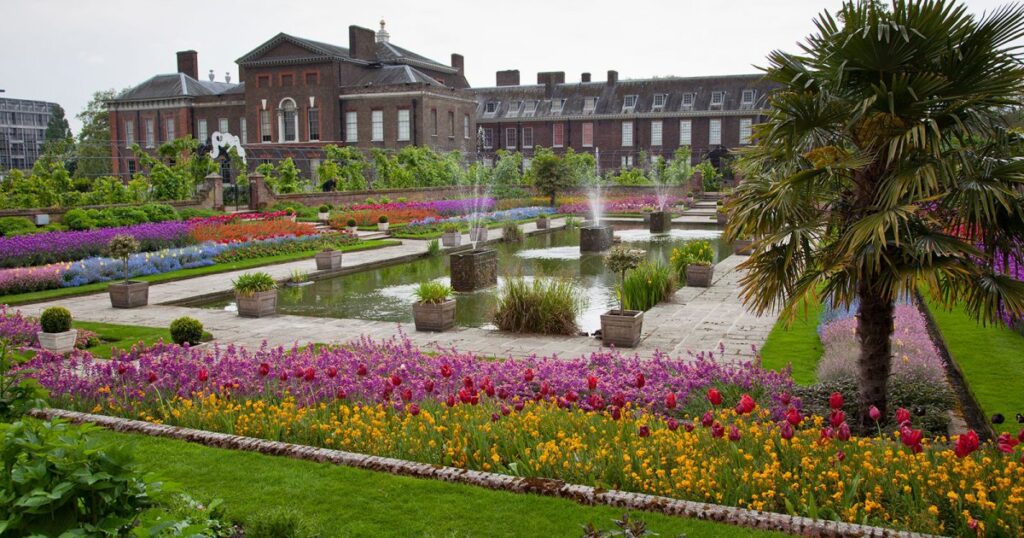
Kensington Gardens flows seamlessly from Hyde Park’s western edge, technically a separate park but feeling like a natural continuation. The Albert Memorial’s Gothic extravagance honors Queen Victoria’s beloved husband, while Kensington Palace provides a glimpse into royal life past and present. Princess Diana lived here too, as do current royals who maintain private apartments within its historic walls.
Summer brings open-air concerts to Hyde Park’s expanses, while autumn transforms the parks into a carpet of russet and gold leaves that Londoners walk through with almost religious devotion to seasonal beauty. Winter offers that particular pleasure of crisp walks followed by warm pub lunches. These are parks for all seasons, all moods, all purposes. You’ll find everything from vigorous jogging to gentle ambling, from solitary contemplation to family picnics spread across grass where sheep once grazed for royal consumption.
Credit: MyWoWo
6. The West End
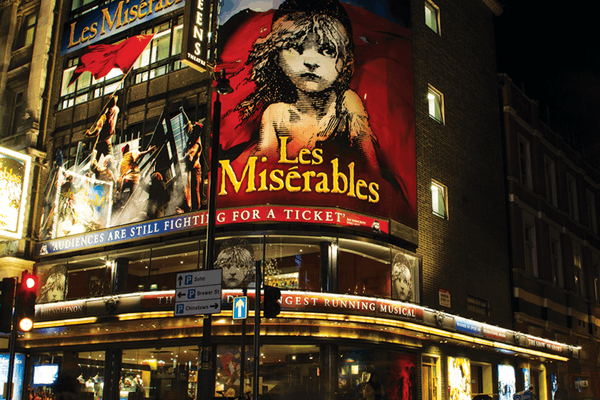
London’s West End rivals Broadway for theatrical excellence, packing world-class productions into historic theaters that line streets around Leicester Square, Covent Garden, and Soho. On any given night, dozens of shows unfold with long-running musicals like Les Misérables and The Phantom of the Opera. New productions transferring from acclaimed runs, innovative fringe work graduating to mainstream success, and Shakespeare performed in venues where his contemporaries once tread the boards.
The TKTS booth in Leicester Square offers same-day discounted tickets, making West End experiences more accessible than full-price bookings suggest. Shows range from family-friendly spectacles to intimate dramas, from jukebox musicals built around familiar songs to avant-garde productions that challenge theatrical conventions. The diversity ensures every taste finds satisfaction, whether you seek familiar comfort or adventurous newness.
The theaters themselves carry stories. Many survived the Blitz, some date to Victorian or Edwardian eras, and their gilded interiors create an atmosphere where theater feels like an occasion rather than mere entertainment. Interval drinks in ornate bars, programs purchased as souvenirs, that particular thrill when house lights dim, and the curtain rises, the West End delivers theatrical magic that transcends any single production’s quality.
The surrounding neighborhoods reward pre-show and post-show exploration. Covent Garden’s street performers entertain crowds, Soho’s restaurants serve every cuisine imaginable, and historic pubs offer perfect spots for debating what you’ve just witnessed. Theater isn’t just what happens on stage but the entire ritual of dressing up, traveling into town, and participating in London’s living cultural tradition.
Credit: Official London Theatre
7. Borough Market
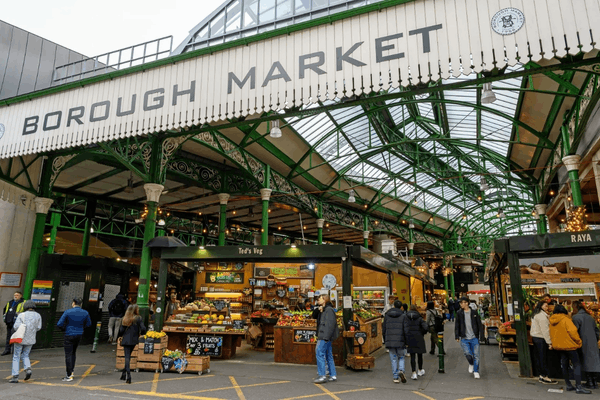
Borough Market, tucked beneath Victorian railway arches near London Bridge, claims status as the city’s oldest food market. Trading has occurred on this site for over a thousand years, though the current covered market dates to the 18th century. Today, it represents London’s food culture at its most vibrant: artisan producers, international cuisines, fresh ingredients, and that particularly British enthusiasm for quality food served without pretension.
Wandering the market’s maze of stalls and permanent shops creates sensory overload with the smell of fresh bread from bakeries, cheese samples from Neal’s Yard Dairy, chorizo sizzling for lunch crowds, coffee roasting at Monmouth, and everywhere the cheerful chaos of vendors calling out specials and shoppers debating purchases. Thursday through Saturday sees the market at its busiest, though Wednesday offers quieter browsing for those who prefer less intensity.
The food spans British specialties and global imports: Scotch eggs from Ginger Pig, oysters from Richard Haward’s, Ethiopian stews from Kappacasein, Spanish jamón, Italian truffle products, and countless other treasures gathered from across Britain and beyond. Lunch can be assembled from multiple stalls. A pork pie here, cheese there, fresh juice from another vendor or purchased as a complete meal from any number of food stands serving cuisine that changes seasonally.
The market’s location places it among Southwark’s cultural attractions. Tate Modern, Shakespeare’s Globe, and riverside walks all sit nearby. Many visitors combine market browsing with broader exploration of the South Bank, creating days that feed both the stomach and the cultural appetite. Borough Market proves that London’s food scene extends far beyond tired stereotypes into genuine enthusiasm for ingredients, preparation, and the simple pleasure of eating well.
Credit: Sotheby’s
8. St. Paul’s Cathedral
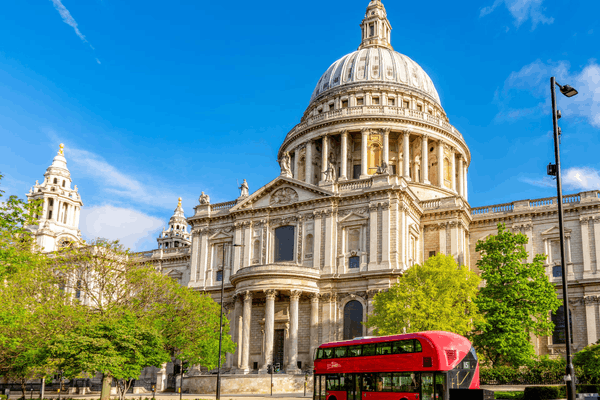
St. Paul’s Cathedral rises above the City of London, its distinctive dome having defined the skyline since Christopher Wren completed construction in 1710. This is a working cathedral and architectural masterpiece equally. Its services continue daily while visitors climb to the Whispering Gallery, where whispers travel across the dome’s circumference with eerie clarity, and higher still to exterior galleries offering panoramic city views.
The interior stuns through classical restraint rather than Gothic excess. Wren’s Protestant sensibilities created spaciousness and light, with decoration serving architecture rather than overwhelming it. The mosaics, added in Victorian times, bring color without diminishing the original vision. Lord Nelson and the Duke of Wellington rest in the crypt, alongside Wren himself, who was buried in the cathedral he designed with the epitaph “If you seek his monument, look around you.”
Climbing to the galleries requires navigating 528 steps, a journey that rewards those willing to make the effort with increasingly spectacular views. The Golden Gallery, at the dome’s apex, offers 360-degree panoramas of London, where the Thames winds through old and new neighborhoods, where medieval street patterns collide with contemporary towers, and where the city reveals its extraordinary density and diversity.
St. Paul’s survived the Blitz – Herbert Mason’s famous photograph shows the cathedral rising through smoke and flames, a symbol of British resilience that sealed its place in national consciousness. Today, it continues to serve as a site for state occasions, royal celebrations, and simple Sunday worship for those who attend services rather than sightsee. This duality, working church and tourist attraction, creates fascinating tension that St. Paul’s navigates with practiced grace.
Credit: The London Pass
9. Buckingham Palace
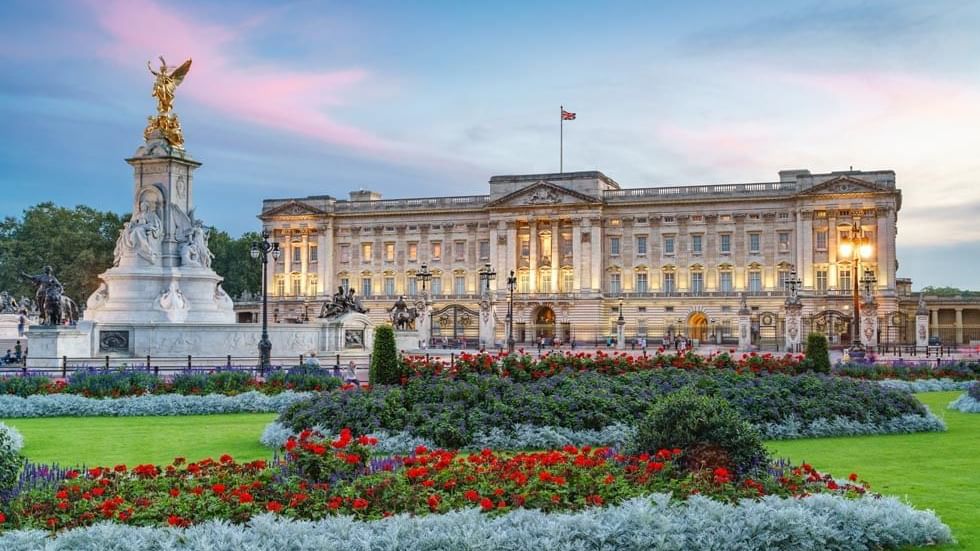
Buckingham Palace functions as both a working royal residence and an administrative headquarters, making it unique among European palaces open to visitors. This isn’t preserved history but a living monarchy continuing traditions that stretch back generations. The State Rooms open to the public during the summer months (late July through September), offering rare glimpses into opulent spaces where the Queen receives guests, hosts state banquets, and conducts official business.
The Changing of the Guard ceremony unfolds daily at 11:00 during summer and alternate days in winter, drawing crowds who gather at the palace gates to watch scarlet-coated guards march with military precision, accompanied by regimental bands. The ceremony embodies that British combination of pageantry and practical defense that makes even routine activities feel theatrical. Arriving early secures better viewing positions, though the spectacle is large enough that most find satisfying vantage points.
The State Rooms themselves drip with royal grandeur and feature gilded furniture, priceless art from the Royal Collection (Rembrandt, Vermeer, Canaletto), and decorative schemes ranging from Georgian restraint to Victorian exuberance. The Throne Room, Picture Gallery, and Ballroom create progression through increasingly impressive spaces that culminate in gardens designed by Capability Brown. 42 acres of private green space that hosts royal garden parties where thousands gather for cucumber sandwiches and glimpses of royalty.
The palace sits at the end of The Mall, that ceremonial route where state processions travel between Trafalgar Square and the royal residence. Green Park and St. James’s Park flank the approach, creating a green corridor through central London that honors the capital’s commitment to accessible parkland. Buckingham Palace represents modern monarchy as it’s a working institution, a tourist attraction, and a symbol of British identity, condensed into Portland stone and protocol all in one.
Credit: The Londoner
10. The National Gallery
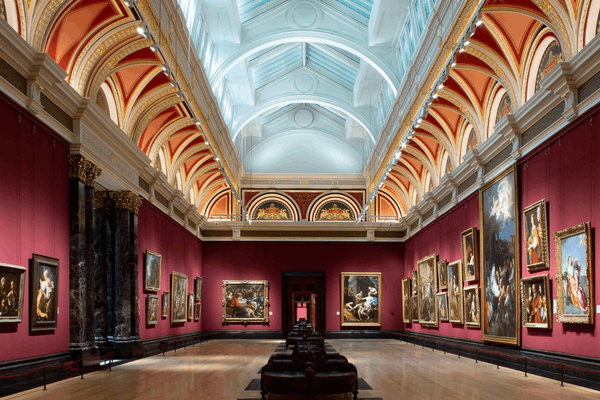
The National Gallery occupies the north side of Trafalgar Square, housing one of the world’s greatest collections of European painting from 1250 to 1900. Like the British Museum, admission to permanent galleries remains free – a democratic principle ensuring art access regardless of economic circumstance. The collection spans the Italian Renaissance, the Dutch Golden Age, French Impressionism, and British masters, creating a visual journey through the evolution of Western art over six centuries.
Van Gogh’s Sunflowers and Turner’s The Fighting Temeraire rank among the most beloved works, though thousands of paintings reward slower, deeper viewing. The Sainsbury Wing houses early Renaissance treasures such as Leonardo’s Virgin of the Rocks, Botticelli’s Venus and Mars, and Uccello’s Battle of San Romano, which are displayed in galleries designed to honor both art and the viewer experience through natural lighting and contemplative spaces.
The gallery’s central location makes it accessible and easy to combine with other Trafalgar Square attractions. The building itself, designed by William Wilkins, represents Greek Revival architecture at its most confident, creating a temple-like approach that signals the cultural treasures within. Temporary exhibitions explore specific artists, movements, or themes, though the permanent collection alone could occupy multiple visits without exhausting its riches.
Art talks, workshops, and late openings extend the gallery’s accessibility beyond passive viewing into active engagement. The National Dining Rooms provide elegant spots for breaks between gallery wings, while the shop stocks excellent art books and reproductions. This is London’s commitment to cultural democracy made manifest. It’s world-class art freely available to anyone willing to climb the steps and walk through doors.
Credit: National Gallery, London
11. Covent Garden
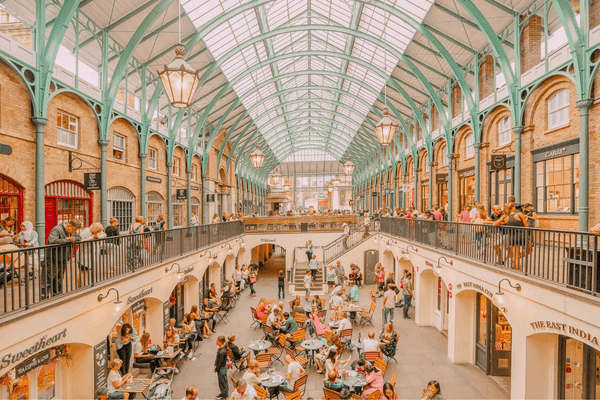
Covent Garden hums with energy, blending high culture and street performance, luxury shopping and casual browsing, fine dining and quick bites into a neighborhood that rewards wandering without a specific destination. The covered market building was originally a wholesale fruit and vegetable market serving all of London, but now houses boutiques, cafés, and artisan shops beneath Victorian iron-and-glass architecture that creates a light-filled space where weather becomes irrelevant.
Street performers claim pitches around the piazza, entertaining crowds with juggling, acrobatics, music, and magic that range from sublime to charmingly amateurish. The performances create a festival atmosphere even on ordinary weekdays, drawing visitors into circles that form around musicians and entertainers whose livelihoods depend on donations freely given. This tradition stretches back centuries. Covent Garden has always been London’s public square for spontaneous entertainment.
The Royal Opera House anchors the district’s cultural credentials, presenting world-class opera and ballet in one of the world’s most beautiful theaters. Neal’s Yard, tucked into neighborhood corners, brings countercultural charm with its colorful buildings housing alternative health shops, organic cafés, and that particular London tendency toward the bohemian that persists amid gentrification.
The surrounding streets reward exploration. Seven Dials’ radiating streets converge at pillar-marked intersections, while Neal Street and Monmouth Street offer independent shops that resist chain-store homogeneity. Covent Garden works for all weathers, all moods, all budgets, from window shopping luxury boutiques to nursing a single coffee while watching street life unfold, from formal opera to impromptu performances that cost nothing but attention.
Credit: Hand Luggage Only – Travel, Food And Photography Blog
12. Greenwich
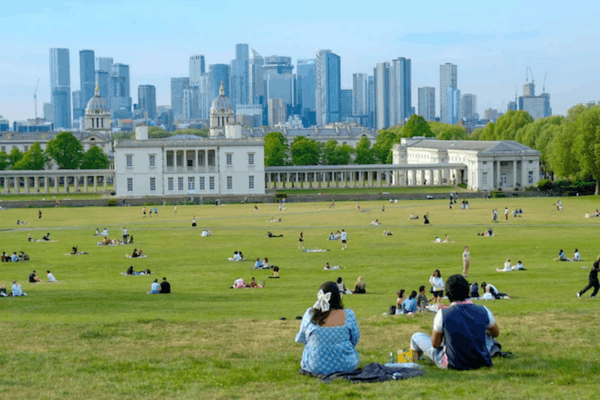
Greenwich deserves full-day excursions, this UNESCO World Heritage Site on the Thames’s south bank packing maritime history, royal connections, astronomical significance, and parkland views into a neighborhood that feels distinctly separate from central London’s intensity. The Thames Clipper riverboat from Westminster provides a scenic approach, delivering passengers to the historic riverside where Cutty Sark, the world’s sole surviving tea clipper, sits in dry dock beneath a dramatic glass canopy.
The Royal Observatory, perched atop Greenwich Park’s hill, marks the Prime Meridian at longitude zero degrees, the line dividing Earth’s eastern and western hemispheres. Standing with feet on either side creates that tourist-favorite photo opportunity, though the Observatory offers far more: Harrison’s revolutionary maritime chronometers, historic telescopes, and planetarium shows that explain our place among stars.
The Old Royal Naval College, designed by Christopher Wren, ranks among Britain’s most spectacular architectural achievements. The Painted Hall alone justifies visits, its baroque ceiling covering nearly 40,000 square feet with allegorical scenes painted by James Thornhill over nearly two decades. The building served as a hospital for injured seamen, then Royal Naval College, and now opens to the public as a monument to British maritime power and artistic ambition.
Greenwich Park provides that classic London pleasure: manicured gardens with wild edges, hill-top views across the Thames toward Canary Wharf’s towers, and deer that graze obliviously among visitors. Greenwich Market offers crafts, antiques, and street food, while neighborhood pubs and restaurants create a village atmosphere where maritime history feels present rather than merely preserved. This is London beyond the obvious, richly rewarding those willing to venture beyond Zone 1.
Credit: The Telegraph
Conclusion
London’s best places reveal a city that has spent two millennia perfecting the art of layering. Roman foundations beneath medieval churches, Victorian markets within contemporary cultural districts, royal traditions coexisting with cutting-edge innovation. From the British Museum’s free access to human history to Borough Market’s vibrant food culture, from Westminster Abbey’s coronation chair to Tate Modern’s industrial cathedral of contemporary art, these experiences offer windows into what makes London endlessly compelling.
Whether you seek iconic landmarks or hidden corners, cultural treasures or simple pleasures like parkland picnics and riverside walks, London delivers with generosity born from centuries of welcoming the world. Each attraction represents not just a thing to see but also an invitation into stories, traditions, and ongoing conversations about art, power, identity, and beauty that continue to shape this remarkable capital.
If you’d like to explore London with guidance that goes beyond guidebook descriptions, discover insider perspectives, understand historical context, and access experiences that transform sightseeing into genuine cultural immersion, consider our private London experiences crafted to reveal the city with elegance, local knowledge, and moments that make every visit unforgettable.
FAQ
What are the top 6 places to visit in London?
The top six places to visit in London are Big Ben and the Houses of Parliament, the Tower of London, Buckingham Palace, the London Eye, Tower Bridge, and the British Museum. These iconic landmarks highlight London’s royal history, architecture, skyline views, and cultural heritage.
What should we not miss in London?
Don’t miss the Changing of the Guard, a West End theatre show, Camden Market, a walk along the South Bank, and panoramic views from Sky Garden. These experiences combine royal tradition, culture, food, and vibrant city atmosphere in one unforgettable trip.
What is the prettiest area in London?
Notting Hill is often considered the prettiest area in London thanks to its pastel houses and charming streets. Other beautiful areas include Greenwich, Hampstead, Covent Garden, and Kensington, known for their parks, historic architecture, and picturesque neighbourhoods.
Where to go in London for first timers?
First-time visitors should focus on Westminster, Trafalgar Square, St Paul’s Cathedral, Piccadilly Circus, and the South Bank. This central area offers iconic landmarks, museums, river views, and easy access to major attractions, making it a perfect introduction to London.