“To eat well in England, you should have breakfast three times a day.” And W. Somerset Maugham wasn’t wrong.
The traditional English breakfast isn’t just a meal. It’s a cultural monument, plated. Rich, bold, and unapologetically filling, it’s the kind of dish that doesn’t whisper politely, while arriving sizzling.
This isn’t an everyday kind of breakfast, though some Brits might disagree. It’s the sort of experience that marks a lazy Sunday, a countryside inn, or a city café that knows its beans from its blood pudding. And it’s been around for longer than you think. The roots of the “Full English” go back centuries, and while the ingredients may evolve, the ritual remains sacred.
This guide breaks down every key element of the English breakfast, from the crunchy-edged bacon to the often-debated grilled tomato, and gives you the cultural context that makes it more than just food. Whether you’re looking to recreate it at home or simply want to understand why it deserves a spot on the culinary stage, you’re in the right place.
What’s in a Full English Breakfast?
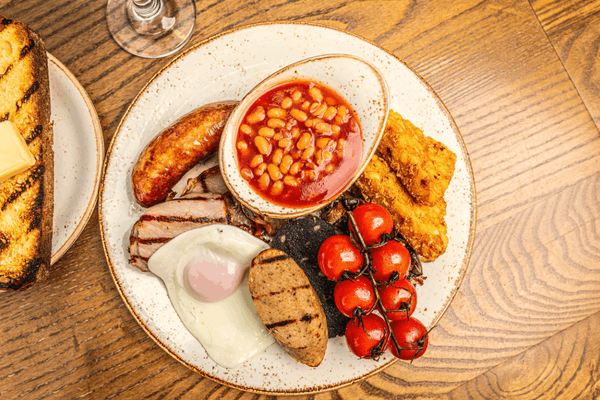
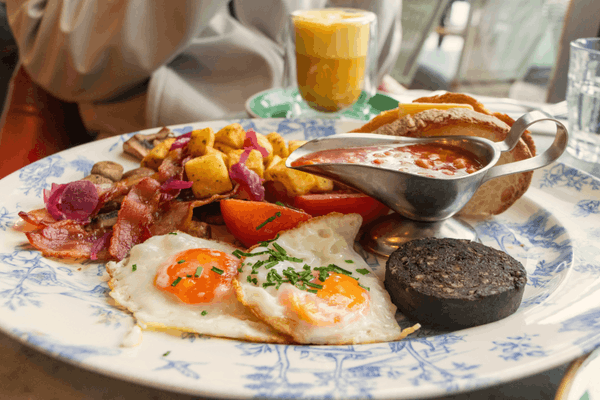
Let’s start with the basics. A traditional English breakfast, sometimes called a “fry-up”, is not a one-size-fits-all situation, but it follows a reliable template. It’s hearty, hot, and typically includes all of the following:
- Back bacon
- Sausages
- Eggs (fried is standard)
- Baked beans
- Grilled tomatoes
- Fried mushrooms
- Toast or fried bread
- Black pudding (yes, it’s optional, but it’s very traditional)
Some regional variations swap or add items like oatcakes in Staffordshire or bubble and squeak in London. But the backbone of the dish remains proudly unpretentious and undeniably filling.
Credit: Nima Naseri
Ingredient Breakdown: Tradition on a Plate
Bacon
In the UK, it’s back bacon, not the streaky American version. It’s meatier, leaner, and pan-fried until golden at the edges but still tender in the middle. Quality matters here. Get a fresh butcher’s cut if you can, not vacuum-packed.
Sausages
Cumberland or Lincolnshire are typical. Herby, meaty, and just fatty enough to feel indulgent. Grill or pan-fry, but don’t rush them. A good sausage deserves time.
Eggs
Fried sunny-side up is classic, but scrambled or poached is fine if you’re being controversial. Whatever you do, the yolk should still run.
Beans
We’re talking Heinz baked beans in tomato sauce. Straight from the tin. Don’t mess with them. They’re perfect as is and need no elevation.
Tomatoes
Halved and grilled or pan-seared. The slight char balances out the fat on your plate and adds colour. Don’t skip them.
Mushrooms
Fried until golden and just a little crispy at the edges. Add thyme or butter if you want to pretend you’re a food stylist.
Toast or Fried Bread
Toast keeps it respectable. Fried bread says “no regrets.” Choose your fighter.
Black Pudding
Polarising? Maybe. But it’s a cornerstone of tradition. Slice and fry until the edges are crisp. It’s rich, earthy, and adds real depth to the dish.
How to Assemble the Perfect Full English
The goal isn’t just flavour. It’s a balance. You want textures, temperatures, and tastes that contrast and complement. Here’s how to layer your plate like a pro:
- Plate the toast or fried bread first, as it’s your foundation.
- Eggs go centre stage.
- Bacon and sausage hug one side, beans the other.
- Tomatoes and mushrooms fill the gaps.
- Crown it with a crispy round of black pudding.
Serve with a cup of strong English breakfast tea, or if you must, coffee. Orange juice? You’re forgiven. Barely.
Beyond the Plate: Cultural Origins
The English breakfast dates back to the early 14th century, when the landed gentry believed breakfast should reflect status, season, and hospitality. By the Victorian era, it had evolved into a more democratic ritual, served in hotels, pubs, and homes across Britain.
It’s a symbol of British identity that survives food fads and health trends, resisting avocado toast with quiet, confident charm. Today, it’s not an everyday meal. It’s an experience. A deliberate indulgence. A full stop before you face the day.
The Art of a Slow Morning
Part of the beauty of a full English breakfast is how it forces you to slow down. You don’t rush a fry-up. You sit. You eat. You sip your tea. It’s a morning ritual that gently reminds you that not everything should be done in a hurry. Not meals. Not travel. Not life.
And if you find yourself lingering over breakfast in a London café or a countryside inn, that’s the point. That’s the charm. That’s the culture baked right into the recipe.
Credit: Gabrielle Cepella
Conclusion
The English breakfast is traditionally served hot. It’s not trying to be healthy. It’s trying to be memorable. And it usually is.
This isn’t just a recipe, it’s a window into British identity. One plate, seven-plus ingredients, and a whole lot of history. It speaks of rainy mornings, hungover Sundays, and the kind of comfort food that doesn’t need an explanation. It just needs a proper brew on the side.
Curious to explore the cultural layers behind Britain’s most iconic customs? Join one of our London city tours and experience more than the usual landmarks. We connect the dots between tradition, architecture, and the real stories that bring the city to life, beyond what’s on your plate.
FAQ
What is in a traditional full English breakfast?
A traditional full English breakfast typically includes fried or scrambled eggs, bacon, sausages, baked beans, grilled tomatoes, mushrooms, and toast. Black pudding is often added in many regions. It’s a hearty meal designed to be filling and energy-rich, traditionally eaten in the morning.
What are the five ingredients in the traditional English breakfast?
The five core ingredients of a traditional English breakfast are eggs, bacon, sausages, baked beans, and toast. These essentials form the base of the meal, with optional additions like mushrooms, tomatoes, or black pudding depending on regional preferences and personal taste.
How to make a nice English breakfast?
To make a nice English breakfast, cook high-quality bacon and sausages until golden, fry or scramble fresh eggs, heat baked beans gently, and grill tomatoes or mushrooms. Serve everything hot with buttered toast. Timing is key. Cook items in stages so they’re all ready together.
What is a traditional breakfast in the UK?
Traditional breakfast in the UK includes the full English breakfast, featuring eggs, bacon, sausages, beans, toast, and vegetables. However, lighter options like porridge, cereal, or toast with jam are common on weekdays, while the full breakfast is more popular on weekends or special occasions.