Helsinki transforms throughout the year through festivals that celebrate everything from contemporary art and design to jazz, light installations, and traditional May Day revelry. The Finnish capital’s festival scene reflects Nordic values: accessible culture for all, innovative programming that pushes boundaries, and that particular Finnish ability to create warmth and celebration even during the darkest winter months.
From Flow Festival’s urban cool, attracting international music acts, to Helsinki Festival’s sprawling late-summer arts program, from Lux Helsinki’s winter light installations to Vappu’s springtime chaos, when the entire city picnics in parks, these festivals reveal Helsinki at its most vibrant, creative, and welcoming. Finland’s capital is a city that takes cultural life seriously while refusing to take itself too seriously.
Key Takeaways
- Helsinki hosts year-round festivals celebrating music, arts, design, film, and Finnish traditions
- Many festivals offer free or accessible programming alongside ticketed events
- Summer brings outdoor festivals, taking advantage of Finland’s famous light nights
- Winter festivals embrace darkness through light art and cozy indoor celebrations
- The festival scene balances international acts with strong support for Finnish artists
1. Helsinki Festival
The Nordic countries’ largest multi-arts festival, Helsinki Festival, transforms the city each late August into September with classical music, contemporary dance, theatre, visual arts, and pop concerts across dozens of venues. The program deliberately ranges from free events accessible to all to intimate performances in unusual spaces, creating approximately two weeks where culture saturates every corner of Helsinki.
The festival’s Night of the Arts component sees museums, galleries, and cultural institutions open late with special programming, while the Huvila tent in Kaisaniemi Park hosts outdoor concerts, perfect for late-summer evenings. Recent editions have featured international orchestras such as the Czech Philharmonic, contemporary dance from Taiwan’s Cloud Gate company, and genre-crossing artists like Rufus Wainwright, performing everything from classical requiems to intimate solo shows.
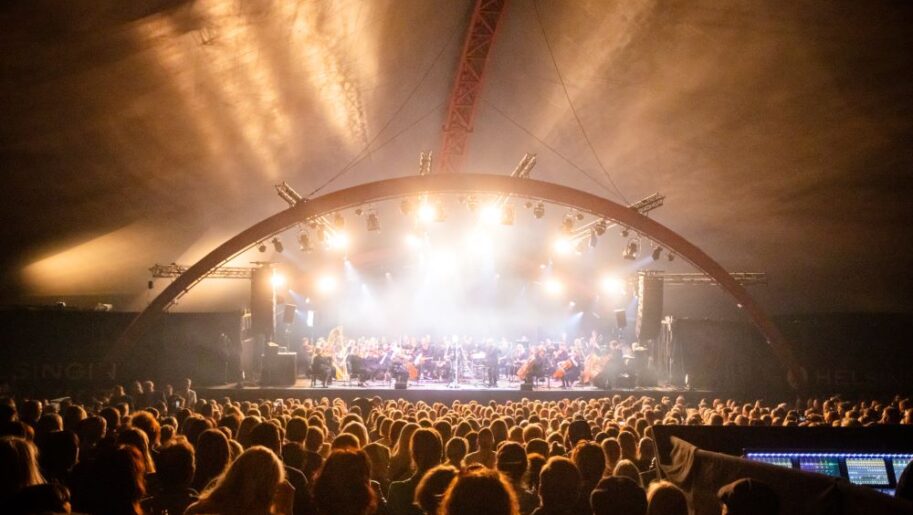
Credit: Helsinki Festival – Finland Festivals
2. Flow Festival
Held annually in August at Suvilahti former power plant, Flow Festival has grown from a local startup to an internationally recognized music and arts event drawing over 80,000 attendees. The industrial setting, with cooling towers, concrete structures, and post-apocalyptic aesthetics, creates a distinctive atmosphere for diverse lineups spanning indie rock, electronic music, hip-hop, and experimental sounds, alongside visual art installations and forward-thinking food culture.
Flow attracts stylish crowds and cutting-edge international acts while maintaining Finnish accessibility and environmental consciousness. The festival pioneered sustainable practices now standard across European festivals. The programming balances headliners with emerging artists, creating opportunities for discovery alongside familiar favorites. This is Helsinki at its most cosmopolitan, where Nordic cool meets global music culture in a uniquely Finnish setting.
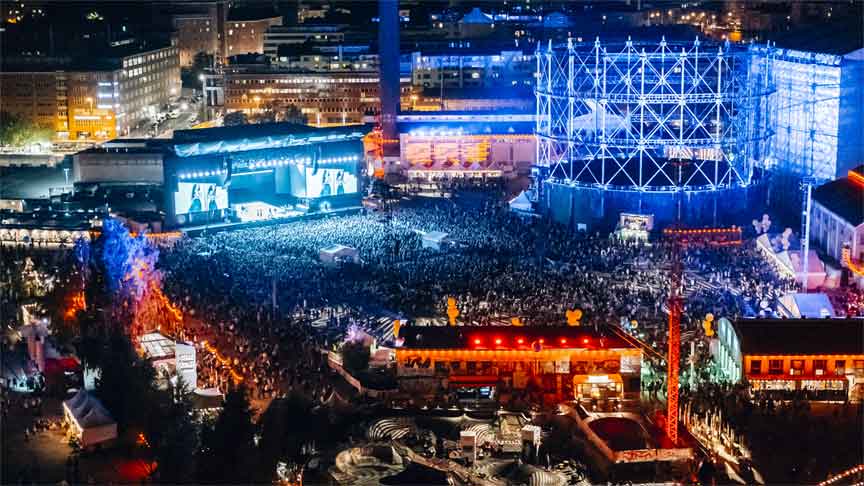
Credit: Flow Festival
3. Lux Helsinki
Each January, Lux Helsinki illuminates the city’s darkest period with spectacular light art installations transforming streets, buildings, and public spaces into outdoor galleries celebrating creativity and technology. Running approximately one week, the free festival draws both locals seeking mid-winter beauty and tourists specifically timing visits to experience Helsinki bathed in artistic light.
The installations range from playful interactive pieces where viewers influence lighting through movement to contemplative works exploring themes of nature, technology, and human connection. Previous editions have seen the cathedral steps transformed into cascading light, Senate Square hosting immersive sound-and-light environments, and side streets revealing unexpected artistic interventions. Lux proves that Finnish winter darkness becomes an opportunity rather than an obstacle when approached with creativity and community spirit.
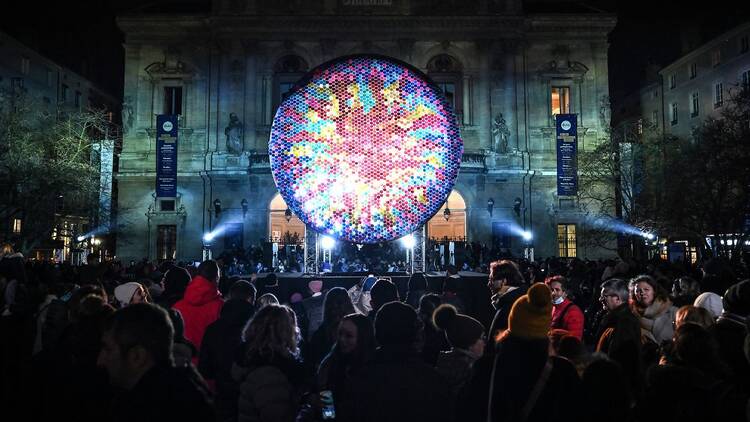
Credit: TimeOut
4. Helsinki Design Week
Since 2005, Helsinki Design Week has anchored September’s cultural calendar as the Nordic region’s largest design festival. The approximately 250 events span exhibitions, workshops, discussions, and open studios across the city, with particular emphasis on discovering previously forgotten or abandoned venues that the festival temporarily activates through design interventions.
Past festivals have occupied the old customs warehouse, former abattoir (now Teurastamo), vintage port warehouses, and the recently renovated Olympic Stadium, proving design’s ability to reimagine urban space. Programming explores everything from sustainable fashion to furniture innovation, from graphic design to urban planning, attracting both industry professionals and design-curious public. Helsinki’s UNESCO City of Design status finds full expression during this week when the entire city becomes a design showcase.
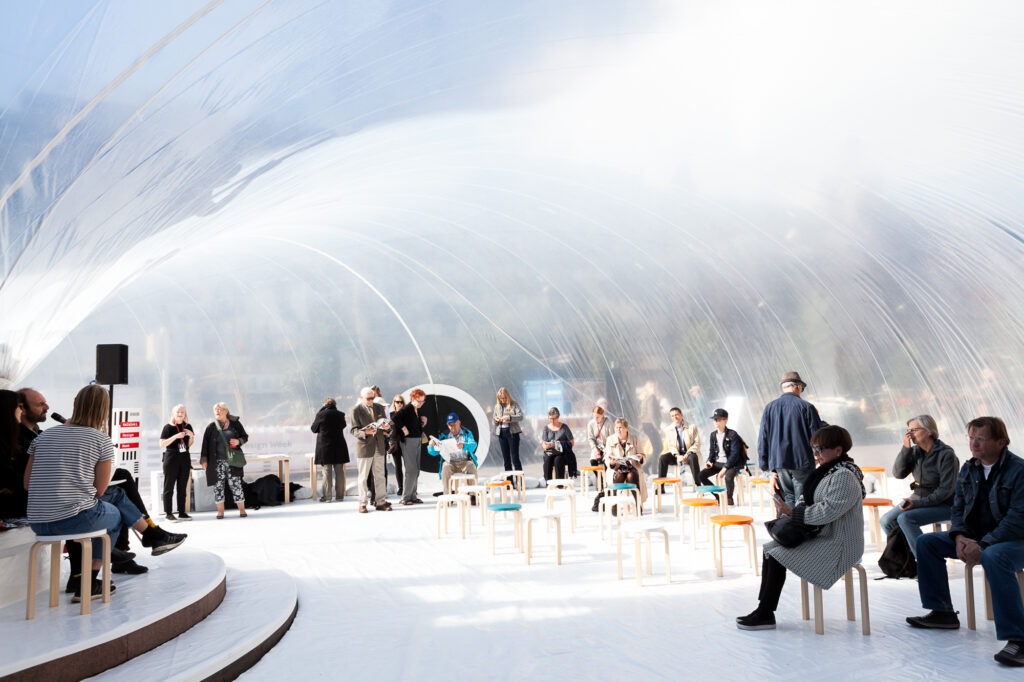
Credit: Helsinki Design Week
5. Vappu (May Day)
Finland’s Vappu celebration on May 1st transforms Helsinki into a nationwide spring party beloved across generations and social classes. What began as a workers’ rights celebration has evolved into an exuberant welcome to spring, where thousands gather in Kaivopuisto Park for traditional picnics featuring sima (homemade fermented drink), munkki (sugary doughnuts), and perunasalaatti (creamy potato salad) alongside champagne and elaborate spreads.
The festivities begin on the evening of April 30th when students don white caps signaling academic achievement, and the city fills with restaurants hosting long celebratory meals. May 1st morning sees families and friend groups claiming park spots early, creating that rare democratic gathering where Helsinki’s entire population seems to converge outdoors, celebrating winter’s end. The atmosphere balances tradition with contemporary energy. Older Finns remember Vappu’s political roots while younger generations embrace pure joyful chaos.
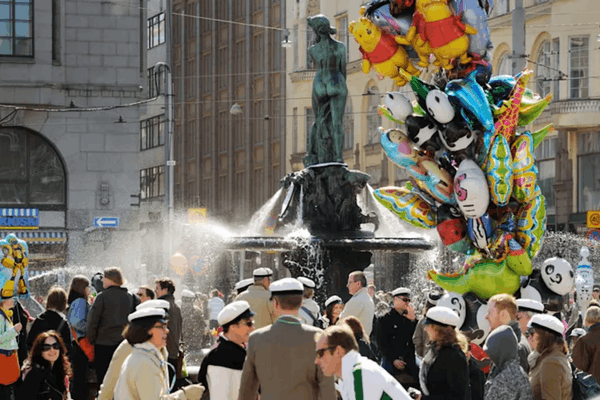
Credit: 50 Degrees North
6. Helsinki International Film Festival (HIFF)
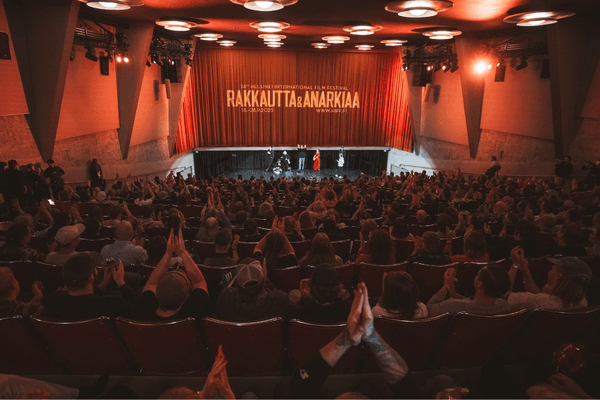
Running annually in September since 1988, HIFF showcases new directorial talent and promotes filmmaking artistry through non-competitive programming that emphasizes discovery over awards. As autumn arrives and Helsinki residents retreat indoors, the festival fills cinemas across the city with international films that many wouldn’t otherwise reach Finnish screens.
The festival utilizes beloved historic cinemas like Riviera in Kallio (where you can book loveseats) and Cinema Orion, one of the city’s oldest establishments, creating an atmosphere where cinema feels like a cultural event rather than mere entertainment. HIFF programming balances international festival-circuit highlights with Finnish premieres and retrospectives that explore specific directors, movements, or national cinemas in depth.
Credit: Cineuropa
7. Baltic Herring Market
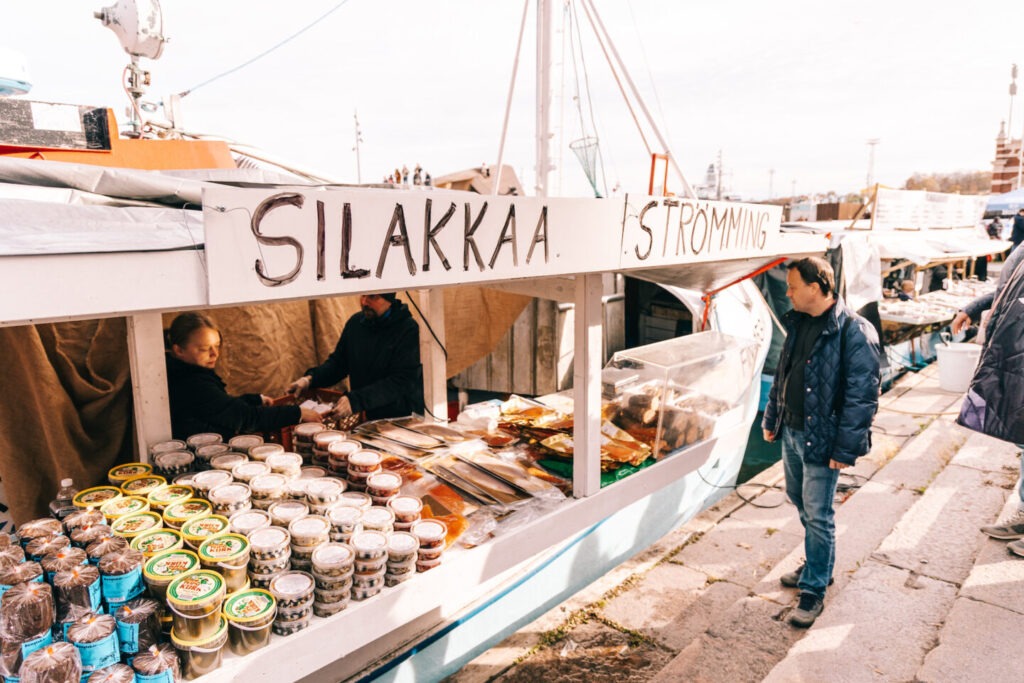
Helsinki’s oldest continuous tradition, dating back to 1743, the Baltic Herring Market unfolds each October at Market Square, where fishermen sell fresh Baltic herring directly from boats moored along the harbor. What began as a practical fish market has evolved into a cultural event celebrating Finnish maritime heritage, traditional foods, and that autumn ritual of stocking up on fish for winter months.
Beyond herring in various preparations like pickled, smoked, or fried, vendors sell traditional crafts, warm clothing, and seasonal produce, creating a marketplace atmosphere that feels genuinely rooted in Finnish life rather than tourist performance. Locals arrive with coolers ready to purchase fish in bulk, while visitors sample herring prepared in various ways, discovering why this humble fish remains a staple of Finnish cuisine.
Credit: Stadin Silakkamarkkinat
8. We Jazz Festival
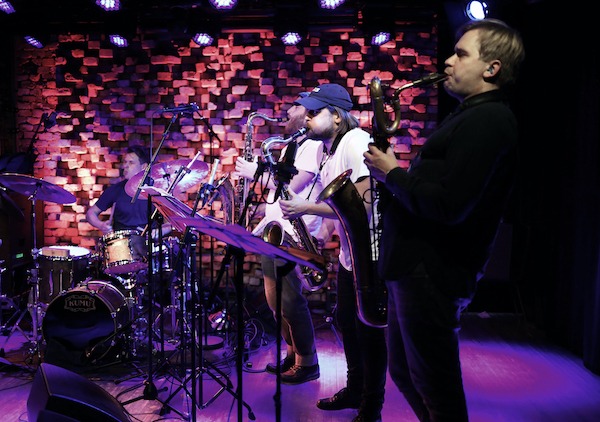
This contemporary jazz festival spans multiple Helsinki venues each winter, typically in December and January, bringing international and Finnish artists to perform jazz that pushes genre boundaries. The programming emphasizes forward-thinking approaches such as experimental sounds, electronic elements, and cross-genre collaborations, while honoring jazz tradition through musicians who understand the rules before breaking them.
The winter timing creates an intimate atmosphere perfect for jazz’s contemplative qualities. Imagine small venues, attentive audiences, and that sense of discovery that defines great jazz experiences. Previous lineups have featured Nordic jazz scene leaders alongside international innovators, creating dialogue between Finnish jazz traditions and global contemporary movements. This is Helsinki’s music scene at its most adventurous yet accessible.
Credit: DownBeat
9. Helsinki Christmas Market
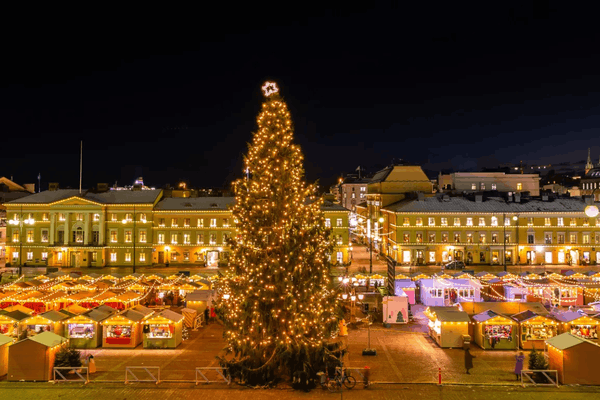
From late November through December, Senate Square hosts Helsinki’s oldest outdoor Christmas market where wooden stalls sell traditional crafts, seasonal foods, glögi (Finnish mulled wine), and gifts beneath the cathedral’s neoclassical grandeur. The market has operated in various forms since the 19th century, creating continuity with Finnish Christmas traditions while adapting to contemporary tastes.
The atmosphere balances commercialism with genuine seasonal warmth. Visit locals shop for handmade gifts while tourists discover Finnish Christmas foods like gingerbread, rice porridge, and various pickled delicacies. Live music, Christmas lights strung across the square, and steam rising from glögi cups create that hygge-adjacent coziness Finns excel at cultivating despite (or because of) winter darkness surrounding the festivities.
Credit: Culture Trekking
10. DocPoint
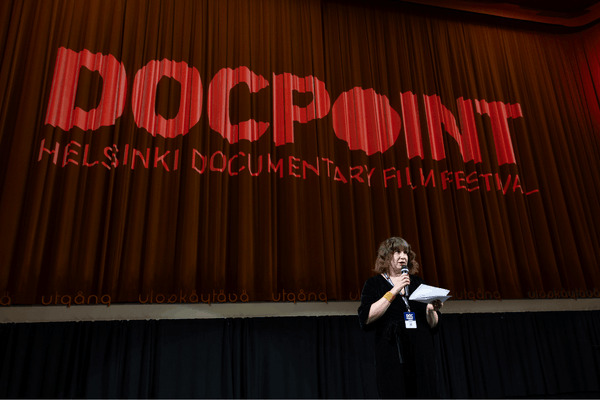
DocPoint, Helsinki’s documentary film festival held each February, showcases international and Finnish documentary filmmaking across multiple city cinemas. The festival champions documentary as an art form rather than merely a journalistic medium, programming works that push creative boundaries while engaging with urgent contemporary issues.
The festival attracts both documentary enthusiasts and broader audiences curious about topics such as environmental crises, social justice, historical reckonings, and personal stories that illuminate larger truths. Director Q&As and panel discussions deepen engagement beyond passive viewing, creating dialogue between filmmakers and audiences around stories that matter. In the darkest winter, DocPoint provides intellectual stimulation and emotional connection through cinema that documents our complex world.
Credit: DocPoint
11. Helsinki Day
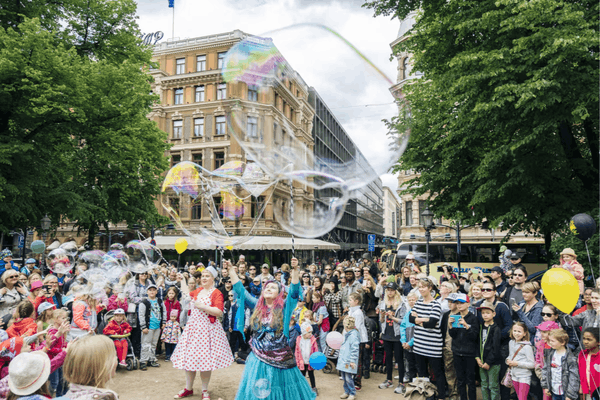
Celebrated annually on June 12th, Helsinki Day marks the city’s official birthday with free events scattered across neighborhoods with concerts, exhibitions, workshops, guided tours, and celebrations that invite residents and visitors to explore Helsinki’s culture, history, and contemporary life without admission charges. The programming deliberately spans from high culture to popular entertainment, ensuring accessibility across interests and ages.
Helsinki Day embodies Finnish egalitarian values in which culture belongs to everyone, celebrations should welcome all, and civic pride is expressed through participation rather than passive observation. The scattered format encourages exploration beyond familiar neighborhoods, revealing Helsinki’s diversity and the distinct characters of different areas. This is the city celebrating itself while inviting everyone to join the party.
Credit: Visit Finland
Conclusion
Helsinki’s festivals reveal a city that refuses to let geography or climate limit cultural ambition, where winter darkness inspires light art installations and summer brightness extends outdoor concerts late into midnight sun hours. From Flow Festival’s urban cool to Baltic Herring Market’s ancient traditions, from Helsinki Festival’s sprawling arts program to Vappu’s democratic spring celebration, these events create rhythm to Helsinki life. They are markers of seasons changing and community gathering around shared cultural experiences.
Whether you seek cutting-edge contemporary art, experimental jazz, documentary cinema, or simply that uniquely Finnish combination of sophistication and accessibility, Helsinki’s festival calendar delivers year-round opportunities for discovery, celebration, and connection. Each festival represents a different facet of what makes Helsinki compelling. Some are innovative yet rooted in tradition, some are international yet proudly Finnish, and some are serious about culture yet playful in presentation.
If you’d like to experience Helsinki’s festivals with guidance that goes beyond ticket purchases, understanding cultural context, discovering hidden festival moments, and connecting with local perspectives that transform attendance into genuine immersion, consider our private Helsinki experiences crafted to reveal the Finnish capital with local insight, thoughtful curation, and access that makes every festival visit unforgettable.
FAQ
What is the biggest festival in Helsinki?
The biggest festival in Helsinki is Helsinki Festival (Helsingin Juhlaviikot), the city’s largest arts event held annually in late summer. It features performances in music, theatre, dance, and visual arts across the city, attracting both local and international audiences.
What are the top 10 festivals?
Top festivals in Helsinki include Helsinki Festival, Flow Festival, Tuska Open Air, Ruisrock, Sideways, Weekend Festival, Lux Helsinki, Vappu celebrations, Helsinki Pride, and Juhannus (Midsummer). These events cover music, arts, culture, and seasonal traditions throughout the year.
What is the festival in Helsinki in July 2026?
One major Helsinki festival in July is the Tuska Open Air Metal Festival, usually held in early July. Other summer events may vary by year, so it’s best to check the official Helsinki events calendar for confirmed dates in 2026.