Edinburgh doesn’t just host festivals, it becomes a festival. Every August, Scotland’s capital transforms into the world’s largest cultural celebration, where church halls become comedy venues, cobblestone streets turn into performance spaces, and the entire city pulses with creative energy that draws millions from across the globe. But Edinburgh’s festival calendar extends far beyond summer, offering year-round celebrations of science, storytelling, film, and Hogmanay revelry that rivals any New Year’s celebration worldwide.
From the legendary Edinburgh Festival Fringe, the planet’s largest arts festival, to the prestigious Edinburgh International Festival showcasing world-class opera and dance, from intimate literary gatherings in the world’s first UNESCO City of Literature to rooftop jazz sessions and fire-lit pagan celebrations, Edinburgh’s festivals reflect a city that has built its identity around creative expression and cultural exchange.
Whether you seek experimental theater that challenges conventions, stand-up comedy from emerging stars and established names, classical music performances of breathtaking virtuosity, or simply the electric atmosphere of a city devoted entirely to celebration, Edinburgh delivers with characteristic Scottish warmth, ambition, and an openness that welcomes everyone into the fold.
Key Takeaways
- Edinburgh hosts 11 major international festivals annually, earning its title as the world’s leading festival city
- August brings multiple festivals simultaneously, creating unparalleled cultural density and creative atmosphere
- The Edinburgh Festival Fringe is the world’s largest arts festival with over 3,800 shows across 300+ venues
- Festivals span all genres: theater, comedy, music, dance, literature, film, visual arts, science, and storytelling
- Many events are free or offer affordable options, making world-class culture accessible to all
1. Edinburgh Festival Fringe
The Edinburgh Festival Fringe stands as the world’s largest arts festival, a claim supported by staggering numbers that barely capture its true impact. In 2025, over 53,000 performances of nearly 3,900 shows took place across 301 venues, drawing artists from 68 countries and selling over 2.6 million tickets. But statistics fail to convey what it feels like to walk Edinburgh’s streets during Fringe, where every corner offers discovery and every hour brings possibility.
What makes the Fringe extraordinary is its open-access philosophy: anyone can perform, anywhere. This democratic approach means church basements host experimental theater, shipping containers become comedy clubs, and historic venues present everything from Shakespearean tragedy to avant-garde dance. The Royal Mile transforms into a living stage where street performers juggle fire, actors distribute flyers for their shows, and buskers create impromptu concerts that rival ticketed events.
Comedy dominates the program, comprising over one-third of shows and launching careers of household names like Robin Williams, Emma Thompson, and Rowan Atkinson. The Edinburgh Comedy Awards, presented annually at the Fringe, can catapult unknown performers into international fame overnight. But theater, dance, circus, cabaret, children’s shows, musicals, spoken word, and physical theater all thrive equally, creating diversity that ensures every taste finds satisfaction.
The Fringe runs from early to late August, overlapping with several other festivals to create Edinburgh’s legendary August atmosphere. The Free Fringe offers hundreds of performances at no cost beyond suggested donations making world-class entertainment accessible regardless of budget. For those seeking the cutting edge of contemporary performance, the unexpected brilliance of emerging talent, or simply the joy of cultural immersion, the Fringe delivers experiences found nowhere else on earth.
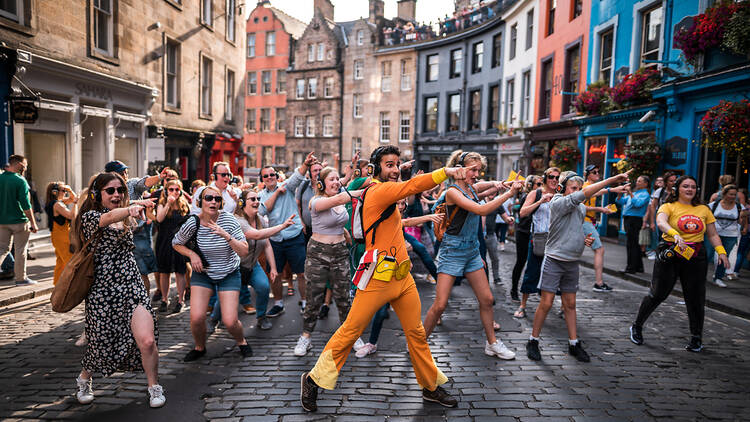
Credit: Edinburgh Festival Fringe 2025
2. Edinburgh International Festival
Founded in 1947 as a celebration of peace through the arts following World War II, the Edinburgh International Festival serves as a curated counterpoint to the Fringe’s open-access chaos. Running from early to late August, this prestigious festival showcases hand-picked companies and artists representing the pinnacle of opera, classical music, theater, and dance from around the world.
Director Nicola Benedetti’s programming emphasizes both virtuosity and accessibility, with tickets starting at just £8 to ensure cultural excellence reaches diverse audiences. The 2025 program explored themes of truth-seeking and transformation through landmark works: Brian Cox starred in the satirical play “Make It Happen” about the 2008 financial crisis, while the eight-hour choral epic “The Veil of the Temple” invited audiences to lose themselves in John Tavener’s transcendent harmonies performed by 250 singers.
International collaborations define the festival’s mission. Scottish National Opera performs alongside visiting companies from Europe, Asia, and the Americas, fostering cultural exchange that fulfills the festival’s founding vision of bringing people together through shared artistic experience. Dance programs feature choreographers like Crystal Pite addressing the climate crisis through movement, while music offerings span baroque orchestras playing period instruments to contemporary composers pushing classical boundaries.
The festival attracts around 500,000 attendees annually to venues across Edinburgh, from the Festival Theatre to the Usher Hall to outdoor spaces transformed for specific productions. For those seeking the highest caliber of performing arts in settings that honor both tradition and innovation, the International Festival delivers with curatorial vision that has maintained its reputation for 78 years and counting.
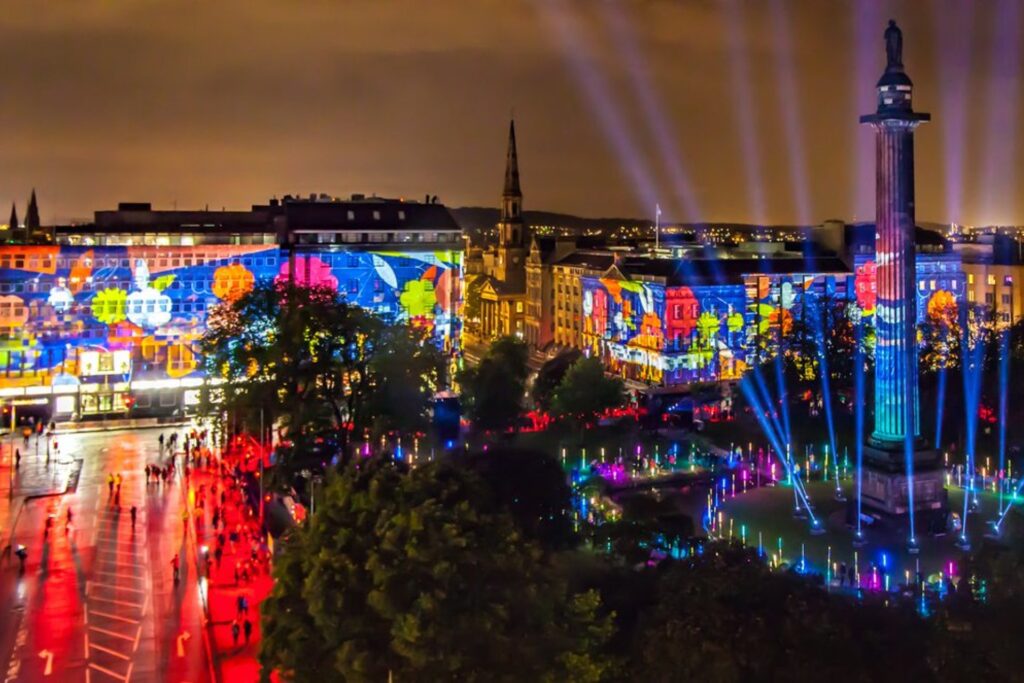
Credit: Edinburgh International Festival 2026
3. The Royal Edinburgh Military Tattoo
Set against the floodlit backdrop of Edinburgh Castle, The Royal Edinburgh Military Tattoo creates one of the most spectacular and moving events in global entertainment. Over 220,000 people experience it live each August, while 100 million watch television broadcasts worldwide – numbers that reflect the Tattoo’s unique combination of military precision, cultural performance, and sheer visual splendor.
The 2025 edition celebrated the Tattoo’s 75th anniversary with “The Heroes Who Made Us,” a program tracing 75 years of music, dance, and precision drill that have defined this extraordinary event. Military bands from around the globe, like pipes and drums, brass sections, or military dancers, perform alongside cultural groups representing diverse traditions, creating a spectacle that transcends nationalism into a celebration of human skill and creativity.
The format remains consistent yet fresh: the Massed Pipes and Drums create that distinctive sound that raises goosebumps, precision drill teams execute maneuvers with breathtaking coordination, and international performers bring their traditions to Edinburgh’s most iconic stage. The lone piper playing from the castle ramparts as night falls has become one of Scotland’s most recognizable images, a moment of stillness amid the program’s energy that never fails to move audiences.
Tickets sell quickly for this limited run (early to late August), and the esplanade seating ensures everyone has clear views of both performances and the castle. The Tattoo proves that tradition and spectacle can coexist beautifully, creating an experience that feels timeless while remaining utterly contemporary in its global embrace and production values.
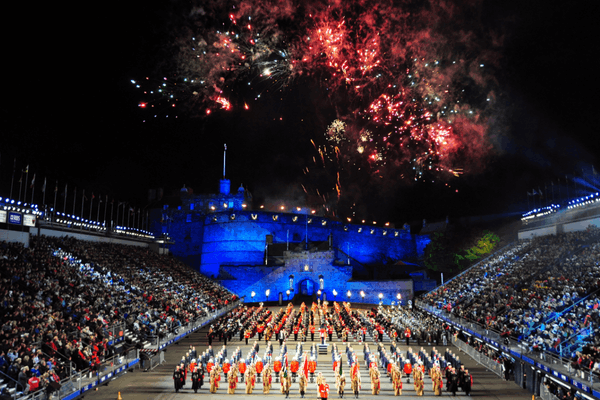
Credit: Wikipedia
4. Edinburgh Art Festival
Founded in 2004, the Edinburgh Art Festival has become the UK’s largest annual visual arts festival, partnering with over 40 galleries and museums across Edinburgh to create a citywide exhibition program throughout August. The 2025 edition featured 82 exhibitions across 45 partner venues exploring themes from queer history to environmental collectivity, political bodies to modern myths.
What distinguishes the Art Festival is its combination of accessibility and ambition. Most exhibitions are free, allowing anyone to engage with contemporary and historic art across Edinburgh’s cultural landscape. Major survey exhibitions of established artists appear alongside emerging talent at pivotal career moments, new commissions for Edinburgh spaces, and experimental works that push the boundaries of what visual art can be.
The festival uses Edinburgh’s diverse architecture brilliantly, where the historic galleries, contemporary art spaces, repurposed buildings, and outdoor installations create varied contexts for experiencing art. A sculpture might occupy a cathedral, sound art might shake historic stonework, or an outdoor installation might transform familiar public space into something strange and revelatory.
For those who find art museums intimidating, the festival format invites exploration without pressure. You can wander from venue to venue, encounter unexpected works, engage deeply or move quickly based on interest. Partner events include artist talks, workshops, and guided tours that deepen understanding without requiring art historical knowledge. The Art Festival proves that visual arts can be as engaging and accessible as performance when presented with thoughtful curation and genuine enthusiasm.
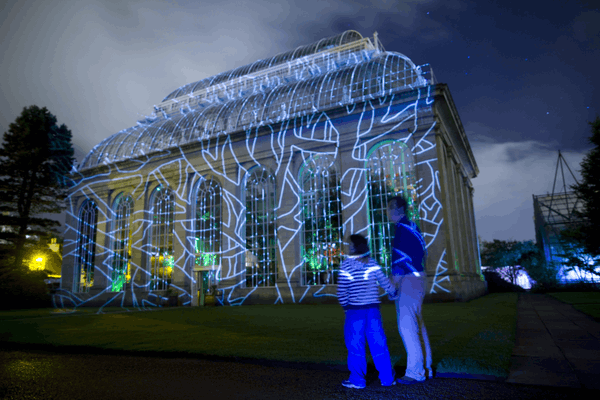
Credit: Edinburgh Art Festival 2026
5. Edinburgh International Book Festival
As befits the world’s first UNESCO City of Literature, the Edinburgh International Book Festival is the world’s largest public celebration of words and ideas. Running mid to late August, the festival welcomes over 900 authors from 47 countries to engage with more than 220,000 attendees through readings, discussions, debates, workshops, and intimate conversations that transform the written word into living dialogue.
The festival site in Charlotte Square Gardens becomes a village of tented venues where literary giants share stages with emerging voices, where children’s authors inspire young readers, where poets perform, and where difficult conversations about politics, society, and culture unfold with nuance and respect. The atmosphere blends intellectual rigor with genuine warmth. This is serious literature made joyful and accessible rather than intimidating.
Programming spans every genre and interest: fiction and nonfiction, poetry and graphic novels, science writing and memoir, political analysis and cookbook launches. Special focus areas highlight underrepresented voices, international perspectives, and urgent contemporary issues. Author signings, bookshop tents, and cafe spaces encourage lingering, browsing, and the serendipitous discoveries that define great bookstores.
For readers seeking direct engagement with writers whose work they admire, for those curious about new voices and perspectives, or for anyone who believes words matter, the Book Festival creates a temporary utopia where literature and conversation reign supreme.
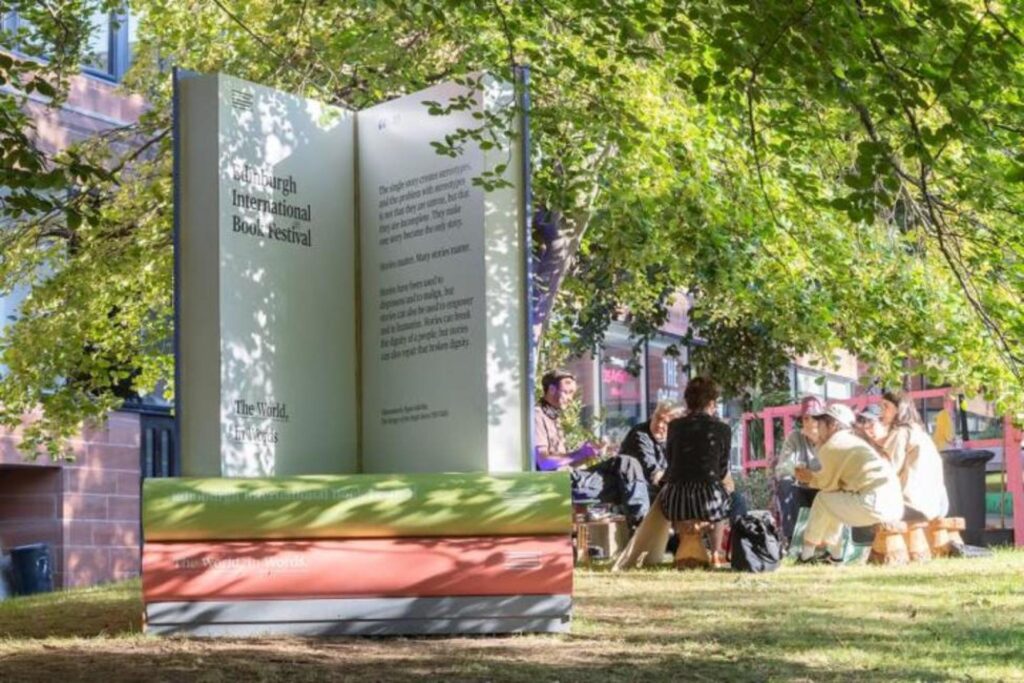
Credit: Edinburgh International Book Festival 2026
6. Edinburgh International Film Festival
The Edinburgh International Film Festival holds the distinction of being the world’s oldest continuously running film festival, established in 1947 alongside the International Festival and Fringe. Running from mid to late August, EIFF focuses on discovering and promoting the best international cinema, with particular attention to new talent, shifts in global filmmaking, and works that challenge conventions.
The festival’s program balances world premieres and UK debuts of films destined for awards season with genuinely experimental work that pushes cinematic boundaries. Retrospectives honor influential directors, while special strands explore specific themes, movements, or national cinemas. Q&A sessions with filmmakers provide insight into creative processes, while the intimate scale (compared to festivals like Cannes) allows genuine access to directors and actors.
Edinburgh’s historic cinemas, such as Filmhouse and Cameo, and festival temporary venues create atmospheric settings for screenings that honor cinema’s theatrical power. Late-night cult classics, family-friendly matinees, and documentary programs ensure a diverse lineup beyond narrative features. The festival’s commitment to accessibility includes captioned screenings, audio description, and programs specifically designed for younger audiences.
For cinephiles seeking work beyond mainstream commercial releases, for those who love film as an art form rather than mere entertainment, EIFF offers curated excellence in Scotland’s most cinematic city.
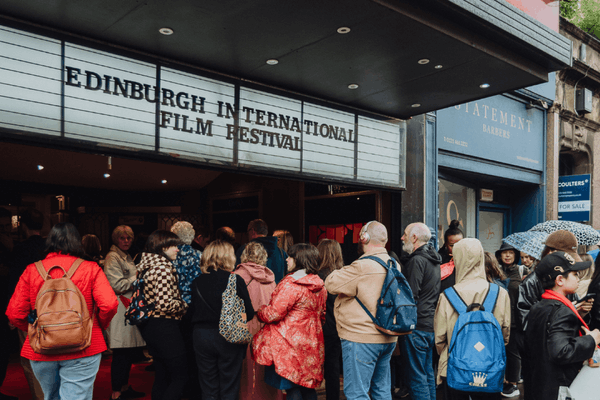
Credit: Edinburgh International Film Festival 2026
7. Edinburgh Jazz & Blues Festival
For over 45 years, the Edinburgh Jazz & Blues Festival has showcased the finest jazz and blues artists over 10 days in mid-July, presenting more than 130 performances that transform Edinburgh into a celebration of improvisation, virtuosity, and soulful expression. The festival balances major international names. Jools Holland and his Rhythm & Blues Orchestra regularly appear, with Scotland’s burgeoning contemporary jazz scene and emerging talent discovering their voices.
The program spans traditional jazz, bebop, fusion, contemporary experimental work, and blues across their various forms, with venues ranging from grand concert halls like Usher Hall to intimate jazz clubs where audiences sit close enough to see musicians’ fingers on their instruments. Free events during the opening weekend, such as Mardi Gras and Carnival celebrations, create the feel-good atmosphere that defines great jazz festivals, bringing music directly to the streets and public spaces.
Special collaborations between international artists and Scottish musicians create unique performances that exist only at this festival, while educational workshops and late-night jam sessions extend the festival’s reach beyond ticketed performances. The diversity ensures accessibility, whether you’re a jazz aficionado or simply curious about the genre, whether you prefer New Orleans brass or Nordic experimental jazz, the festival provides entry points and discoveries.
For those seeking music that swings, soars, and surprises, where technical mastery serves emotional expression, the Jazz & Blues Festival delivers 10 days of unforgettable performances in a city that transforms itself into one vast music venue.
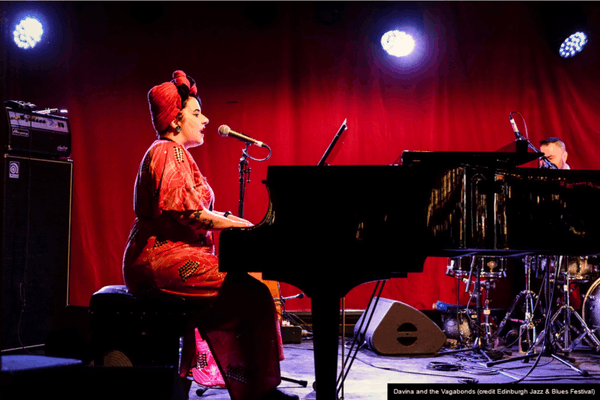
Credit: Edinburgh Jazz & Blues Festival 2026
8. Edinburgh Science Festival
Launched in 1989 as the world’s first science festival, the Edinburgh Science Festival remains the UK’s largest celebration of science and technology. Running for two weeks around Easter (early to mid-April), the festival presents exhibitions, workshops, performances, screenings, and discussions that make science accessible, fun, and thought-provoking for all ages.
The 2025 program explored “Spaceship Earth,” examining challenges of living on a planet with finite resources through the lenses of science fiction and space exploration. Appearances by eminent figures such as Professor Richard Dawkins sit alongside hands-on workshops where children build robots, interactive exhibitions exploring topics from chocolate science to quantum physics, and theatrical performances that dramatize scientific discovery.
Venues across Edinburgh host events for specific age groups and interest levels, from toddler-friendly sensory experiences to adult discussions of cutting-edge research, from school group workshops to family shows that educate and entertain. The festival excels at making complex concepts understandable without dumbing down, respecting audience intelligence while removing barriers to engagement.
For families seeking educational entertainment, for curious adults seeking to understand contemporary science, or for anyone who believes scientific literacy is essential to navigating our complex world, the Science Festival delivers enlightenment wrapped in genuine enjoyment.
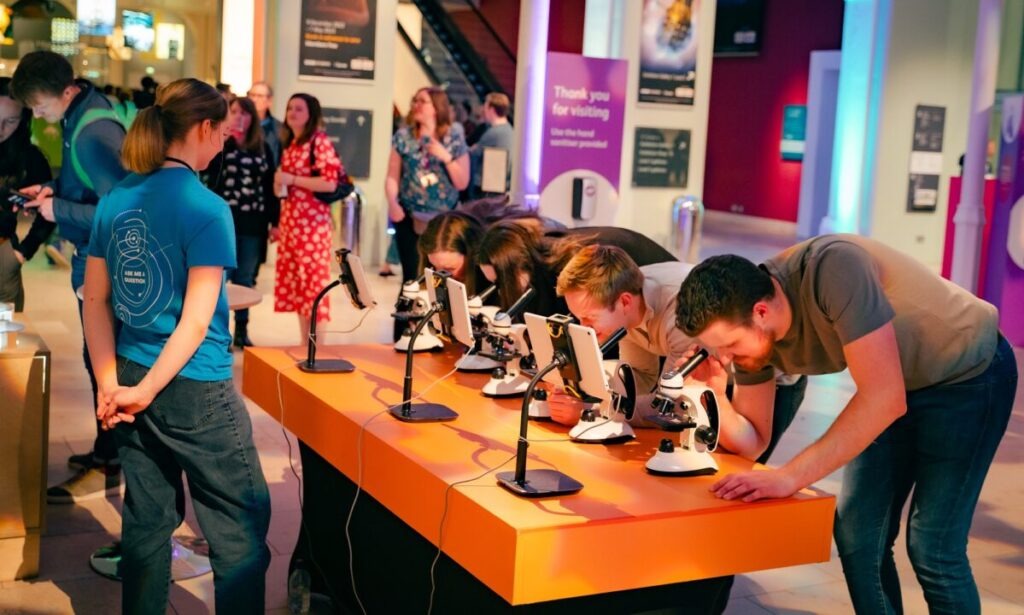
Credit: Edinburgh Science Festival – Forever Edinburgh
9. Edinburgh International Children’s Festival
The Edinburgh International Children’s Festival dedicates eight days in late May to early June to innovative theater and dance specifically created for young audiences. The program features big ideas, epic stories, and flamboyant physicality designed to help children make sense of our sometimes-conflicted world through performance that respects their intelligence and emotional depth.
The 2025 program showcased 12 productions from 7 countries, with special focus on Flanders (Belgium) and its reputation for quality, risk-taking children’s theater. New Scottish commissions like “Tongue Twister,” a one-man show that attempts tongue twisters in multiple languages, and “The Unlikely Friendship of Feather Boy and Tentacle Girl” demonstrate the festival’s commitment to supporting local talent alongside international work.
Productions take place in theaters and community centers across Edinburgh, with the festival opening through free pop-up performances at the National Museum of Scotland that introduce families to what’s possible when theater takes young people seriously. The visually striking nature of many shows transcends language barriers, making the festival accessible to international visitors and non-English speakers.
For parents seeking meaningful cultural experiences with their children, for educators seeking to inspire young people through performance, or for anyone who believes children deserve art created specifically for their unique perspectives and needs, this festival delivers work that stays with young audiences long after the curtain call.
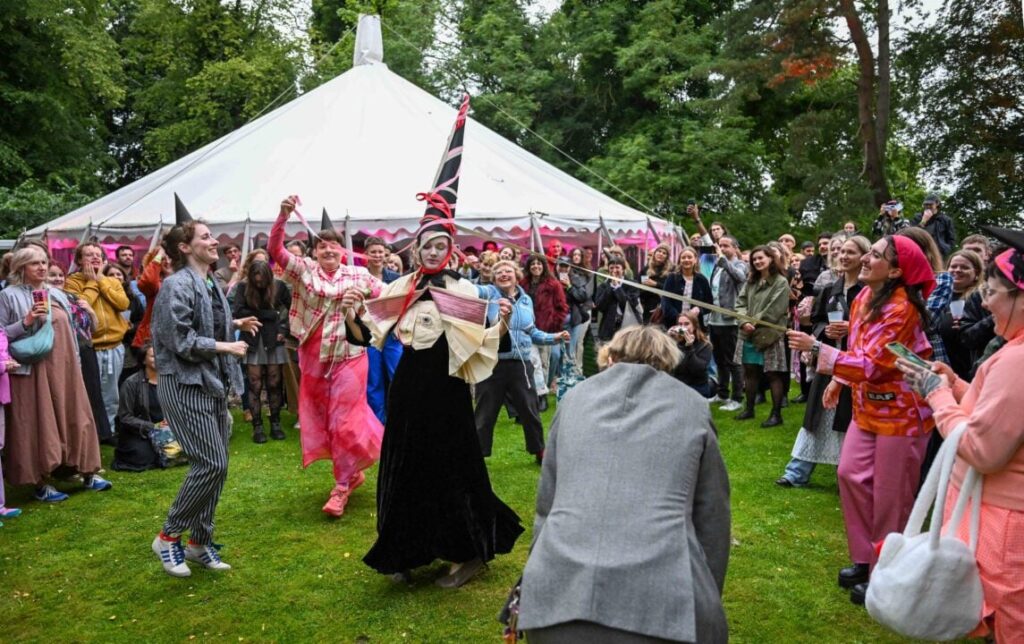
Credit: Edinburgh International Children’s Festival – Forever Edinburgh
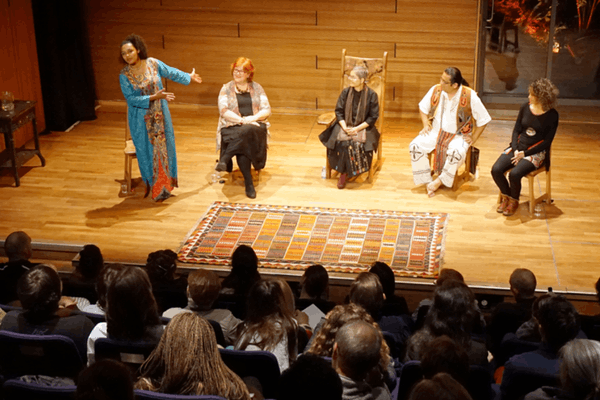
10. Scottish International Storytelling Festival
Running for 10 days from late October into early November, the Scottish International Storytelling Festival celebrates oral traditions that have carried Scotland’s voices across generations and around the world. This is storytelling in its purest form: no sets, minimal props, just human voices weaving tales that transport, educate, move, and connect.
The festival brings together traditional storytellers who preserve ancient narratives with contemporary artists who use oral tradition techniques to tell modern tales. Performances span Scottish folklore and mythology, international stories from diverse cultures, personal narratives, and new works that push storytelling boundaries. Music often weaves through stories, honoring Scotland’s tradition of blending song and tale.
Venues range from the Scottish Storytelling Centre to atmospheric locations around Edinburgh and beyond. Stories might be told in historic buildings, natural settings, or intimate spaces where listeners gather close. Special programs for children introduce young people to storytelling as both an art form and a cultural transmission, while workshops teach techniques for anyone wanting to develop their own narrative voice.
In an age dominated by screens and digital media, the Storytelling Festival reminds us of the enduring power of oral tradition: the human voice, the shared moment of listening, and the stories that shape who we are. For those seeking connection through narrative, cultural preservation through performance, or simply the magic of a well-told tale, this festival offers something increasingly rare and precious.
Credit: Scottish International Storytelling Festival | TRACS & The Scottish Storytelling Centre
11. Edinburgh’s Hogmanay
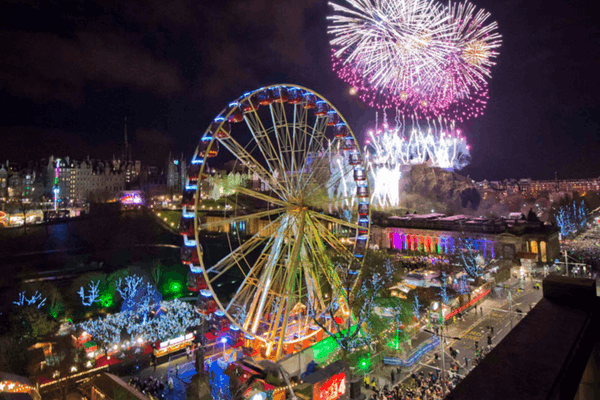
Edinburgh’s Hogmanay transforms Scotland’s capital into the world’s most spectacular New Year celebration, running from December 30 through January 1. This isn’t merely a party. It’s a festival-scale event that draws over 150,000 people annually, featuring street parties, concerts, torchlight processions, and traditions honoring both Scottish heritage and contemporary celebration.
The Street Party on December 31 takes over the city center with multiple stages featuring live music, DJs, and performances that build toward midnight when Edinburgh erupts in collective joy. The Torchlight Procession, earlier in the evening, sees thousands carrying flaming torches through Edinburgh’s streets, creating a river of fire that culminates in spectacular displays. Loony Dory, a New Year’s Day dip in the frigid Firth of Forth, proves Scots’ commitment to starting the year with invigorating madness.
Concert events feature major Scottish and international artists, ceilidh dancing brings traditional music to modern celebration, and various venues host parties catering to different tastes and atmospheres. The celebration reflects genuine Scottish warmth where strangers link arms for Auld Lang Syne, everyone is welcomed into the revelry, and the entire city commits to making midnight unforgettable.
Tickets sell quickly, and accommodation must be booked months in advance, but for those seeking the ultimate New Year experience, where tradition meets contemporary celebration, where an entire city devotes itself to joy, and where midnight feels genuinely transcendent, Edinburgh’s Hogmanay delivers on an impossible promise: making New Year’s Eve as good as you’ve always imagined it could be.
Credit: Edinburgh’s Hogmanay 2026
Conclusion
Edinburgh’s festivals reveal a city that has built its identity around creative celebration, cultural exchange, and the radical belief that art matters. Not as a luxury or afterthought but as an essential human expression deserving year-round attention and support. From the Fringe’s democratic chaos to the International Festival’s curated excellence, from Military Tattoo spectacle to intimate storytelling, from Hogmanay’s collective joy to quiet gallery moments during the Art Festival, these events create experiences that transform visitors into participants and audiences into communities.
Whether you’re drawn to comedy that makes your face hurt from laughing, opera that moves you to tears, science that sparks wonder, books that change perspectives, or simply the atmosphere of a city devoted entirely to celebration, Edinburgh delivers with Scottish generosity, creative ambition, and warmth that makes everyone feel welcome.
If you’d like to experience Edinburgh’s festivals with insider guidance, discovering hidden venues, understanding cultural context, and accessing experiences beyond the obvious, consider our private Edinburgh experiences crafted to reveal Scotland’s capital with local knowledge, thoughtful curation, and moments that transform festival-going into genuine cultural immersion.
FAQ
What is the huge festival in Edinburgh?
The Edinburgh Festival Fringe is the world’s largest arts festival, held annually in August. Featuring thousands of performances across hundreds of venues, it showcases theatre, comedy, dance, music, and more. Running for three weeks, the Fringe transforms Edinburgh into a global cultural hub, attracting millions of visitors and performers from worldwide.
How many Edinburgh festivals are there?
Edinburgh hosts approximately 12 major festivals throughout the year, with eight occurring simultaneously in August. These include the Edinburgh Festival Fringe, International Festival, Military Tattoo, Book Festival, Art Festival, Film Festival, Jazz & Blues Festival, and International Television Festival. Additional festivals occur year-round, making Edinburgh a festival city.
What are the must-see events in Edinburgh?
Must-see Edinburgh events include the Edinburgh Festival Fringe (August), Royal Edinburgh Military Tattoo, Hogmanay (New Year celebration), Edinburgh International Festival, and Edinburgh Christmas markets. The Royal Mile during festival season, Edinburgh Castle, and various comedy shows at the Fringe are essential experiences. Book lovers shouldn’t miss the Edinburgh International Book Festival.
What is the most famous festival in Scotland?
The Edinburgh Festival Fringe is Scotland’s most famous festival and the world’s largest arts festival. Attracting over three million attendees annually, it features thousands of performances across all artistic genres. However, Hogmanay (Edinburgh’s New Year celebration) and the Royal Edinburgh Military Tattoo are also internationally renowned Scottish festivals with massive global recognition.