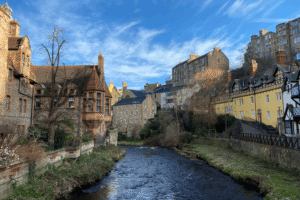
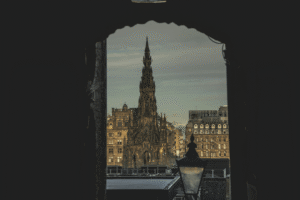
Edinburgh rewards those who venture beyond its cobbled streets and castle views. Within an hour or two, you’ll find yourself amid Highland glens where mist clings to mountain peaks, wandering medieval fishing villages along dramatic coastlines, or standing in castles where Scottish kings once plotted rebellion and romance. Scotland’s compact geography and Edinburgh’s central position create opportunities for experiences that would require days of travel in larger countries.
From the legendary waters of Loch Ness to the windswept beauty of the Scottish Borders, from the golfing heritage of St Andrews to the royal history of Stirling Castle, these day trips reveal Scotland’s diversity of rugged wilderness and refined culture, ancient traditions and contemporary vitality, all accessible through organized tours or independent travel by train and bus.
Key Takeaways
- Edinburgh’s central location makes most of Scotland accessible for day trips by car, train, or organized tour
- The Scottish Highlands, including Loch Ness and Glencoe, offer dramatic landscapes within reach
- Coastal towns like North Berwick and St Andrews provide seaside charm and fresh air
- Historic sites, including Stirling Castle and Rosslyn Chapel, showcase Scotland’s rich past
- Many destinations are easily reached by public transport for car-free exploration
1. Scottish Highlands and Loch Ness
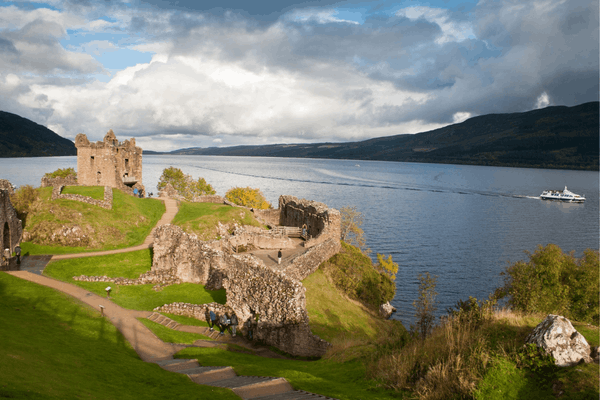
The journey north into the Scottish Highlands delivers Scotland at its most dramatic with vast expanses of heather-covered moorland, deep glens carved by ancient glaciers, and lochs reflecting mountains that seem to touch the sky. Loch Ness, nearly 40 kilometers long and 226 meters deep at points, dominates the landscape with its dark waters and legendary monster that continues drawing seekers hoping for glimpses of Nessie.
Most Highland day trips from Edinburgh include Glencoe’s haunting valley, where the 1692 massacre occurred, Rannoch Moor’s desolate beauty, and stops at viewpoints where wilderness stretches endlessly in every direction. The ruins of Urquhart Castle perch dramatically on the shores of Loch Ness, providing historical context alongside natural splendor. This is Scotland’s unforgettable wild heart for those willing to embrace long coach journeys rewarded by landscapes that justify every mile.
Credit: VisitScotland
2. Stirling
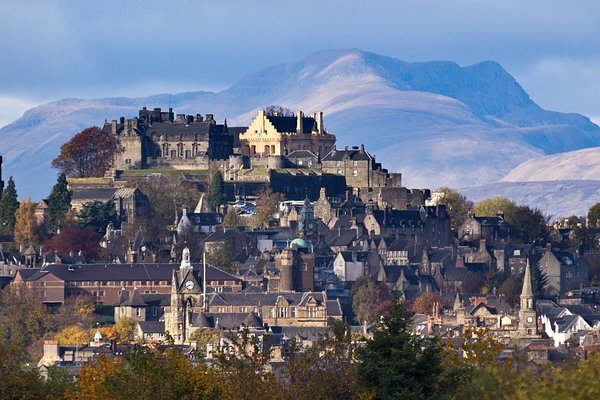
Just 50 minutes by train from Edinburgh, Stirling punches well above its size in historical significance. Stirling Castle, perched on volcanic rock, commanded the gateway to the Scottish Highlands and witnessed pivotal moments, including the coronations of Mary, Queen of Scots, and James VI. The castle’s Great Hall and Royal Palace showcase Renaissance grandeur, while views from its ramparts reveal why this location held such strategic importance.
Beyond the castle, the National Wallace Monument honors William Wallace, whose victory at Stirling Bridge in 1297 became a legend immortalized in Braveheart, while the nearby battlefield of Bannockburn marks where Robert the Bruce secured Scottish independence in 1314. The compact city center rewards wandering, with independent shops and cafés creating pleasant breaks between historical sites. Stirling proves that Scotland’s story extends far beyond Edinburgh’s walls into landscapes where freedom and identity were forged through blood and determination.
Credit: Tripadvisor
3. St Andrews
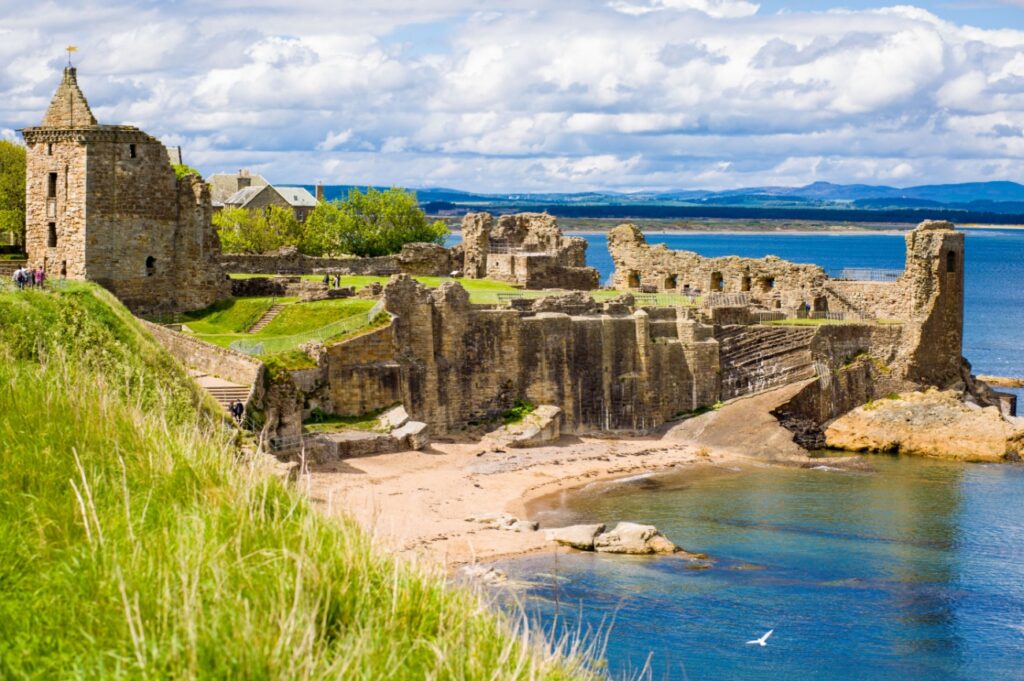
The ancient university town of St Andrews sits on Fife’s eastern coast, approximately 90 minutes from Edinburgh by bus or car. Founded in the 12th century, Scotland’s oldest university still dominates the town’s character. Students in scarlet gowns hurry between medieval buildings while visitors explore the ruins of the cathedral that once stood as Scotland’s largest church before Reformation fury reduced it to haunting fragments.
Golf defines St Andrews as much as academia, and the Old Course has hosted the game since the 15th century, earning status as golf’s spiritual home where the sport’s earliest rules were codified. Even non-golfers appreciate the coastal walks, the charming harbor, and that particular atmosphere where history and contemporary student life merge comfortably. Independent boutiques, excellent seafood restaurants, and the dramatic coastline make St Andrews rewarding beyond its famous fairways and academic prestige.
Credit: Revigorate
4. North Berwick
This East Lothian seaside town sits just 30 minutes from Edinburgh by train, offering sandy beaches, volcanic geology, and fresh sea air that have attracted holidaymakers since Victorian times. North Berwick centers around its harbor, where fishing boats still operate, and the Scottish Seabird Centre provides interactive exhibits alongside wildlife boat trips to Bass Rock. Home to the world’s largest northern gannet colony, whose 150,000 birds create a spectacular white coating visible from shore.
The Law, North Berwick’s distinctive volcanic hill, offers panoramic views across the Firth of Forth toward Edinburgh and Fife after the steep climb to its summit. Tantallon Castle’s dramatic clifftop ruins sit a few miles east, while the town’s high street delivers independent shops, excellent cafés, and that relaxed seaside atmosphere that makes it popular with families and anyone seeking respite from urban intensity. This is Scotland’s gentler coast. It’s accessible, welcoming, and perfect for half-day or full-day escapes.

Credit: TimeOut
5. Glasgow
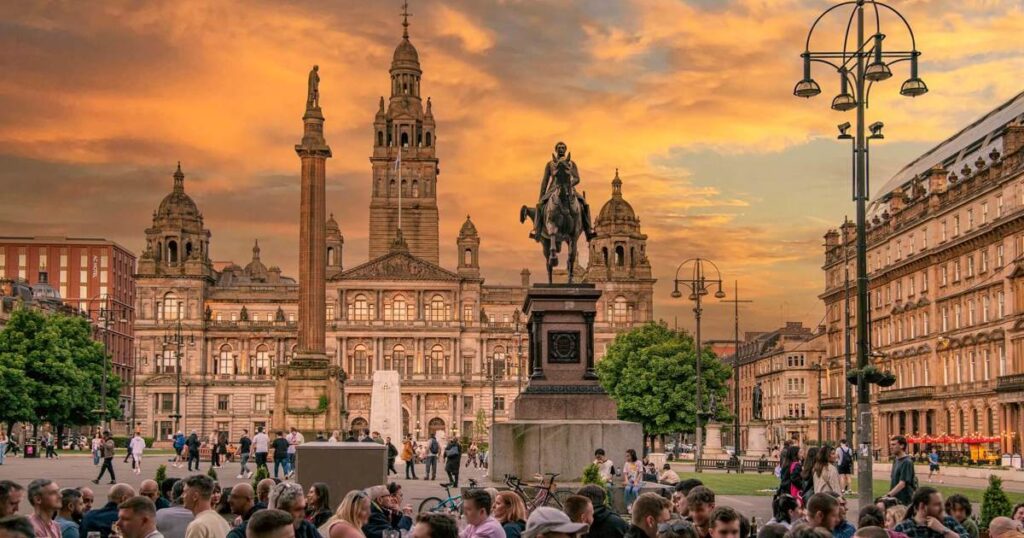
Scotland’s largest city sits just one hour from Edinburgh by frequent trains, yet the two capitals could hardly differ more in character. Where Edinburgh feels refined and historical, Glasgow embraces working-class roots, contemporary creativity, and street-level energy, manifesting in world-class street art, innovative restaurants, and music venues that have launched countless careers. The Kelvingrove Art Gallery and Museum houses outstanding collections in magnificent Victorian buildings, while the Riverside Museum showcases transport history in Zaha Hadid’s striking contemporary design.
Glasgow’s nightlife and restaurant scene outpaces Edinburgh’s, offering everything from Michelin-starred fine dining to casual curry houses beloved by students for decades. The city’s architectural heritage spans medieval Glasgow Cathedral to Charles Rennie Mackintosh’s Art Nouveau masterpieces, creating visual interest at every turn. Day trips barely scratch the surface of Glasgow, but they introduce the particular Glaswegian warmth and humor that define Scotland’s largest urban center.
Credit: Visit Glasgow
6. The Scottish Borders
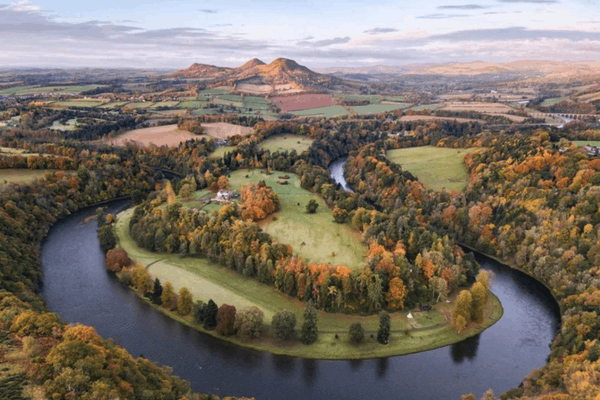
The Scottish Borders region stretches south from Edinburgh into rolling countryside dotted with ruined abbeys, historic houses, and market towns that preserve traditions stretching back centuries. Melrose Abbey’s Gothic ruins inspired Sir Walter Scott, while nearby Abbotsford House preserves the author’s former home, complete with his vast library and collected antiquities. Rosslyn Chapel, made famous by The Da Vinci Code, contains stone carvings of extraordinary intricacy that have inspired speculation and wonder for generations.
The Borders also offers outdoor activities, including walking trails along ancient routes, cycling through gentle valleys, and fishing in rivers that gave the region its historic Common Ridings festivals. Towns like Peebles and Kelso maintain market-town character with independent shops and traditional architecture, while the textile heritage that once drove the regional economy endures through specialist mills and wool shops. This is Scotland’s quieter countryside. Less dramatic than Highlands but rich in history and accessible pastoral beauty.
Credit: MeanderApparel
7. Culross and Dunfermline
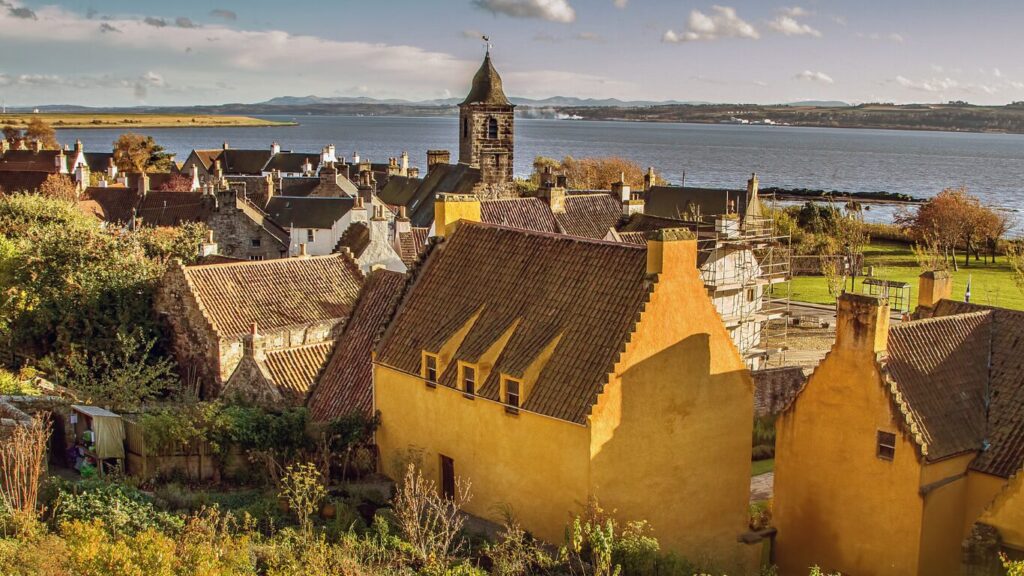
The perfectly preserved village of Culross transports visitors to 17th-century Scotland through its cobbled streets, whitewashed houses with red pantile roofs, and the magnificent Culross Palace, whose ochre-yellow walls and turrets create a fairytale atmosphere. Managed by the National Trust for Scotland, the village served as a filming location for Outlander’s Cranesmuir scenes, though its authentic historical character predated television’s discovery of it.
Just up the coast, Dunfermline became Scotland’s newest city in 2022, honoring its ancient past as the capital where kings, including Robert the Bruce, were buried in the abbey that dominates the town center. Andrew Carnegie’s birthplace cottage and the first Carnegie Library preserve the industrialist’s legacy, while Pittencrieff Park, which Carnegie gifted to his hometown, provides green space with views toward the Forth. Both destinations combine easily into single-day trips exploring Fife’s western reaches.
Credit: Dunfermline.com
8. Glenfinnan and West Highlands
The Glenfinnan Viaduct achieved global fame through Harry Potter films, where the Hogwarts Express steamed across its curved arches, though the structure’s Victorian engineering deserves recognition beyond cinema. The real Jacobite Steam Train still crosses the viaduct during summer, creating that iconic image of a red locomotive against a Highland backdrop. The Glenfinnan Monument at the loch’s head marks where Bonnie Prince Charlie raised his standard in 1745, beginning the doomed Jacobite Rising that ended at Culloden.
This far northwest corner requires a full-day commitment. It’s roughly 3.5 hours each way from Edinburgh, but it rewards dedication with West Highland scenery at its finest. Most organized tours combine Glenfinnan with other Highland stops, creating comprehensive experiences of Scotland’s wild landscapes. The journey itself becomes an attraction as roads wind through mountains and past lochs that exemplify why Scotland’s natural beauty attracts visitors from across the globe.

Credit: Rabbie’s Tours
9. Linlithgow
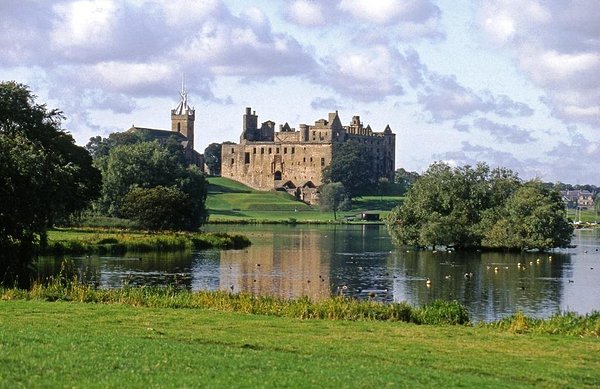
Just 20 minutes from Edinburgh by train, Linlithgow centers around its magnificent ruined palace, where Mary Queen of Scots and James V were born. The Renaissance architecture stands roofless but largely intact beside Linlithgow Loch, allowing exploration of royal apartments, great halls, and the famous fountain that once ran with wine during celebrations. The palace served as a royal residence until fire damaged it beyond repair in 1746, leaving romantic ruins that inspired generations of Scottish artists and writers.
The town itself rewards exploration with independent bookshops like Far From the Madding Crowd, farm shops selling local produce, and St Michael’s Church, where its crown spire provides Linlithgow’s distinctive skyline. The short journey makes Linlithgow ideal for half-day trips or a combination with other West Lothian destinations. This is royal Scotland at an intimate scale. No crowds, no rush, just history presented through evocative ruins and peaceful loch views.
Credit: Tripadvisor
10. Loch Lomond and The Trossachs
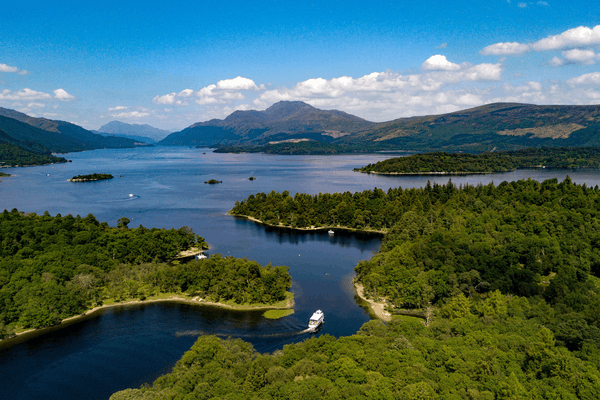
Loch Lomond, Scotland’s largest lake by surface area, sits roughly 90 minutes northwest of Edinburgh within the Trossachs National Park. The southern end feels accessible and gentle. The village of Luss is worth seeing with its picturesque cottages, easy lakeshore walks, and boat trips across waters that reflect the surrounding mountains. The northern reaches grow wilder as the loch narrows into Highland territory where serious hillwalking begins.
Most day trips combine Loch Lomond with Stirling Castle and the Kelpies, Andy Scott’s 30-meter-high horse-head sculptures near Falkirk that honor Scotland’s horse-powered industrial heritage. The diversity creates satisfying experiences spanning natural beauty, royal history, and contemporary public art. While brief visits barely hint at the national park’s full range of hiking and outdoor opportunities, they introduce landscapes that have inspired everyone from Rob Roy to modern nature lovers seeking Scotland’s celebrated wilderness.
Credit: National Parks
Conclusion
Edinburgh’s day trips reveal Scotland’s extraordinary diversity. From the Highland wilderness where silence feels profound to university towns buzzing with student energy, from seaside villages offering fresh air and seafood to historic sites where Scottish identity was forged through conflict and culture. Each destination represents different facets of what makes Scotland compelling: dramatic landscapes that are humble, histories that inspire, communities that welcome, and that particular Scottish character that balances pride with humor and tradition with innovation.
Whether you seek the legendary waters of Loch Ness, the golfing heritage of St Andrews, the Victorian charm of North Berwick, or simply relief from Edinburgh’s August Festival crowds, these day trips deliver experiences that complement and contrast with the capital’s urbane sophistication. Scotland rewards exploration beyond any single city, and Edinburgh’s position makes that exploration remarkably accessible through trains, buses, and organized tours that remove logistical stress while maximizing discovery.
If you’d like to explore Scotland with guidance that goes beyond standard tours, discovering hidden viewpoints, understanding cultural contexts, and experiencing Scotland with local insight that transforms sightseeing into a genuine connection, consider our private experiences in Edinburgh crafted to reveal the place with elegance, expertise, and moments that make every journey unforgettable.
FAQ
Which is the best day trip from Edinburgh?
The best day trip from Edinburgh is to the Scottish Highlands, including Glencoe and Loch Ness, for dramatic scenery and iconic landscapes. For something closer, St Andrews and Rosslyn Chapel are excellent choices, combining history, coastal views, and culture.
What are the best free day trips from Edinburgh?
Great free day trips include North Berwick for beaches and coastal walks, South Queensferry for views of the Forth Bridges, and hiking in the Pentland Hills. You only pay for transport, and nature, villages, and scenic views are free to enjoy.
What is the nicest village close to Edinburgh?
Culross is often considered the nicest village near Edinburgh, known for its cobbled streets and historic houses. South Queensferry is another favorite, offering charming waterfront views and easy access to the iconic Forth Rail Bridge.
Where can I go from Edinburgh?
From Edinburgh, you can visit the Scottish Highlands, Loch Lomond, St Andrews, Stirling, North Berwick, Glasgow, or the Isle of Skye. Options range from historic castles and coastal towns to dramatic mountain scenery, all of which are accessible by train, bus, or guided tour.