Norway’s castles tell a different story than their Continental European counterparts – fewer fairy-tale turrets and more strategic fortifications built to withstand Swedish invasions, defend harbours, and project royal power across a nation where geography made defence both essential and challenging. These medieval strongholds, Renaissance palaces, and neoclassical residences reveal Norway’s evolution from Viking-age chieftains through union with Denmark and Sweden to modern independence.
From Akershus Fortress commanding Oslo’s harbour for over 700 years to Gamlehaugen’s fairytale beauty near Bergen, from Bergenhus Fortress where medieval kings ruled to The Royal Palace where Norway’s current monarchy resides, these structures embody Norwegian resilience, strategic thinking, and that Nordic ability to preserve history while remaining functionally relevant to contemporary life.
Key Takeaways
- Norway has fewer castles than Central Europe because its sparse population and defensive priorities, rather than feudal traditions, reduced the need for castle construction.
- Most castles are not built as noble residences, but as military fortresses for defence.
- Several remain active as royal residences, military headquarters, government venues, and museum functions.
- The castles concentrate around Oslo, Bergen, and strategic border regions, defending against Swedish invasions.
- Many offer free access to grounds while charging admission for interior tours.
1. Akershus Fortress and Castle
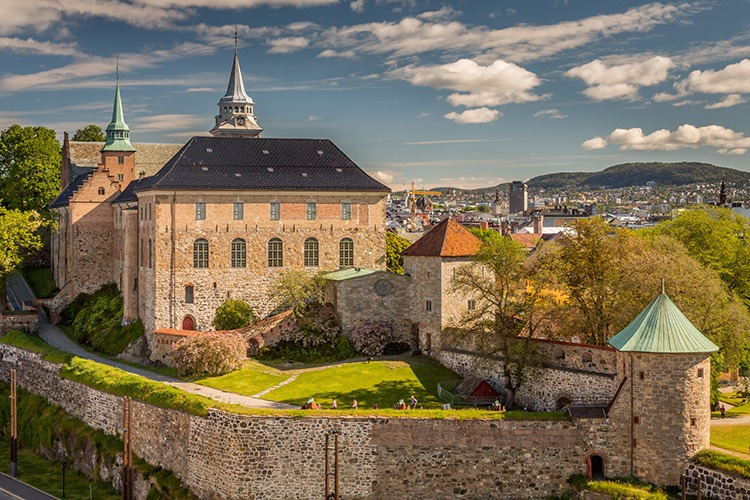
Built around 1300 by King Håkon V to defend the young capital of Oslo, Akershus stands as Norway’s most historically significant castle. Never successfully conquered by enemy forces despite numerous sieges, particularly from Swedish armies, the fortress evolved from a medieval stronghold into a Renaissance palace under Christian IV’s 17th-century renovations. Today, it functions simultaneously as a military headquarters, a government venue for state occasions, and a public park where Oslo residents jog past ramparts that witnessed 700 years of Norwegian history.
The complex houses two important museums: the Armed Forces Museum, which chronicles Norwegian military history, and the Resistance Museum, which preserves stories of the WWII occupation. The Royal Mausoleum houses the remains of modern Norway’s monarchs, while guided castle tours reveal banquet halls, dungeons, and the chapel where royalty worshipped. The grounds open free to the public year-round, providing spectacular Oslo Fjord views and green spaces beloved by locals who treat this fortress as a neighbourhood amenity rather than merely a tourist site.
Credit: History Hit
2. The Royal Palace (Oslo)
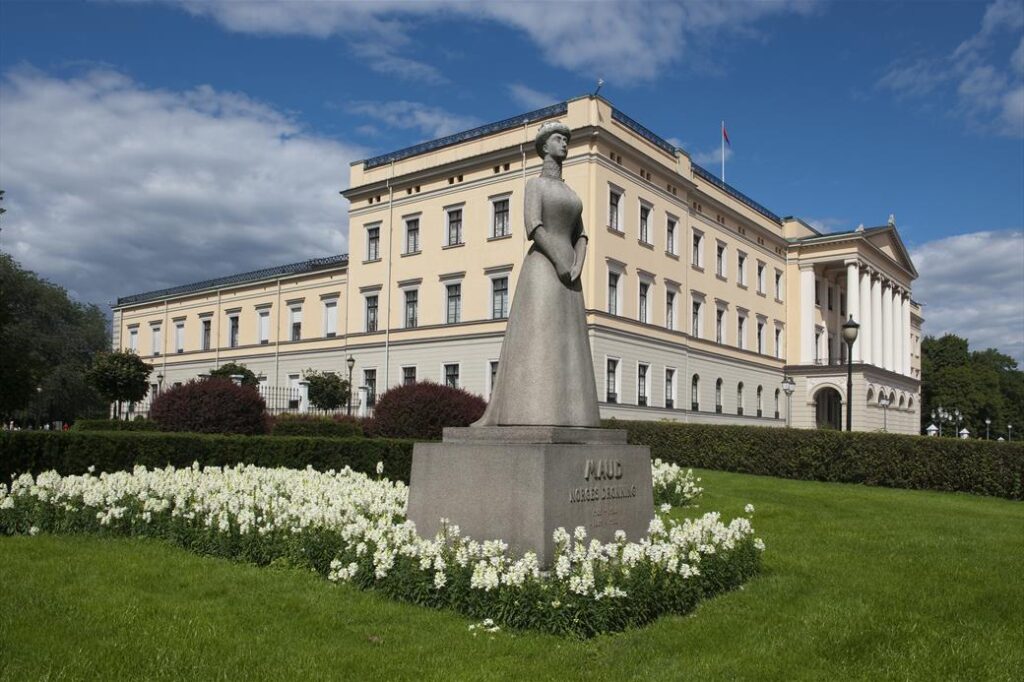
Norway’s official royal residence since 1849, The Royal Palace crowns Henrik Ibsen’s gate at the western end of Karl Johans Gate. The neoclassical palace designed by Hans Linstow represents the establishment of the constitutional monarchy after Norway separated from Denmark, serving as an architectural symbol of independence and democratic ideals. King Charles III and Queen Sonja maintain private apartments here while conducting official duties, including state dinners and diplomatic receptions.
Summer guided tours provide access to State Rooms where Norway conducts official business (the Bird Room, Great Hall, Ballroom, and various salons decorated with Norwegian art and craftsmanship). The surrounding Palace Park remains open year-round, offering 22 hectares of green space where Oslo residents picnic, jog, and enjoy landscaped gardens without security barriers, creating distance between royalty and citizens. The daily Changing of the Guard ceremony at 13:30 showcases Norwegian pageantry in its characteristic understated Nordic style.
Credit: Visit Oslo
3. Bergenhus Fortress
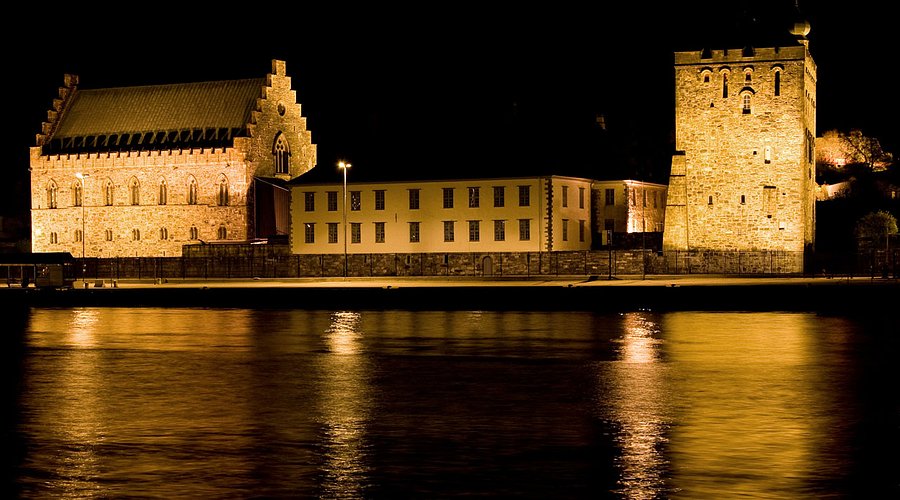
Bergen’s Bergenhus Fortress claims to be one of Norway’s oldest and best-preserved fortifications, with parts dating to the 1240s, when Bergen served as Norway’s capital. Håkon’s Hall, completed around 1261, hosted royal coronations and celebrations during Norway’s medieval golden age. The adjacent Rosenkrantz Tower, built in the 1560s, demonstrates Renaissance military architecture with thick stone walls and strategic defensive positions overlooking Bergen’s harbour.
The fortress survived German occupation during WWII when an ammunition explosion caused significant damage, though post-war restoration returned much to its original splendour. Today, visitors explore both medieval and Renaissance structures, climb tower ramparts for harbour views, and attend concerts in Håkon’s Hall, where acoustics designed for medieval feasting create unique performance spaces. The fortress grounds are open free to the public, while the building interiors charge admission for tours that reveal Bergen’s history as a medieval power centre.
Credit: Tripadvisor
4. Gamlehaugen
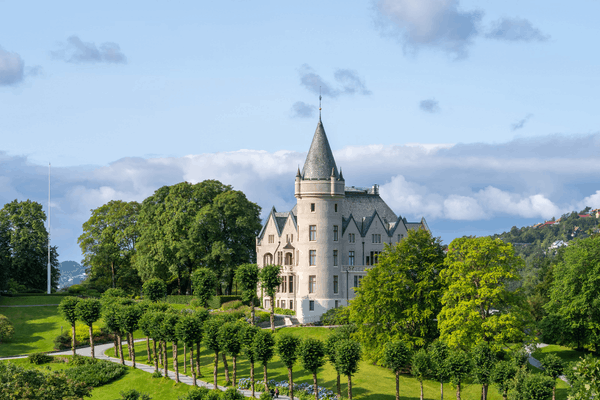
The King’s official residence in Bergen, Gamlehaugen, occupies scenic grounds near Troldhaugen, seven kilometres south of Bergen. Designed in 1899 by architect Jens Zetlitz Monrad Kielland in Scottish baronial style, this fairytale castle features towers, turrets, and romantic architecture that contrasts sharply with Norway’s typically austere buildings. The property passed to the Norwegian state in 1927 following a national fundraising campaign after owner Christian Michelsen, Norway’s first Prime Minister post-independence, died in 1925.
The royal family uses Gamlehaugen when visiting Bergen, though the English-style landscaped park surrounding the castle opens freely to the public for walking and recreation. Summer guided tours show ground-floor rooms, including Christian Michelsen’s library, music room, and office, revealing how Norway’s early-20th-century elite lived during the nation-building years following the nation’s separation from Sweden. The setting of parkland, fjord views, and architectural fantasy creates one of Norway’s most photogenic royal properties.
Credit: Royal Court
5. Fredriksten Fortress
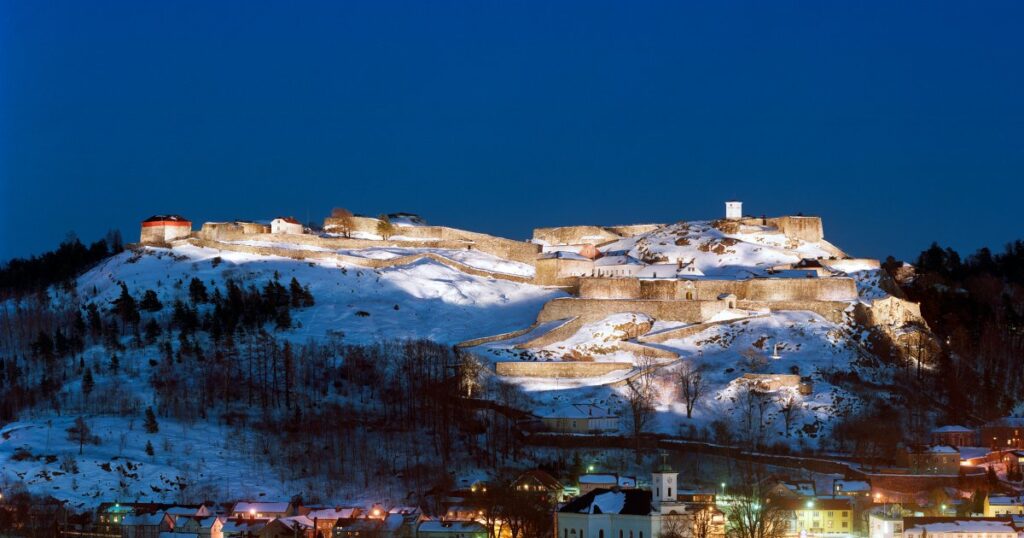
Perched dramatically on hills overlooking Halden near the Swedish border, Fredriksten Fortress was constructed between 1661 and 1671 after Norway lost Bohus Fortress to Sweden. The star-shaped fortifications defended against repeated Swedish invasions, most famously during the 1718 siege when Swedish King Charles XII died from a gunshot. Whether enemy fire or assassination remains debated. The fortress’s strategic importance declined after Norway and Sweden united peacefully in 1814, though it continued to be used militarily into the 20th century.
Visitors explore ramparts, museums detailing Halden’s history, and the fortress bakery and brewery that once fed thousands of soldiers daily. Ghost tours, multimedia shows, and Sunday guided tours bring history to vivid life, while nature trails through the partially ruined site appeal to hikers, combining historical exploration with outdoor exercise. Views from fortress walls across Halden, the Iddefjord, and toward Sweden demonstrate why this location proved so strategically vital for centuries.
Credit: Forsvarsbygg
6. Kongsvinger Fortress
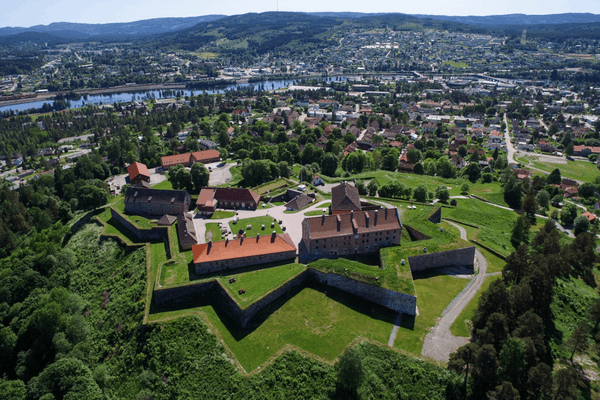
Built in 1682-1685 on high ground overlooking the Glomma River, Kongsvinger Fortress defended Norway’s eastern approaches against Swedish attacks. The fortress never faced major combat, though its presence discouraged invasion attempts and demonstrated Norwegian determination to protect territory along contested borders. The restored fortifications now function as a cultural venue hosting concerts, theatre performances, and special events that bring contemporary life to historic military architecture.
The Commissioner’s Residence within the fortress contains exhibitions exploring local history, military traditions, and daily life in border regions where Norwegian and Swedish influences mixed despite political tensions. Walking the ramparts provides panoramic views across the Glomma valley and the surrounding forests, while interpreters during summer demonstrate period military drills and weapons handling. This is military heritage made accessible. It’s educational without being dry, and historical without feeling distant from contemporary Norwegian identity.
Credit: Strawberry
7. Oscarsborg Fortress
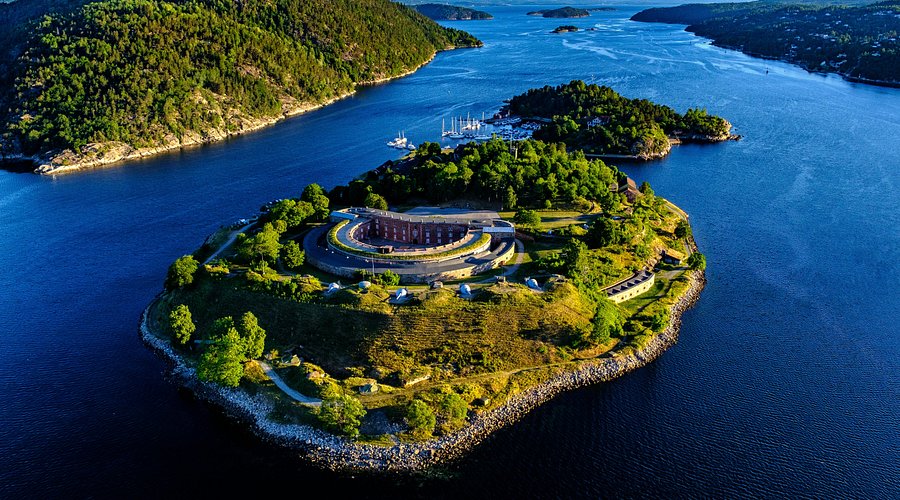
Located on islands in the Oslo Fjord, Oscarsborg Fortress achieved fame on April 9, 1940, when Norwegian forces sank the German cruiser Blücher during the invasion of Norway. This action delayed the German capture of Oslo by crucial hours, allowing King Haakon VII and the government to evacuate northward and establish a government-in-exile rather than falling immediately into Nazi hands. The fortress’s role in this pivotal moment ensures its place in Norwegian national memory, beyond merely serving as military architecture.
Today, Oscarsborg functions as a hotel, museum, and cultural venue accessible by ferry from Drøbak. Visitors explore gun emplacements, torpedo battery, underground passages, and exhibitions chronicling the fortress’s construction and its decisive WWII action. The main fortress was built in 1845-1855 on Håøya and Søndre Kaholmen islands, while the torpedo battery, added in 1901, provided the weapons that ultimately stopped Blücher. Summer concerts and events transform the fortress into a lively destination combining historical tourism with contemporary cultural programming.
Credit: Tripadvisor
8. Stiftsgården (Trondheim)
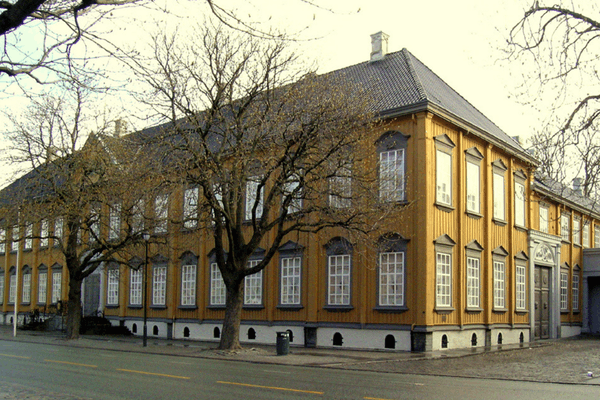
Northern Europe’s largest wooden palace, Stiftsgården, serves as the Royal Family’s official residence when visiting Trondheim. Built 1774-1778 in the late baroque/rococo style, the yellow wooden structure extends 58 meters along Trondheim’s main street, creating an impressive urban presence while maintaining the timber-construction traditions that define Norwegian architecture. The palace contains 140 rooms, including banquet halls, private apartments, and reception spaces still used for official royal functions.
Summer guided tours provide access to State Rooms decorated with period furniture, art, and craftsmanship that reflect Trondheim’s cultural importance in the 18th century. The palace chapel, ballroom, and various salons demonstrate how Norwegian nobility lived during the period when Trondheim served as a coronation city for Norwegian kings. The building’s scale, achieved entirely in wood, showcases Norwegian timber craftsmanship at its finest, proving that royal grandeur needn’t require stone castle architecture.
Credit: Wikipedia
9. Oscarshall
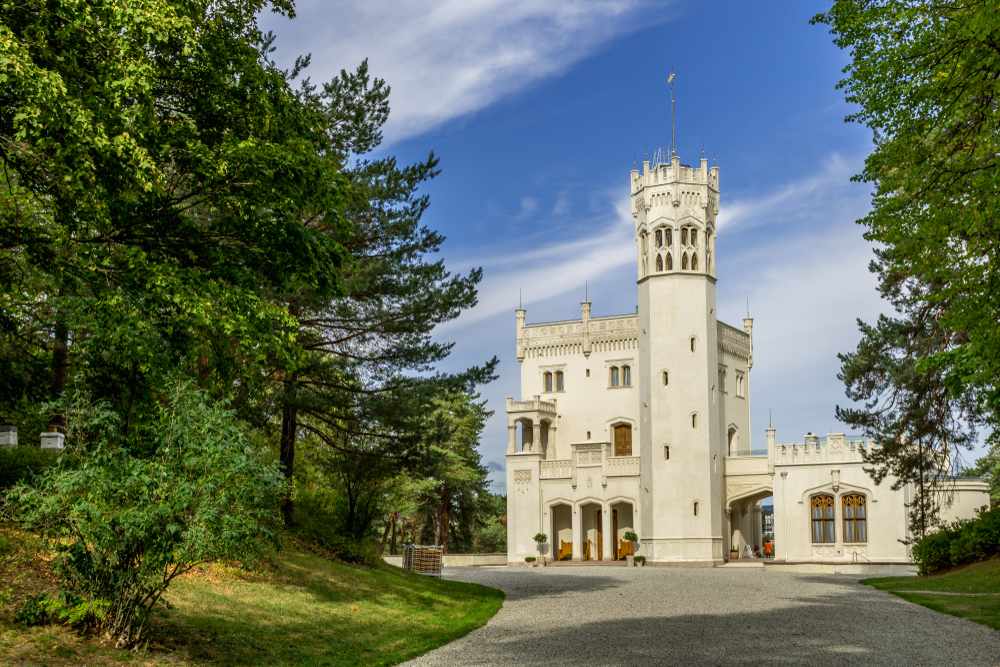
This neo-Gothic summer palace on Oslo’s Bygdøy peninsula was commissioned by King Oscar I and completed in 1852 as a showcase for Norwegian art and craftsmanship. Architect Johan Henrik Nebelong designed Oscarshall, incorporating romantic nationalism’s emphasis on Norse heritage, while leading Norwegian artists received commissions for frescoes, sculptures, and decorative elements. King Oscar II opened the palace to the public as a museum in 1881, making it one of Norway’s earliest public art museums.
Summer guided tours reveal rooms decorated by the period’s foremost Norwegian artists, including Adolf Tidemand, Hans Gude, and Joachim Frich. The palace sits within an English-style landscaped park providing a peaceful retreat from Oslo’s urban centre, while its fjord views and romantic architecture create that fairytale quality often absent from Norway’s more utilitarian military fortifications. Oscarshall demonstrates how 19th-century Norway deliberately constructed national identity through architecture and art, celebrating Nordic heritage over Continental influences.
Credit: Campervan Norway
10. Steinvikholm Castle Ruins
The ruins of Steinvikholm Castle occupy an island in Trondheim Fjord, representing Norway’s most impressive medieval castle ruins. Archbishop Olav Engelbrektsson constructed the castle in 1525-1532 as a fortified residence and power centre during the period when the Catholic church hierarchy wielded significant political influence. After the Reformation eliminated the archbishops’ power, the castle fell into military use and eventual ruin, though substantial walls and foundations survived.
The island setting is accessible only by boat during the summer months, creating an atmospheric backdrop for exploring medieval military architecture. The ruins demonstrate defensive sophistication with thick walls, strategic positioning, and a layout designed to withstand sieges. Guided tours during the summer explain the castle’s brief but historically significant role during the turbulent period when Norway transitioned from Catholic to Lutheran control and royal power consolidated at the expense of church authority.
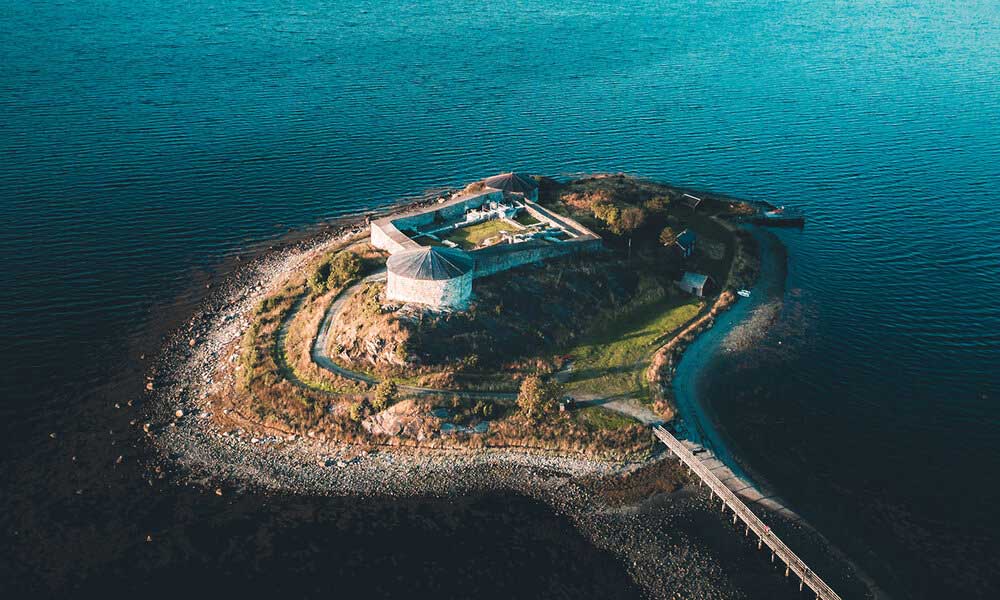
Credit: Visit Trondheim
11. Rosendal Barony
Norway’s only barony, Rosendal near Hardangerfjord, combines the manor house, gardens, and surrounding estate into a cultural heritage site that preserves 17th-century aristocratic life. The property reached completion in 1665, when Ludvig Rosenkrantz and Karen Mowatt transformed a farm into an elegant residence, with Renaissance, rose, and kitchen gardens providing both beauty and practical produce. The last private owners left in 1927, after which the property became a museum preserving original interiors and landscaping.
The manor house contains period furniture, art, and decorative objects revealing how Norway’s small aristocracy lived during centuries when most Norwegians remained farmers. The terraced, formal, and meticulously maintained gardens survive as outstanding examples of Baroque landscape design adapted to the Norwegian climate. The estate café serves produce from the kitchen garden, creating a full-circle connection between historical agricultural traditions and contemporary local food movements. The mountain backdrop of Malmangernuten, Melderskin, and Laurdalstind provides a dramatic setting that elevates this manor house beyond merely architectural interest.
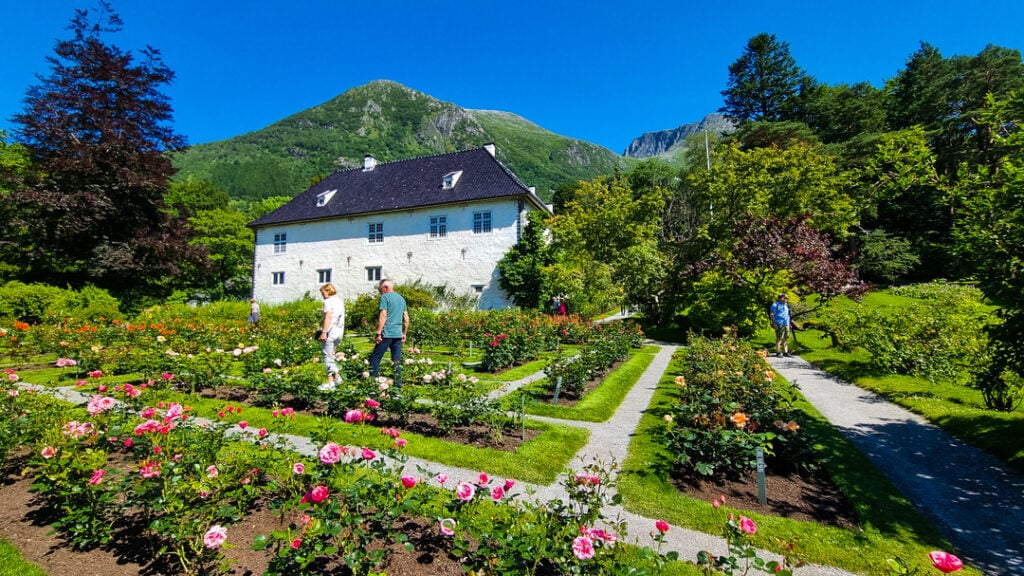
Credit: Rødne Fjord Cruise
12. Heddal Stave Church
While technically a church rather than a castle, Heddal Stave Church represents Norway’s unique contribution to defensive religious architecture. Built around 1250, this largest surviving stave church features medieval wooden architecture that blends Christian and Viking traditions, creating structures found nowhere else in the world. The fortified appearance of dark timber, steep roofs, and dragon-head carvings suggests defensive purposes alongside spiritual functions, as churches served as community refuges during attacks.
The church remains in active use for services while functioning as a heritage site attracting visitors interested in medieval Norwegian architecture and craftsmanship. The interior preserves medieval paintings, carved decorations, and architectural details demonstrating sophisticated woodworking techniques. Heddal represents a broader Norwegian pattern in which religious and defensive architecture merged, as sparse settlement patterns required multi-purpose buildings that served spiritual, social, and protective community needs simultaneously.
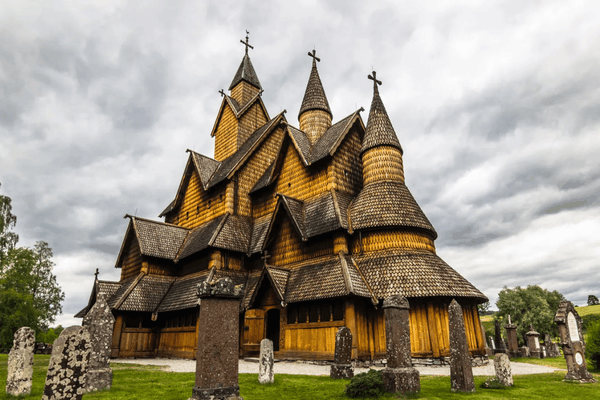
Credit: Forbes
Conclusion: Castles in Norway
Norway’s castles and fortresses reveal a nation shaped by defensive necessities, strategic geography, and determination to maintain independence against more powerful neighbours. From Akershus’s 700 years defending Oslo to Fredriksten’s border vigilance, from The Royal Palace’s democratic accessibility to Gamlehaugen’s fairy-tale romanticism, these structures tell stories of Vikings becoming kings, unions imposed and dissolved, occupations endured, resistance celebrated, and a modern monarchy coexisting comfortably with egalitarian values.
Whether you seek medieval fortifications where history echoes through stone corridors, royal palaces offering glimpses into how Norway’s monarchy lives and works, or romantic castles capturing 19th-century nationalist dreams, Norway delivers castle experiences that educate, inspire, and reveal how architecture shapes and reflects national identity. Each fortress, palace, and manor represents a different chapter in the Norwegian story. They’re all worth reading for anyone seeking to understand this remarkable nation.
If you’d like to explore Norway’s castles with guidance that deepens historical understanding, connecting architectural details to broader narratives, revealing stories stones alone cannot tell, and experiencing these treasures with local insight, consider our private experiences crafted to transform castle visits from photo opportunities into genuine cultural immersion that makes Norwegian history vivid and unforgettable.
FAQ
Does Norway have any castles?
Yes, Norway has several historic castles and fortresses, though fewer than many European countries. Notable examples include Akershus Fortress, Bergenhus Fortress, and Kongsvinger Fortress. Most Norwegian “castles” are medieval fortresses built for defence rather than royal luxury.
What is the oldest castle in Norway?
The oldest castle in Norway is Bergenhus Fortress, dating back to the 1240s. Its medieval hall, Håkon’s Hall, was built during the reign of King Håkon IV and remains one of the country’s best-preserved royal stone buildings.
What is the largest castle in Norway?
The largest and most prominent castle complex in Norway is Akershus Fortress in Oslo. Built in the late 13th century, it includes a castle, defensive walls, museums, and historic buildings overlooking the Oslofjord.
Was Harry Potter filmed in Norway?
No, the main Harry Potter films were not filmed in Norway. Most scenes were shot in the United Kingdom. However, Norway’s snowy landscapes resemble scenes from the series, and some fans compare Norwegian scenery to the Hogwarts surroundings.