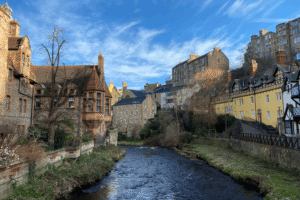
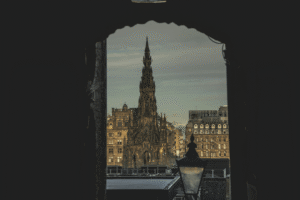
At the foot of Edinburgh’s Royal Mile, where cobblestones surrender to parkland, and Arthur’s Seat rises dramatically behind, the Palace of Holyroodhouse serves as His Majesty The King’s official Scottish residence. This isn’t merely preserved history but a living monarchy. The Palace hosts state ceremonies, royal receptions, and the annual Holyrood Week when the monarch conducts official business in Scotland, making it both a working palace and one of Edinburgh’s most compelling visitor attractions.
With 900 years of Scottish royal history concentrated within its walls and grounds, Holyroodhouse witnessed some of Scotland’s most dramatic moments, including the brutal 1566 murder of Mary Queen of Scots’ secretary David Rizzio in her chambers, events that transformed ordinary rooms into “the most famous room in Scotland.” The Palace evolved from a medieval abbey guesthouse to Renaissance towers to the baroque masterpiece standing today, each architectural layer revealing Scotland’s tumultuous journey through unions, rebellions, and eventual modern constitutional monarchy.
Key Takeaways
- The Palace of Holyroodhouse is the King’s official Scottish residence, still actively used for state functions.
- Open to the public year-round except when the King is in residence (typically annual closures in May and late June/early July)
- Mary Queen of Scots’ Historic Apartments preserve rooms where dramatic 16th-century events unfolded.
- The Palace sits beside the atmospheric 12th-century Holyrood Abbey ruins, which are included in admission
- Free multimedia guides provide a comprehensive history in multiple languages.
The State Apartments
The State Apartments showcase baroque splendour created for Charles II in the 1670s, though he never actually visited. These ceremonial rooms are still used today by the King for state occasions. They display treasures from the Royal Collection, including works by Canaletto and Dutch masters. The Great Gallery stretches 45 meters, its walls lined with portraits of Scottish monarchs (both real and imaginary) commissioned by Charles II to establish royal lineage connecting him to ancient Scottish kings.
The Throne Room, Morning Drawing Room, and Evening Drawing Room form a progression of increasingly intimate spaces where state business is conducted, diplomatic receptions unfold, and investiture ceremonies bestow honours. The opulent plasterwork, period furniture, and Flemish tapestries create settings where royal pageantry continues as it has for centuries, though now tourists rather than courtiers fill the rooms between official functions.
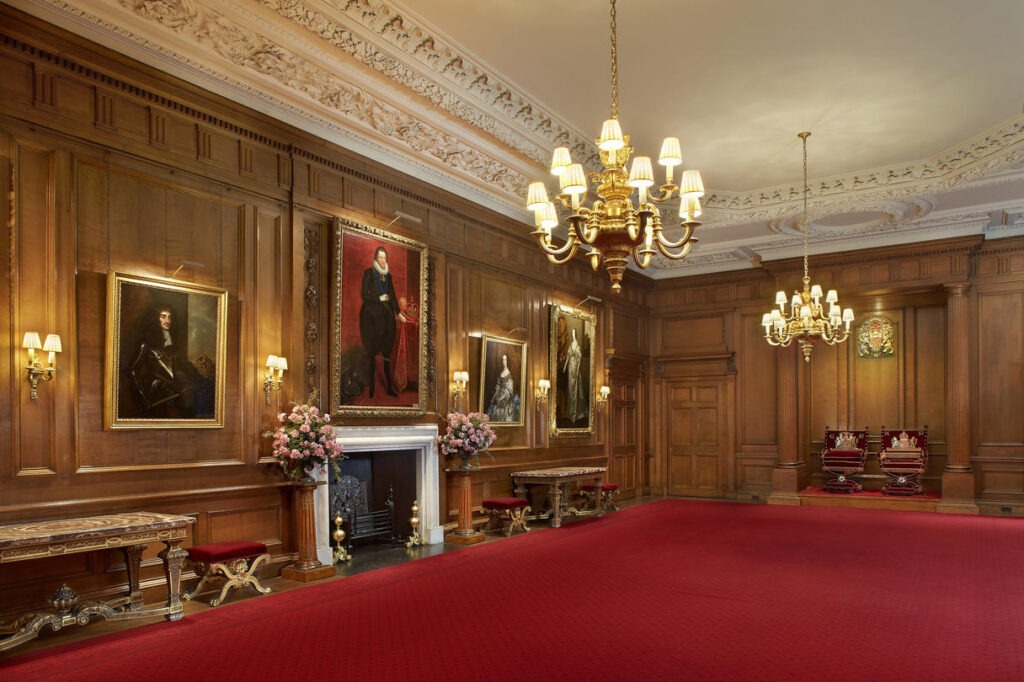
Credit: Meeting Edinburgh
Mary Queen of Scots’ Historic Apartments
The second floor preserves rooms that Mary Stuart occupied between 1561 and 1567 during her turbulent reign. Her Outer Chamber, Bedchamber, and Supper Room remain largely as they were when David Rizzio, her Italian secretary and rumoured lover, was brutally murdered here in 1566 by conspirators, including her husband, Lord Darnley. Visitors see the very spot where Rizzio fell, stabbed 56 times, creating a scene of violence that shocked Europe and contributed to Mary’s eventual downfall.
These relatively modest rooms contrast sharply with the grandeur of the State Apartments, revealing how Mary actually lived rather than how she presented herself ceremonially. The needlework attributed to her, miniature portraits, and period furnishings create an intimate connection to the queen whose life reads like tragic drama. She was widowed at 18, forced to abdicate at 24, imprisoned by her cousin Elizabeth I for 19 years before execution at 44.
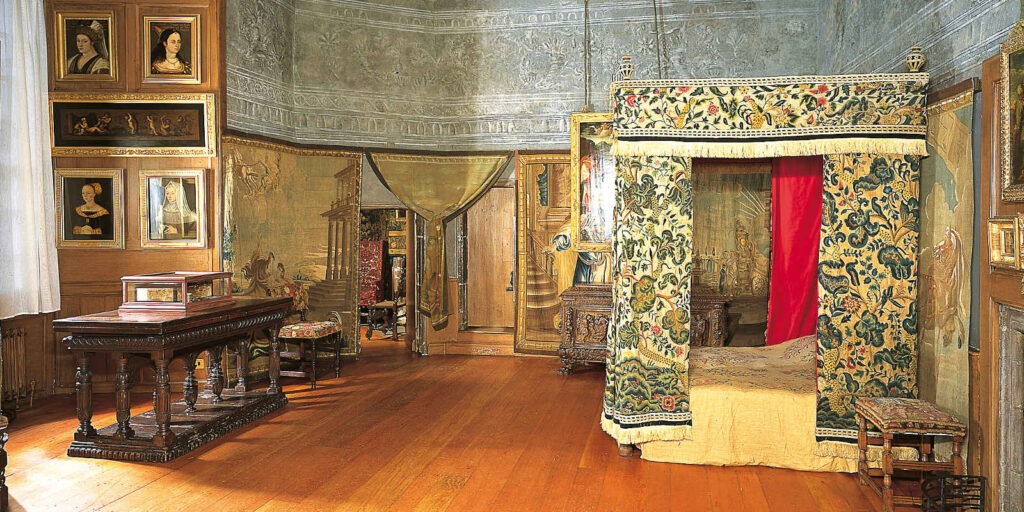
Credit: Edinburgh Tourist
Holyrood Abbey Ruins
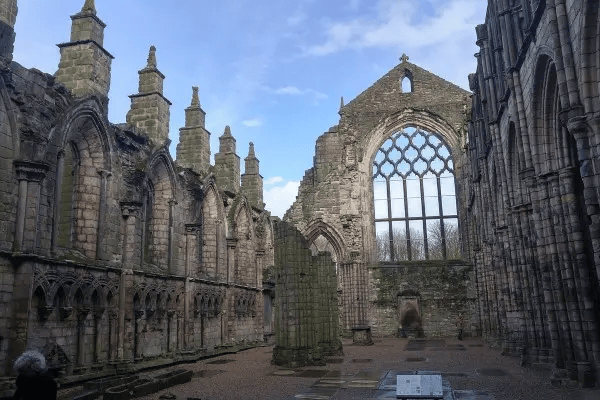
Adjacent to the Palace stand the atmospheric ruins of Holyrood Abbey, founded by David I in 1128 and functioning as Scotland’s premier abbey until Reformation violence and eventual roof collapse in 1768 left it a romantic ruin. The roofless nave, with Gothic arches soaring against the sky, creates one of Edinburgh’s most photographed settings, particularly evocative at sunset, when golden light illuminates the weathered stone.
The abbey hosted royal coronations, weddings, and burials throughout the medieval period, serving as the spiritual centre of the Scottish monarchy before the construction of the Palace. Today, visitors wander freely through the ruins, imagining when these walls echoed with Gregorian chant and royal ceremony, when power was divided between church and crown, and when Scotland was an independent kingdom rather than a component of the United Kingdom.
Credit: The Palace of HolyroodHouse
The Palace Gardens
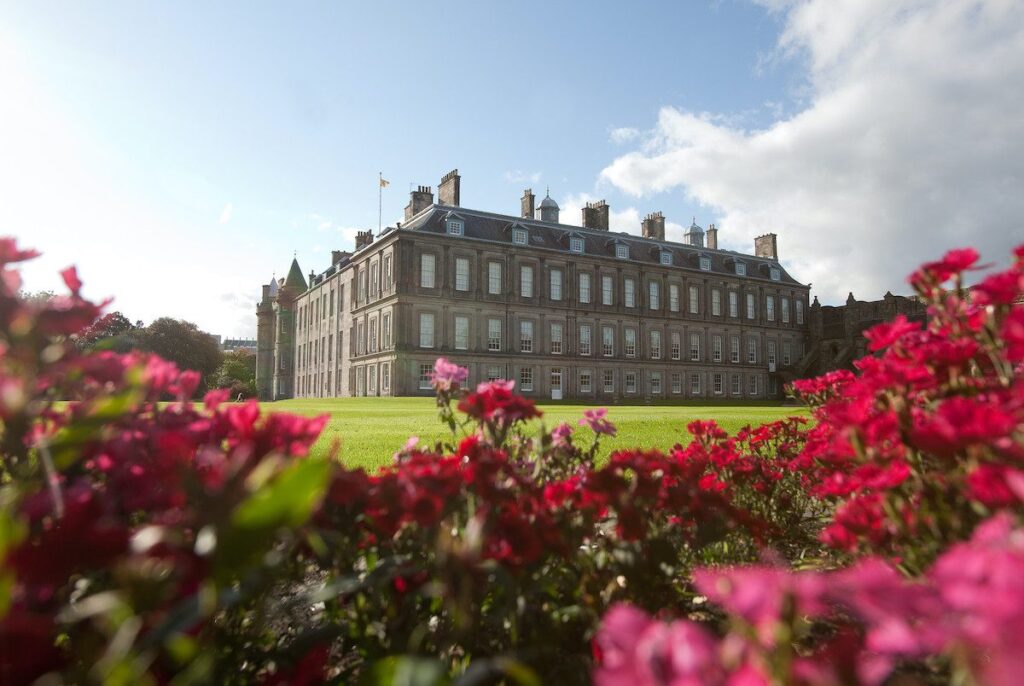
Behind the Palace, ten acres of formal and informal gardens provide unexpected tranquillity against Arthur’s Seat’s dramatic backdrop. Originally, the monastery gardens, where monks grew medicinal herbs, were transformed by James IV into royal pleasure grounds hosting tournaments, archery, hawking, and even a menagerie containing lions, tigers, and bears. Mary Queen of Scots practised archery here and imported wild boars from France for hunting.
The gardens balance formality with naturalistic plantings, featuring herbaceous borders, an ancient sundial, and carefully maintained lawns. Visitors conclude Palace tours with garden walks, offering moments to process the history experienced inside while enjoying views back toward the Palace facade and upward toward the volcanic peaks of Arthur’s Seat. The contrast between cultivated gardens and wild hillside epitomises Edinburgh’s character through sophistication and wilderness coexisting comfortably.
Credit: Discover Scottish Gardens
The King’s Gallery
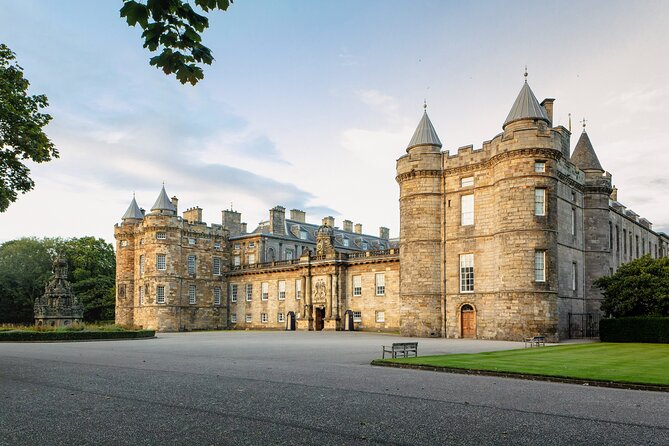
Housed in the former Holyrood Free Church beside the Palace, The King’s Gallery presents rotating exhibitions from the Royal Collection, including artworks, decorative objects, and historical treasures accumulated by monarchs across centuries. Recent exhibitions have explored Renaissance drawing (featuring works by Leonardo, Michelangelo, Raphael, and Titian), royal photography, and specific artists or periods that illuminate British and European cultural history.
The gallery building’s conversion created a purpose-built exhibition space with controlled environments protecting delicate works while presenting them beautifully. Combined tickets with Palace admission provide good value for those wanting a comprehensive royal cultural experience. The rotating nature ensures repeat visitors discover new treasures with each exhibition, revealing the depths of the Royal Collection that no single permanent display could encompass.
Credit: Tripadvisor
Visiting Practical Information
The Palace is open daily throughout the year, except during periods of royal residence (check the website for current closures). Multimedia guides included with admission provide a comprehensive history in English, French, Spanish, German, Italian, Mandarin, Japanese, and Russian, as well as British Sign Language and audio-descriptive versions. Self-guided tours typically take 1-2 hours, depending on interest level and reading pace. Rushing diminishes experience, so allow adequate time to journey through.
The Palace sits at the Royal Mile’s eastern end, approximately a 20-minute walk from Edinburgh Waverley station or readily accessible by buses stopping near the Scottish Parliament. Photography and filming inside remain prohibited to protect furnishings and maintain the atmosphere, though gardens welcome cameras enthusiastically. The Palace is largely accessible for wheelchair users, with some restrictions in Mary Queen of Scots’ rooms due to historic architecture. Make sure to contact in advance regarding specific accessibility needs.
The Palace in Royal Life Today
Unlike many royal residences that function solely as museums, Holyroodhouse remains an active working palace, hosting annual Holyrood Week, when the monarch conducts official Scottish duties. During this period, the Palace is closed to the public as the state rooms fulfil their intended purposes. They are receiving dignitaries, hosting receptions, and conducting investiture ceremonies where Scottish residents receive honours. Garden parties welcome thousands of guests who represent various Scottish communities and achievements.
This dual function as a working palace and a visitor attraction creates a unique atmosphere where history isn’t merely preserved but continues to unfold. The same rooms tourists photograph in July host state banquets in June, the same throne where visitors pause for selfies serves actual ceremonial purposes weeks later. This vitality (the sense that Holyroodhouse matters to contemporary monarchy rather than merely commemorating past glories) distinguishes it from purely historical sites and creates a connection between Scotland’s royal past and present.
Conclusion: Palace of Holyroodhouse in Edinburgh
The Palace of Holyroodhouse in Edinburgh reveals Scottish royal history not as a distant narrative but as a living tradition that continues to shape how the United Kingdom’s monarchy operates. From Mary Queen of Scots’ tragic drama to Charles III’s annual official duties, from baroque State Apartments to atmospheric abbey ruins, the Palace offers experiences that educate about Scotland’s complex relationship with monarchy while demonstrating how constitutional kingship adapts across centuries without losing connection to historical roots.
Whether you seek baroque splendour, tragic royal drama, romantic ruins, or simply an understanding of how modern monarchy functions, Holyroodhouse delivers with its characteristic Scottish balance of grandeur and accessibility. The Palace proves that heritage sites needn’t choose between preservation and relevance. They can honour history while remaining vitally important to contemporary national life, making every visit encounter both past and present.
If you’d like to explore Edinburgh’s royal heritage beyond Holyroodhouse, discovering Edinburgh Castle’s military might, understanding Scottish history through multiple perspectives, and experiencing the city with guidance that connects Royal Mile cobblestones to broader narratives, consider our private Edinburgh experiences crafted to reveal Scotland’s capital with local insight, historical depth, and moments that transform sightseeing into genuine cultural connection.
FAQ
What is Holyroodhouse famous for?
The Palace of Holyroodhouse is famous as the official Scottish residence of the British monarch. Historic highlights include Mary, Queen of Scots’ chambers, where her secretary David Rizzio was murdered in 1566. The palace features stunning State Apartments, the ruined Holyrood Abbey, and beautiful gardens. It’s an active royal residence where the monarch stays during visits to Scotland.
Is the Palace of Holyroodhouse worth visiting?
Yes, the Palace of Holyroodhouse is worth visiting for its rich royal history, stunning State Apartments, and connection to Mary, Queen of Scots. Visitors explore lavishly decorated rooms, historic quarters, the ruined abbey, and beautiful gardens. Audio guides provide fascinating context. Located at the end of the Royal Mile, opposite Edinburgh Castle, it offers excellent value for history enthusiasts.
Is it free to visit the Palace of Holyroodhouse?
No, the Palace of Holyroodhouse requires paid admission. Standard tickets cost approximately £18-20 for adults. Children under 5 enter free, with reduced rates for children, students, seniors, and families. Annual memberships and combined tickets with other royal palaces offer better value. Tickets include audio guides. Book online for guaranteed entry, especially during peak season.
Who lives in the Palace of Holyroodhouse in Edinburgh?
No one permanently lives in the Palace of Holyroodhouse. King Charles III uses it as his official Scottish residence during Royal Week (typically late June/early July) and other state visits to Scotland. The Master of the Household at Holyroodhouse oversees palace operations year-round. When royals aren’t in residence, the palace opens to public tours.