Helsinki is an excellent base.
The Finnish capital sits at the edge of the Baltic, surrounded by islands and an archipelago, with a train network that reaches historic towns and a ferry route that extends all the way to a medieval Estonian capital. Within two hours in any direction, the city gives way to national parks, old wooden towns, Finland’s first city, and one of the most dramatically preserved medieval city centres in northern Europe.
This guide covers the best day trips from Helsinki, organised by travel time and character.
Key Takeaways
- Helsinki’s ferry terminals connect directly to Tallinn, Estonia (around 2 hours) and Stockholm, Sweden (an overnight journey that makes for an unconventional day-and-a-half trip).
- The main public transport operator for trains is VR, with tickets bookable in advance online; regional buses run by OnniBus connect Helsinki to Turku and other destinations at competitive prices.
- Suomenlinna Sea Fortress is technically a Helsinki attraction, but functions as a day trip in feel – a UNESCO-listed island fortress 15 minutes by public ferry from Market Square.
- Nuuksio National Park is reachable by public transport (metro to Espoo, then bus) in under an hour and is free to enter.
- Porvoo is the most visited day trip from Helsinki and the most rewarding for first-time visitors who want historic character, beautiful wooden houses, and a quiet town to wander.
Within the City: The Island That Feels Like an Escape
Suomenlinna Sea Fortress
Distance: 15 minutes by public ferry
How to get there: HSL ferry from Market Square (Kauppatori). Covered by standard Helsinki public transport tickets.
Suomenlinna is the day trip that requires the least planning and rewards the most disproportionately.
Built by Sweden in the 1740s and declared a UNESCO World Heritage Site in 1991, the fortress spreads across six interconnected islands at the entrance to Helsinki harbour. The ferry from Market Square takes fifteen minutes and runs year-round, several times an hour in summer. On the other side: cannon ramparts, tunnels, historic stone buildings, a church, several museums, a brewery, and enough green open space to spend an entire afternoon.
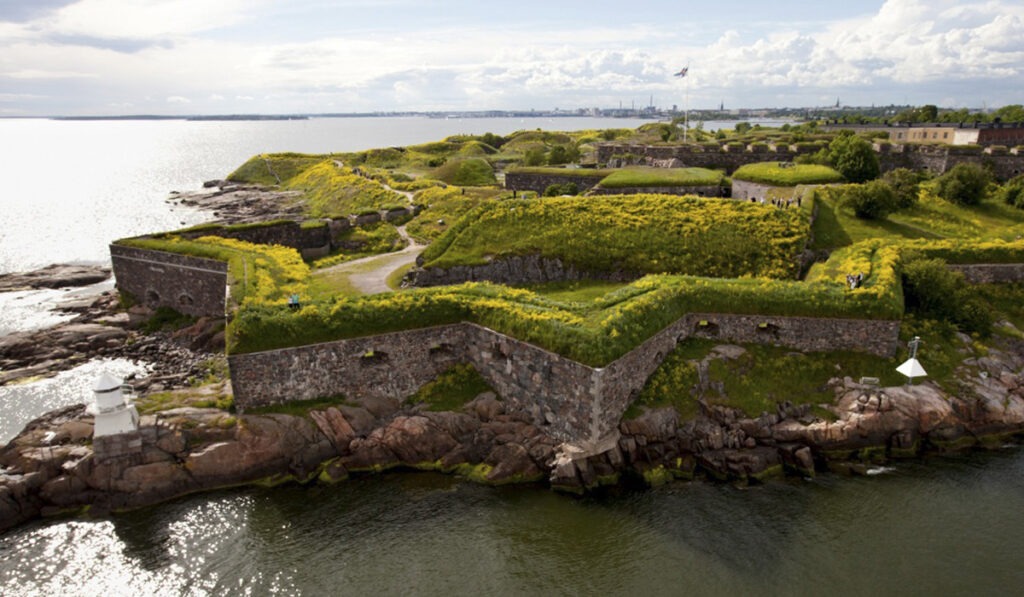
Credit: Discovering Finland
In summer, the islands are genuinely beautiful with wildflowers on the ramparts, swimming from the rocks, and picnics on the southern shore with the Baltic stretching to the horizon. In winter, the ferry still runs, the islands are quiet and snow-covered, and the fortifications look exactly as dramatic as they should.
Most visitors to Helsinki do Suomenlinna in half a day. It can easily absorb a full one.
Under One Hour
Nuuksio National Park
Distance: 40–50 minutes from central Helsinki
How to get there: Metro to Espoo centre, then bus 245 toward Haltia (the park’s nature centre). The park is also reachable by car in approximately 35 minutes.
Nuuksio is Finland’s most accessible wilderness. It’s a national park of lakes, ancient forests, moss-covered granite boulders, and marked hiking trails that begins less than 40 kilometres from central Helsinki.
The park is free to enter. Trails range from short, accessible loops around the nature centre at Haltia to longer routes through old-growth forest and across the rocky ridges that characterise the landscape. Birdwatching is excellent year-round; the park is home to the white-backed woodpecker, various raptors, and, for patient visitors who know where to look, the extraordinarily elusive flying squirrel.
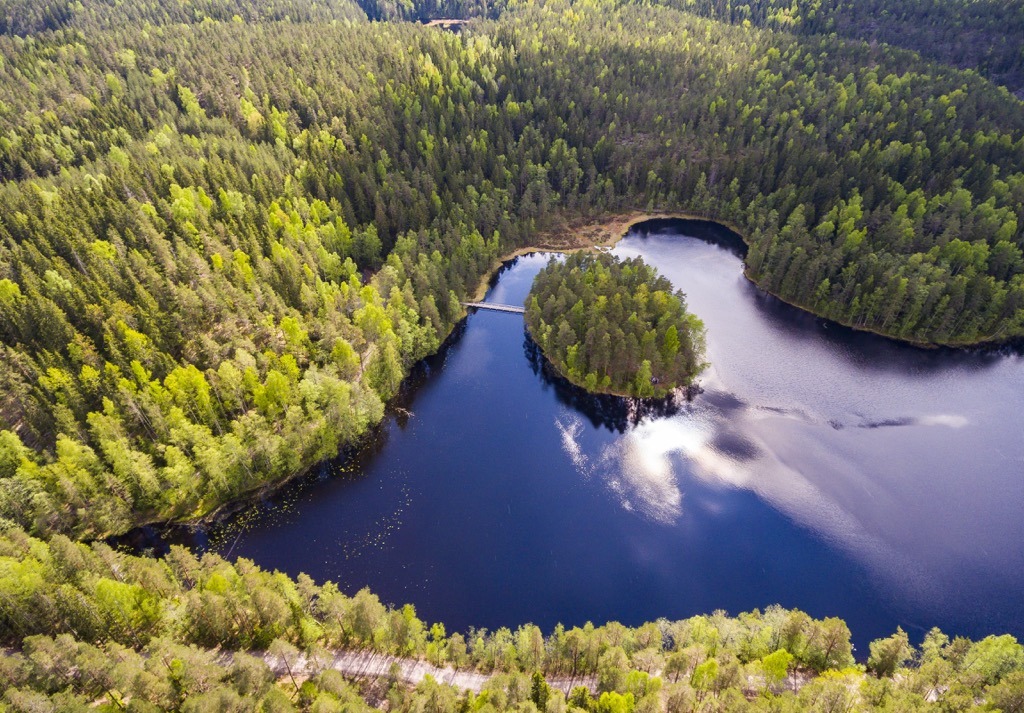
Credit: PeakVisor
In summer, the lakes offer swimming from natural shorelines with no facilities and, importantly, no crowds. In winter, cross-country skiing trails are groomed across the park, and the silence of a Finnish forest under deep snow is one of those experiences that requires no embellishment.
Nuuksio is the day trip most used by Helsinki residents themselves, which is the strongest possible endorsement.
Getting there by public transport: Take the metro from central Helsinki toward Kivenlahti, change at Espoo, and board bus 245 toward Haltia. Journey time is approximately 50 minutes from the city centre.
Porvoo – Finland’s Most Charming Old Town
Distance: 50 km east of Helsinki, approximately 50 minutes by bus
How to get there: Regular buses from Kamppi Bus Terminal; journey approximately 50 minutes. In summer, a steamboat operates along the Porvoo River from Helsinki.
Porvoo is Finland’s second-oldest city and its most immediately beautiful. It’s a small medieval town of cobblestone streets, 18th and 19th-century wooden houses, and the iconic row of red riverside warehouses that line the Porvoo River and have appeared on more Finnish postcards than perhaps any other image in the country.
The Old Town is compact and entirely walkable, and the quality of independent shops, cafés, chocolatiers, and galleries concentrated within it is remarkable for a city of this size. J.L. Runeberg (Finland’s national poet) lived in Porvoo for much of his life, and his home is the oldest preserved home museum in Finland and is worth visiting for the insight it provides into 19th-century Finnish bourgeois life.
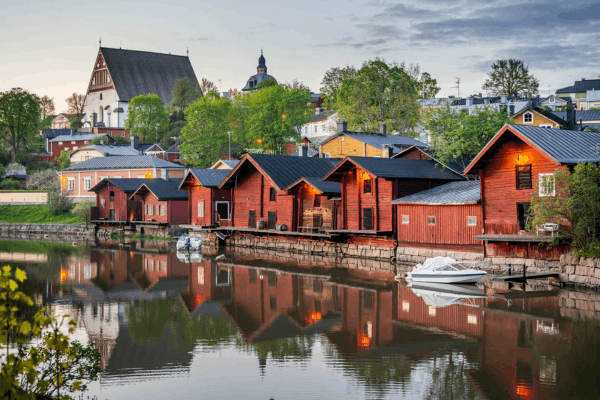
Credit: Visit Finland
The cathedral of Porvoo, a medieval stone church that has stood on its hill since the 14th century, offers sweeping views of the red warehouse roofs and the river below. The walk down through the old town, stopping at the chocolate shops and the riverside cafés, is the essential Porvoo experience.
For visitors who want to reach Porvoo in the most atmospheric way possible, the summer steamboat service from Helsinki is the answer. It’s a two-hour journey along the coast, arriving directly at the riverside.
Around Two Hours
Turku – Finland’s First City
Distance: 165 km west of Helsinki – approximately 2 hours by train or 2 hours by express bus
How to get there: Frequent direct InterCity trains from Helsinki Central Station; journey approximately 2 hours. OnniBus services also run between Helsinki and Turku at competitive prices.
Turku was Finland’s capital until 1812, and its seniority over Helsinki is visible in the scale and character of its historic assets. The medieval castle at the mouth of the Aura River is one of the largest and most impressive in Scandinavia, its massive stone halls housing a permanent exhibition on medieval Finnish court life that is among the finest of its kind in the country. The cathedral of Turku, begun in the 13th century, is Finland’s national shrine and still the mother church of the Church of Finland.
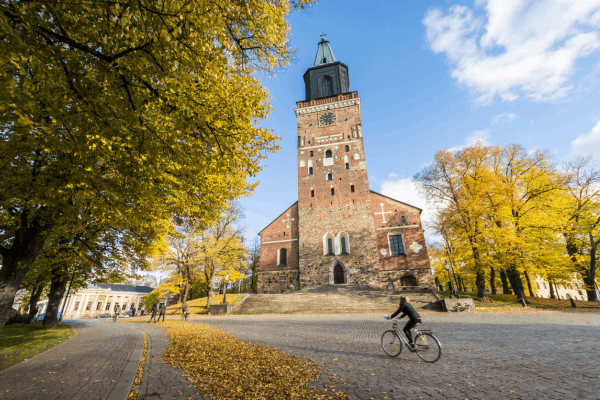
Credit: Expedia
The modern Turku is a university city with a vibrant café and restaurant culture concentrated along the Aura River, where old wooden boats have been converted into bars and restaurants that fill in summer. The Turku archipelago, stretching southwest through thousands of islands toward the Åland archipelago and Sweden, offers some of the finest sailing and island-hopping in the Baltic.
Turku is a full-day destination that justifies arriving early and leaving late.
Tallinn – The Medieval Capital Across the Sea
Distance: 80 km by sea – approximately 2 hours by ferry
How to get there: Ferries operated by Tallink, Viking Line, and Eckerö Line from the West Harbour (Länsisatama). Journey time 2–2.5 hours, depending on the operator.
The ferry to Tallinn is one of the great day trips in northern Europe, combining the pleasure of a short sea crossing with the reward of a destination that is genuinely extraordinary.
Tallinn’s Old Town is a UNESCO World Heritage Site full of medieval streets, Gothic spires, and Hanseatic merchant architecture that has survived largely intact. It is one of the finest preserved medieval city centres in Europe. The walk from the Lower Town through the medieval gates to the Upper Town at Toompea, with views across the red-roofed city toward the Baltic, is an experience that justifies the ferry fare on its own.
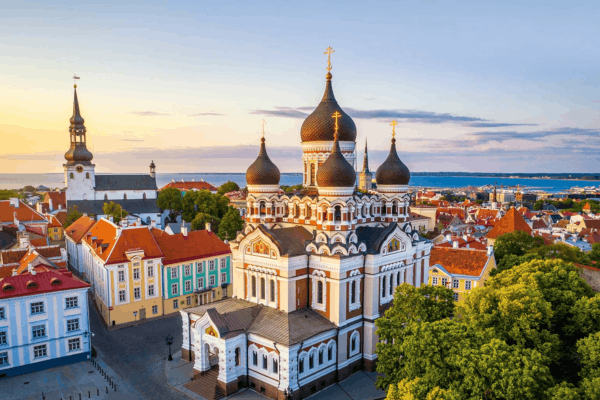
Credit: National Geographic
Beyond the Old Town: the Kalamaja neighbourhood (creative, independent, lined with wooden buildings), the Telliskivi creative district, and the waterfront development at Noblessner (where Tallinn’s two Michelin-starred restaurants are located) all reward time spent beyond the tourist perimeter.
Ferries depart Helsinki in the early morning and return in the evening. A return trip is easily accomplished in a day, with six to eight hours in Tallinn. Book the earliest outbound sailing to maximise time. The crossing itself – the Baltic on a clear morning, the Estonian coast emerging from the sea – is part of the experience rather than merely a transfer.
Hämeenlinna – Castle and Lake Country
Distance: 100 km north of Helsinki – approximately 1 hour by train
How to get there: Direct trains from Helsinki Central Station; journey approximately 1 hour.
Hämeenlinna is the gateway to Finland’s inland lake district and the site of one of the country’s finest medieval fortifications – Häme Castle, a 13th-century fortress on the shores of Lake Vanajavesi that has served as a royal residence, a prison, and a granary across its seven centuries of existence.
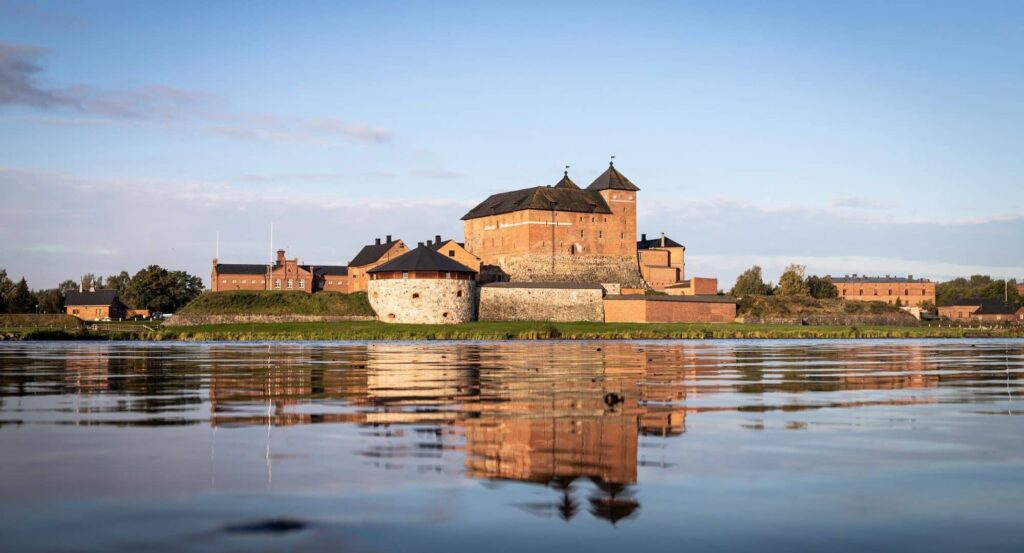
Credit: Lakeland Finland
The city is also the birthplace of Jean Sibelius, Finland’s most celebrated composer, and the house where he was born in 1865 has been preserved as a museum. The combination of the castle, the Sibelius birthplace, and the beautiful lake setting makes Hämeenlinna one of the most rewarding cultural day trips available from Helsinki, and the one-hour train journey makes it entirely practical.
Lake Vanajavesi, surrounding the city, is one of the starting points for the vast Häme Ox Road cycling route, and in summer, the lake is warm enough for swimming.
Tampere – Finland’s Industrial Soul
Distance: 180 km north of Helsinki – approximately 1.5 hours by fast train
How to get there: Frequent direct trains from Helsinki Central Station, including high-speed Pendolino services; journey approximately 1.5 hours.
Tampere is Finland’s third city and, by a significant measure, its most characterful – a city built on the rapids between two lakes in the early 19th century, where the textile mills and factories that drove Finland’s industrialisation have been transformed into museums, restaurants, and cultural spaces without losing the physical presence of what they originally were.
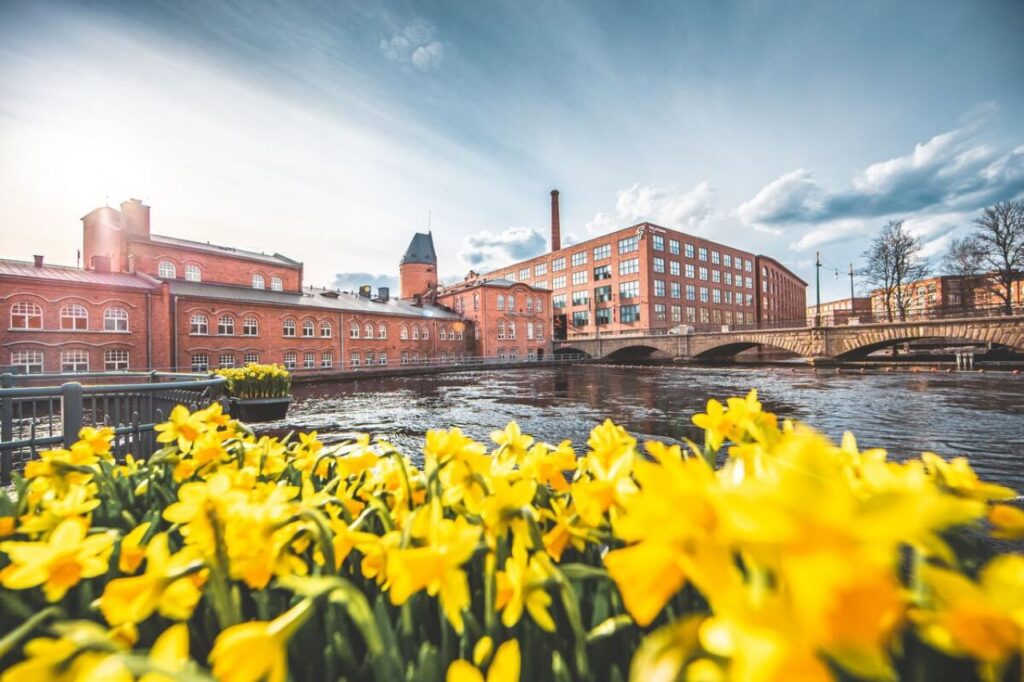
Credit: Visit Finland
The Vapriikki Museum Centre, in a former factory complex on the rapids, contains multiple museums. It hosts natural history, hockey (ice hockey is Tampere’s civic religion), and temporary exhibitions under one industrial roof. The Tampere Cathedral and the Näsinneula observation tower offer the best views of the city’s extraordinary geographical position. The mustamakkara (black sausage with lingonberry jam, served at the market hall) is Finland’s most famous regional food and the essential Tampere eating experience.
Tampere is the day trip from Helsinki most suited to visitors who want a proper Finnish city experience rather than a historic town or a national park, somewhere with the energy of a working, living urban community.
Further Afield
Rauma – UNESCO Wooden Old Town
Distance: 240 km west of Helsinki – approximately 3.5 hours by bus
How to get there: OnniBus services from Kamppi Bus Terminal, changing in Turku; total journey approximately 3.5 hours.
Rauma is Finland’s best-kept secret and its most under-visited UNESCO site. It’s the largest preserved old wooden town in the Nordic countries, with over 600 18th and 19th-century timber buildings lining a network of cobblestone streets that have remained largely unchanged for over two centuries.
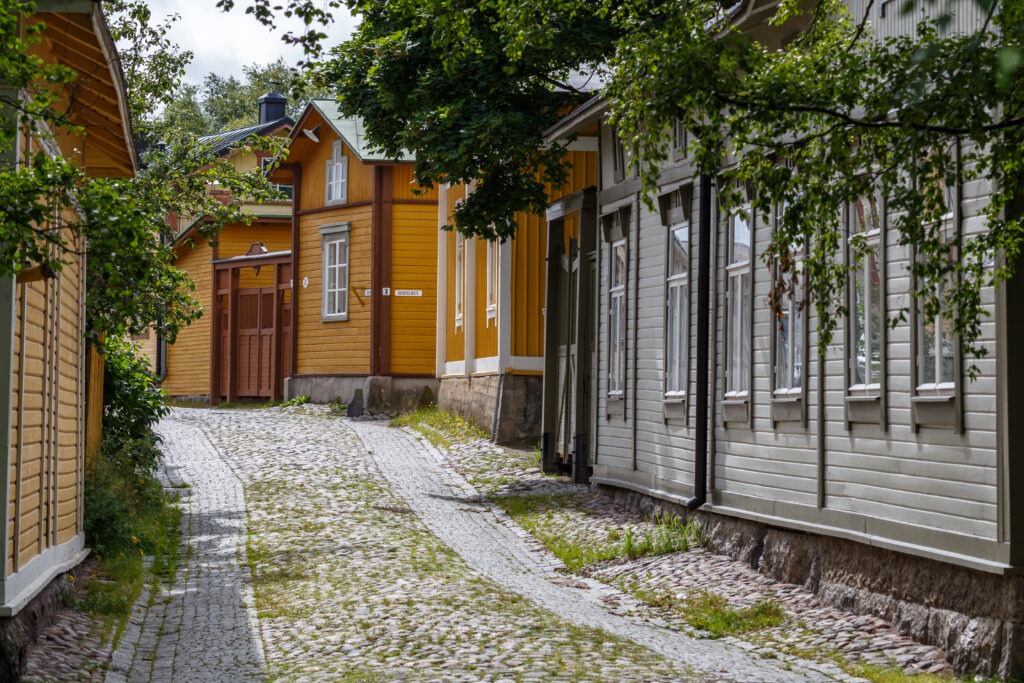
Credit: Visit Rauma
The buildings are painted in the faded pastels that characterise old Scandinavian coastal towns, many of them housing independent shops, lace workshops (Rauma is Finland’s centre of bobbin lace making, itself listed as UNESCO Intangible Cultural Heritage), and cafés. The old church of the Holy Cross, dating from the 15th century, is one of the finest medieval interiors in western Finland.
Rauma is a long day from Helsinki, but a deeply rewarding one, and the combination of the wooden town with a walk along the rocky coast of the surrounding Rauma archipelago makes it worth the journey.
Åland Islands – The Archipelago Kingdom
Distance: 6–7 hours by overnight ferry from Helsinki, or 5.5 hours via Turku
How to get there: Viking Line and Tallink Silja operate ferry services from Helsinki and Turku to Mariehamn, the Åland capital. The overnight Helsinki–Mariehamn crossing makes a comfortable one-night trip rather than a day trip.
Strictly speaking, Åland is too far for a true day trip – the ferry journey alone takes most of the day. But for visitors with an extra night in the Helsinki region, Åland provides an experience unlike anything available from the mainland: a Swedish-speaking Finnish archipelago of over 6,500 islands, with its own flag, its own stamps, and a cycling and sailing culture that has built a genuine international reputation.
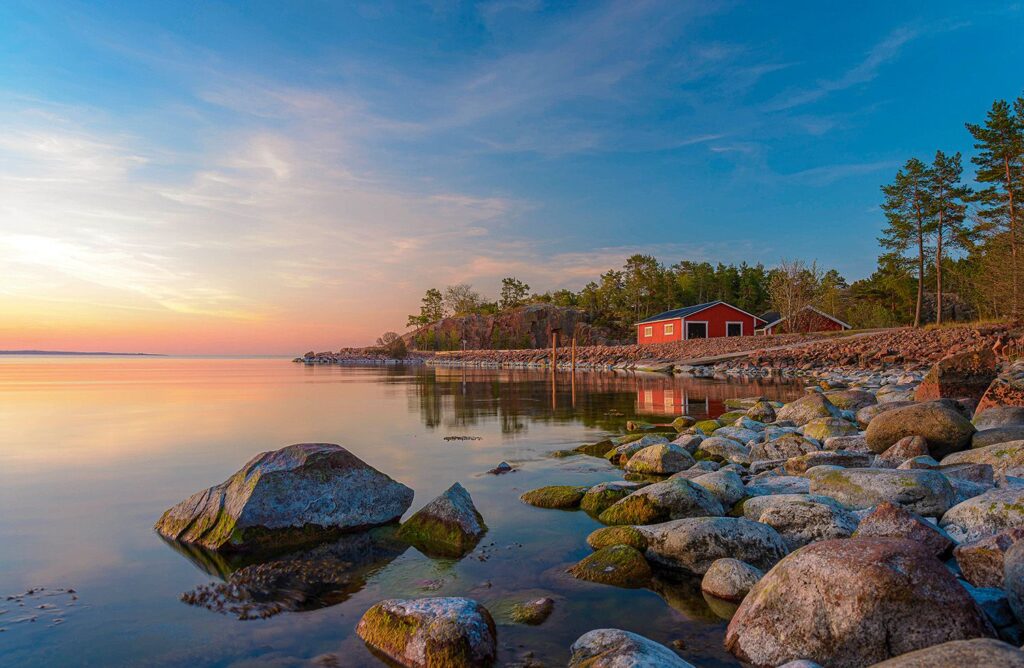
Credit: Wanderlust
The medieval castle of Kastelholm, the maritime museum at Mariehamn, and the cycling routes between the islands on a summer day combine into one of the most complete and most quietly magnificent travel experiences in northern Europe. Åland in June, cycling between islands connected by small cable ferries, is the kind of day that becomes a repeated destination.
Practical Notes for Day Trips from Helsinki
The HSL (Helsinki Regional Transport) day pass covers metro, tram, bus, and the Suomenlinna ferry within Helsinki and the inner zone – a good option for Nuuksio via the metro-to-bus route.
VR trains are comfortable, punctual, and often the fastest option for Tampere, Turku, and Hämeenlinna. Book in advance on vr.fi for the best fares, especially on popular summer routes.
Ferries to Tallinn should be booked in advance in summer – particularly on Friday and Sunday, when the service is busy with Finnish day-trippers crossing for the day.
Summer extends the day trip season considerably. With daylight lasting until after 11 pm in June and July, the practical window for a day trip from Helsinki in summer is significantly longer than in most European cities.
Conclusion
The day trips from Helsinki reflect the diversity of what Finland and the surrounding Baltic region offer: medieval wooden towns and national parks, an industrial city built on rapids, a fortress archipelago, and a 2-hour ferry ride to a medieval Estonian capital that is one of the finest in Europe.
Helsinki is worth more than one day. So is everything around it.
To experience Helsinki and the wider Finnish and Nordic region as part of a curated private journey, explore our private Helsinki tours.
FAQ
What are the best day trips from Helsinki?
Edinburgh has five Michelin-starred restaurants as of 2025. The city boasts one two-star restaurant (The Kitchin) and four one-star establishments including Restaurant Martin Wishart, 21212, Timberyard, and The Gardener’s Cottage. Scotland’s capital leads the country in Michelin recognition, showcasing innovative Scottish cuisine using locally-sourced ingredients. The number fluctuates annually with new Michelin Guide releases.
How many days are enough to see Helsinki?
The Kitchin, Edinburgh’s only two-Michelin-star restaurant, is widely considered the best. Chef Tom Kitchin’s “from nature to plate” philosophy showcases exceptional Scottish seasonal ingredients with French techniques. Restaurant Martin Wishart also receives high acclaim for refined modern French-Scottish cuisine. Both offer tasting menus around £100-150 per person. Timberyard and 21212 provide excellent one-star alternatives with creative, ingredient-focused menus.
Where can you go by train from Helsinki?
Yes, Scotland has multiple Michelin-starred restaurants. Edinburgh leads with five starred establishments including two-star The Kitchin. Glasgow has several, including Unalome by Graeme Cheevers. Isle of Skye features three-Michelin-star Loch Bay and one-star Edinbane Lodge. Other Scottish starred restaurants include Andrew Fairlie at Gleneagles and various establishments across Perthshire, Highlands, and coastal regions showcasing Scotland’s exceptional seafood and local produce.
What is the prettiest town in Finland?
Must-eat Edinburgh foods include haggis with neeps and tatties, Scottish salmon, Cullen skink (smoked haddock soup), traditional fish and chips, and shortbread. Try black pudding, stovies, Scottish tablet, and Tunnock’s teacakes. Experience fine dining at Michelin-starred restaurants, traditional pubs serving hearty fare, street food at markets, and authentic afternoon tea. Don’t miss local craft beer and whisky.