Helsinki does not have a bad season.
It has four very different ones, each offering something the others cannot, and deciding when to visit Helsinki comes down entirely to which version of the city you want to see. The Helsinki of June, with the sun barely setting and cafés spilling onto terraces until midnight, is a different city from the Helsinki of February, when the harbour freezes, and locals commute to work in the dark. Both are worth experiencing. Neither is wrong.
This guide covers every season in detail, with a month-by-month summary and practical notes to help you plan.
Key Takeaways
- Helsinki is genuinely worth visiting year-round, but the experience changes dramatically with the season – there is no objectively “best” time, only the time that suits what you want to do.
- Summer (June to August) offers the midnight sun, island hopping in the archipelago, and the city’s most vibrant outdoor life; it is also the busiest and most expensive period.
- Winter (December to February) is quieter, considerably cheaper, and transforms Helsinki into a Nordic snow city with excellent sauna culture, Christmas markets, and occasional Northern Lights sightings outside the city centre.
- May and September are the two months most consistently recommended by both locals and travel experts as the ideal balance of good weather, reasonable costs, and manageable crowds.
- Helsinki is compact and well-served by public transport year-round; the ferry to Suomenlinna Sea Fortress operates in all seasons.
- The Northern Lights are only occasionally visible from Helsinki itself due to its southern latitude and urban light pollution; for reliable aurora sightings, short trips to Finnish Lapland or northern Finland are recommended between September and March.
Summer: June, July, August
Summer in Helsinki is the city at its most expansive and most social.
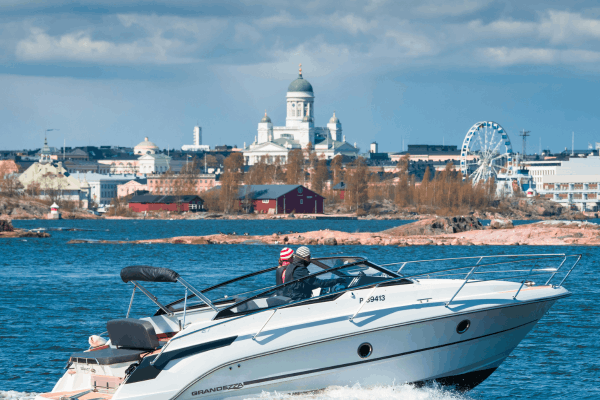
Around the summer solstice in June, the sun rises before 4am and does not set until after 11pm, and for much of June and July, the sky never reaches full darkness. Locals call this the White Nights (valkoiset yöt), and the effect on city life is palpable: café terraces fill at 10pm with natural light still in the sky, the harbour fills with boats, and the archipelago islands surrounding Helsinki become destinations in their own right.
Average summer temperatures in Helsinki sit between 18°C and 25°C. It’s comfortable rather than hot, with humidity occasionally making it feel warmer. July is the warmest month; August, statistically the wettest, rewards visitors who bring a light rain layer.
Credit: Tapio Haaja
What summer offers:
- Island hopping in the Helsinki archipelago – dozens of islands accessible by public ferry, including Suomenlinna, Pihlajasaari, Vallisaari, and the inner harbour islands
- Outdoor markets, including the Kauppatori (Market Square) in full bloom with fresh berries, vegetables, and fish
- Vappu (May Day, 1 May) – one of Finland’s most exuberant national celebrations, marking the end of winter with crowds in Esplanadi Park and the harbour
- Midsummer (juhannus) in late June – Finland’s most important summer holiday, when much of the city quiets as locals depart for lakeside cottages
- The Helsinki Festival in August – the largest arts festival in the Nordic countries, spanning music, theatre, and visual art
- Swimming in the sea – Helsinki’s harbour water is clean, and the city has well-established outdoor swimming platforms.
What summer does not offer:
- Solitude at the city’s most popular sites – Suomenlinna, Market Square, and the harbour area are busy throughout July and August
- Budget accommodation – summer is peak season, and central hotels book quickly at high rates.
- A quiet, local Helsinki – the city genuinely feels more like itself in the shoulder months.
Midsummer note: Finns leave the city in large numbers for Midsummer (the weekend around 21 June). Helsinki itself becomes quieter, some restaurants and shops reduce hours, and the experience shifts. This can be a pleasant time to visit if you want a quieter city, or a reason to plan around it if you want the city at full energy.
Summary: Summer is Helsinki at its most photogenic and most alive. For first-time visitors who want the full experience of a Nordic city in the light season, including the archipelago, terraces, long evenings, and outdoor markets, then June and early July are the ideal months.
Autumn: September and October
Autumn is Helsinki’s most underrated season, and for many experienced visitors, their favourite.
September arrives with cooler temperatures (9°C–14°C), the crowds of summer thinning almost immediately, and the first golden and copper tones in Esplanadi Park and the Nuuksio National Park forests. The days are still long enough for comfortable exploration; the evenings are cool enough to make a sauna feel genuinely necessary. The city’s restaurant scene is always strong and operates with full energy.
Helsinki Design Week, typically held in September, is the largest design event in the Nordic countries and draws an international creative community to a city already deeply invested in design culture. The combination of the event and the autumn atmosphere makes September one of the most culturally rich months to visit Helsinki.
October cools quickly, the leaves reach peak colour, and the darkness begins to feel genuine. The Ruska season – Finland’s equivalent of New England’s fall foliage – is particularly vivid in the national parks and forests around the city. Rain increases through the month, and daylight drops sharply.
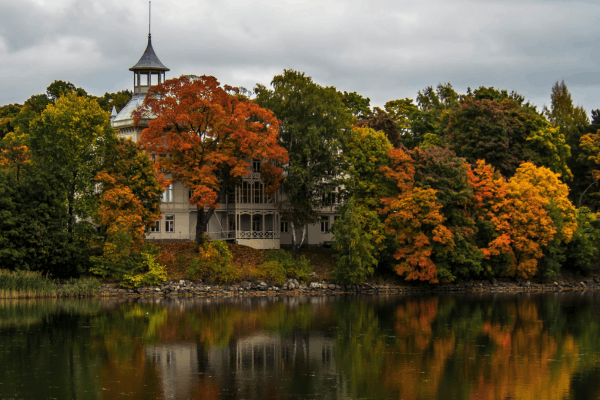
Credit: Jaakko Kemppainen
What autumn offers:
- Helsinki Design Week (September) offers exhibitions, events, and studio openings across the city.
- Autumn foliage in Nuuksio National Park, Sipoonkorpi, and the archipelago islands
- Lower accommodation costs relative to summer
- September: still warm enough for outdoor dining and island trips
- A more local, residential atmosphere as the summer visitors depart
What autumn does not offer:
- The midnight sun, where nights don’t return to normal darkness until mid-August
- The energy of Helsinki’s summer event calendar
Summary: September is the month that experienced Helsinki visitors return to most often – the city is still fully alive, the light is beautiful, the crowds have thinned, and the design festival gives an additional reason to be there. October suits those who want autumn colour and a quieter city.
Winter: November to February
Helsinki’s winter is not for everyone.
By December, the sun rises around 9:30am and sets before 3:30pm – less than six hours of daylight. The harbour can freeze by January, and temperatures regularly drop below -10°C. Some attractions reduce their hours; some outdoor activities become unavailable.
But Helsinki in winter offers a genuinely Nordic experience that summer cannot approach.
The sauna culture, already central to Finnish life year-round, becomes essential in winter, and Helsinki’s public saunas, including the extraordinary Löyly and Allas Sea Pool, are at their most dramatic when you alternate between 80°C heat and a plunge through a hole cut in the harbour ice. The experience is visceral and entirely specific to this city at this time of year.
The Christmas season transforms central Helsinki with Advent markets, illuminated streets, and the warm amber glow of café windows on dark afternoons. The city’s museums, galleries, and restaurants operate at full capacity, making winter an excellent time for cultural depth.
December brings Christmas markets, Lux Helsinki in January (a festival of light installations across the city), and the visual spectacle of snow on Helsinki’s neoclassical and Art Nouveau architecture.
January and February are the coldest and darkest months, but also the quietest, with accommodation at its most affordable and attractions at their least crowded. The frozen sea around the archipelago creates walking and skiing routes that simply do not exist at any other time of year.
On the Northern Lights: Helsinki itself is too far south and too light-polluted for reliable aurora sightings. Occasional strong solar activity produces auroras visible from darker areas outside the city – open parks, coastal viewpoints – between September and March. For a genuine Northern Lights experience, a short trip to Finnish Lapland is the reliable option.
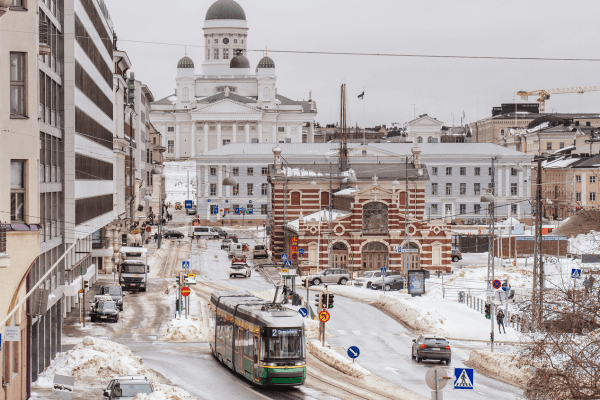
Credit: Said Aqqa
What winter offers:
- Public sauna culture at its most immersive: Löyly, Allas Sea Pool, and the city’s numerous neighbourhood saunas
- Christmas markets and festive illuminations in December
- Lux Helsinki light festival (January)
- Ice walking and skating on the frozen harbour
- The lowest accommodation costs of the year
- A quiet, unhurried city with short but dramatic days
What winter does not offer:
- Extended daylight for outdoor exploration
- Island hopping and archipelago access (ferries to some islands reduce service)
- The summer social energy of the harbour and terraces
Summary: Winter suits visitors who want to experience the essential Nordic character of Helsinki through sauna culture, snow, darkness as an aesthetic rather than an obstacle, and a city living at a different pace. It is also the cheapest time to visit.
Spring: March, April, May
Spring arrives slowly in Helsinki, and the transition from winter to summer is one of the city’s most interesting atmospheric periods.
March is the most ambiguous month. The snow that has been reliable through winter begins to turn to slush, daylight returns noticeably, and the city operates in a state of seasonal restlessness. March is not Helsinki’s most attractive month visually, but it is quieter and cheaper, and the equinox brings a brief period of increased geomagnetic activity that makes it, paradoxically, one of the better months for Northern Lights sightings outside the city.
April is a genuine transition: the snow clears from the city, the first warmth arrives on sunny days, and the days lengthen considerably. The archipelago emerges from ice; the first outdoor café seating appears tentatively. Accommodation costs are still at shoulder-season rates.
May is, by common consensus, one of the finest months to visit Helsinki.
The days are long as we’re rising to seventeen or eighteen hours of daylight by the end of the month, and the weather is comfortable without summer heat, and Vappu on 1 May is one of the great Finnish celebrations. Students fill Esplanadi Park in their white caps; the harbour is festive; the mood of the entire city lifts visibly. The botanical gardens and Esplanadi burst with early blossoms. Accommodation is still priced at shoulder-season rates, and the summer crowds have not yet arrived.
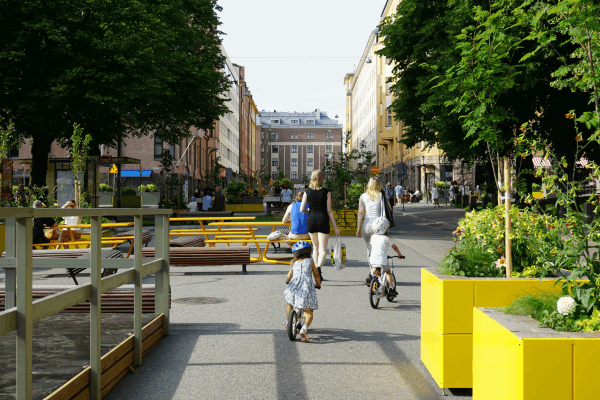
Credit: Marek Lumi
What spring offers:
- Vappu (1 May) is the most exuberant national celebration in Finland’s calendar.
- Rapidly lengthening days and increasing warmth through May.
- Lower accommodation costs relative to summer
- The city is emerging from winter with a particular energy.
- Early access to outdoor terraces, parks, and the archipelago islands
What spring does not offer:
- The full warmth of summer (April and early May can still be cold)
- The midnight sun (which begins only in late May and peaks in June)
Summary: May is the month most consistently recommended for first-time visitors who want the best of both worlds = proper daylight, the Vappu celebration, manageable crowds, and the city at the start of its most vibrant season.
Month-by-Month Summary
January: Coldest and darkest. Lux Helsinki light festival. Quietest and cheapest. Sauna culture at its most essential.
February: Still cold. More daylight than January. Snow is often reliable. Good for winter activities and very affordable travel.
March: Snow turning to slush. Equinox increases Northern Lights activity. Quiet and cheap. Transitional character.
April: Spring arrival. Snow clears. First outdoor seating. Days are lengthening quickly. Shoulder-season rates.
May: Outstanding month. Vappu celebrations (1 May). Long days, comfortable temperatures, and lower costs than summer. Highly recommended.
June: Midnight sun begins. White Nights at their most extreme. Summer events begin. Busy and expensive — book well ahead.
July: Warmest month. Peak summer. Many Helsinkians leave for the countryside. Most tourists are present. Highest costs.
August: Still summer. Helsinki Festival (arts). Slightly wetter than June-July. Busy through mid-August; quieter in the final weeks.
September: Excellent all-round month. Design Week. Autumn colours are beginning. Crowds are reducing. Highly recommended.
October: Autumn foliage peaks. Increasingly cold and dark. Good for cultural visits. Rain increases.
November: Darkest low season. Least popular month. Very cheap. Short days but a full cultural calendar.
December: Christmas markets, festive atmosphere, and snow possible. Lux Helsinki begins. Cosy and characterful despite the dark.
Practical Notes for Visiting Helsinki
Dress for layers in every season. Helsinki’s coastal wind makes temperatures feel several degrees colder than the thermometer suggests in winter, autumn, and early spring. Even in summer, evenings cool considerably, and a light jacket is always worth having.
The Helsinki Card provides free or discounted access to over 50 attractions, unlimited public transport, and the Suomenlinna ferry, and is available for 24, 48, or 72 hours. For a short city visit, it represents genuine value.
Suomenlinna Sea Fortress is accessible by public ferry year-round. In summer, the outdoor spaces and museums are fully open; in winter, it is a quieter, atmospheric visit. The island is one of Helsinki’s most worthwhile attractions in any season.
Book accommodation in advance for the summer. Helsinki’s best-value central accommodation fills quickly for July and August; booking two to three months ahead is sensible.
Conclusion
When to visit Helsinki depends entirely on what you want to find there.
For the midnight sun, the archipelago, and the city at its most exuberant: choose June or early July. For the best balance of weather, costs, and atmosphere with fewer crowds: choose May or September. For the full Nordic winter experience with sauna, snow, Christmas markets, and a city that lives beautifully in the dark: choose December or January. For quiet exploration with the lowest possible costs: choose November or February.
Every month, Helsinki offers something worth experiencing. The question is which version of the city you are looking for.
To experience Helsinki, in whatever season suits you best, as part of a curated Nordic journey, explore our private Helsinki tours.
FAQ
Which month is best to visit Helsinki?
June, July, and August are best for Helsinki with the warmest weather (15-22°C), long daylight hours, and outdoor festivals. June offers white nights with nearly 24-hour daylight. May and September provide pleasant shoulder-season weather with fewer crowds and lower prices. December suits Christmas market enthusiasts despite the darkness. Avoid November-March for cold, dark conditions unless seeking winter activities or Northern Lights nearby.
Is 3 days in Helsinki too much?
No, three days is perfect for Helsinki, allowing time to explore key attractions like Suomenlinna Fortress, Senate Square, Design District, Temppeliaukio Church, and Kauppatori Market. Enjoy Finnish sauna culture, museum visits, and excellent restaurants. Add day trips to Porvoo or Tallinn (Estonia) if desired. Two days cover highlights, but feel rushed. Four days enable deeper exploration or a relaxed pace with more neighbourhood wandering.
What is the cheapest time of year to go to Finland?
November through March (excluding Christmas/New Year) offers the cheapest Finland travel with significantly lower accommodation and flight prices. January and February provide the deepest discounts despite harsh winter conditions with limited daylight. Late autumn (November) and early spring (March-April) balance affordability with slightly better weather. Avoid peak summer (June-August) and Christmas market season when prices double or triple throughout Finland.
Is Helsinki cheap or expensive?
Helsinki is expensive, ranking among Europe’s priciest cities. Expect high costs for accommodation ($100-200/night), dining ($15-30/meal), alcohol ($8-12/beer), and transportation. Coffee costs $4-6, museum entries $10-20. Budget $100-150 daily minimum per person. Alcohol taxes make drinking particularly costly. Compared to Southern Europe, Helsinki is significantly more expensive. However, free attractions, supermarket meals, and tap water help budget-conscious travellers manage costs.