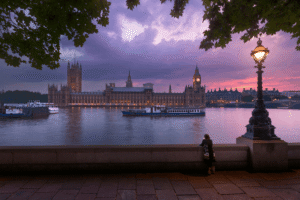
London is a city that rewards curiosity with extraordinary generosity.
Beneath the version that everyone knows spanning the Tower, the Eye, Buckingham Palace, or the Tube is a London of medieval alleys, Victorian eccentric museums, Japanese gardens hidden inside Holland Park, underground postal railways that now carry passengers through tunnels built for mail, a house preserved as a time capsule by a 20th-century artist who wanted visitors to feel they’d entered the 18th century, and a Roman amphitheatre buried beneath the Guildhall Yard that London Corporation spent centuries building on top of without knowing it was there.
The hidden gems in London are not hard to find. They simply require the decision to look.
Key Takeaways
- Most of London’s best hidden gems are free or very low cost – the Kyoto Garden, the Brunel Museum Tunnel, the Sir John Soane’s Museum, and the Roman Amphitheatre all cost nothing to enter.
- The hidden gems in London span every category: unusual museums, secret gardens, peculiar historical sites, neighbourhood discoveries, and experiences that most visitors to London never encounter.
- Many of the best-kept secrets in London are maintained by specialist trusts, academic institutions, or the City of London Corporation, which gives them a character quite different from the main tourist attractions.
- The Lee Valley canal towpath, the Kyoto Garden in Holland Park, and the hidden alleyways of the City of London are all accessible without any planning – they simply need you to walk toward them.
Extraordinary Museums
Sir John Soane’s Museum
On Lincoln’s Inn Fields in Holborn, Sir John Soane’s Museum is one of the most extraordinary interiors in London and one of the most consistently cited as a hidden gem by visitors who discover it.
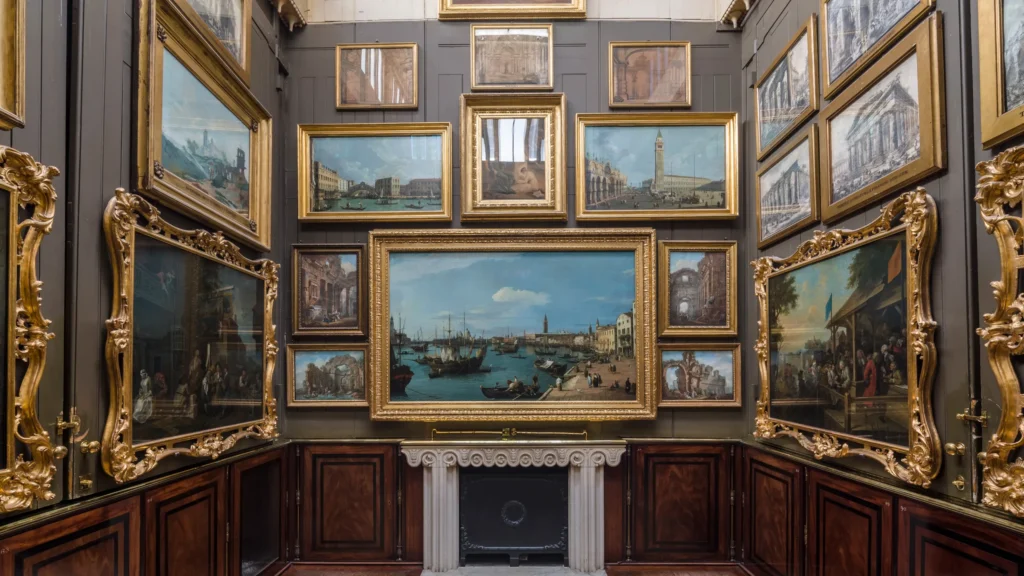
John Soane was a Georgian architect who designed the Bank of England and rebuilt the House of Lords, and he spent decades filling his four connected townhouses with objects, paintings, architectural fragments, casts, and curiosities until every surface, every wall, and every ceiling in the building was covered. The Picture Room has a system of hinged panels that fold back to reveal additional paintings behind – Hogarth’s original Rake’s Progress and Election series hang here, together, worth a visit on their own.
The museum was left to the nation on Soane’s death in 1837 with the specific condition that nothing should be changed or moved. The building has been exactly as he left it ever since. It is free to enter.
Credit: Condé Nast Traveler
The Old Operating Theatre Museum
Hidden in the roof of St Thomas’s Church on Borough High Street, the Old Operating Theatre Museum is one of London’s most remarkable and most unusual heritage spaces.
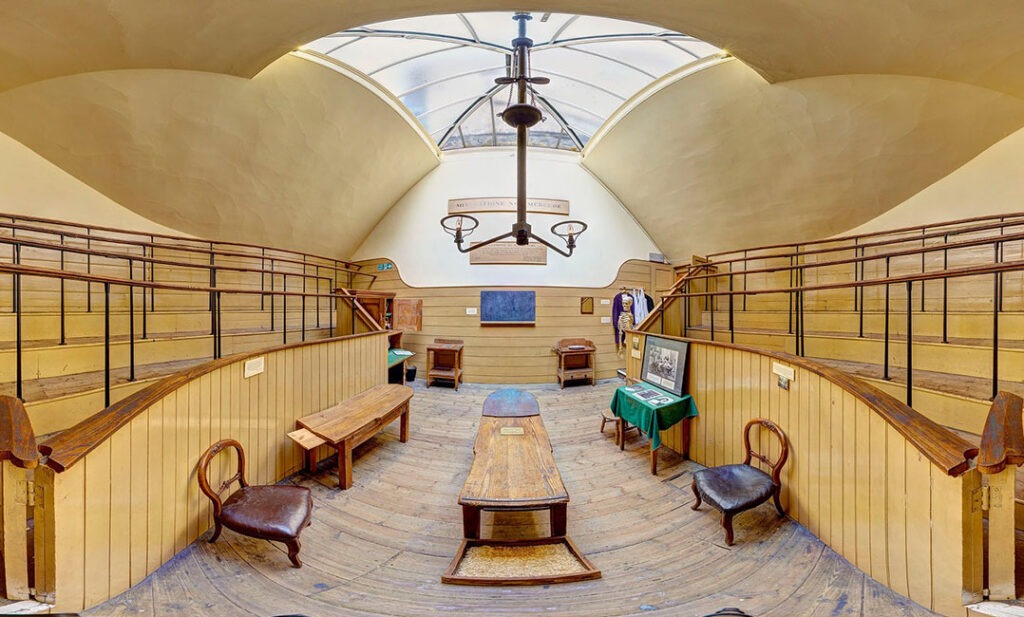
The theatre dates from 1822 and it is the oldest surviving surgical theatre in Europe, and was used for operating on female patients of St Thomas’s Hospital before anaesthesia and antisepsis were developed. The steeply raked viewing gallery, the sawdust beneath the operating table, and the collection of Victorian surgical instruments displayed with complete honesty about what they were used for and how well they worked create an experience that is simultaneously grimly fascinating and profoundly humanising.
The museum also maintains an extensive collection of medical herbs in the original garret above the theatre. The space was used for drying and storing medicinal plants. Entry requires climbing a steep spiral staircase inside the church tower, which contributes to the sense of discovery.
Credit: The Old Operating Theatre Museum
The Hunterian Museum
At the Royal College of Surgeons on Lincoln’s Inn Fields, conveniently close to the Soane Museum, allowing both to be visited in the same afternoon, the Hunterian Museum houses the specimen collection of 18th-century surgeon John Hunter, whose work on the human body and its diseases established the foundations of modern surgery.
The collection includes over 3,500 anatomical specimens preserved in glass jars: the skeleton of Irish Giant Charles Byrne, the gallstones of Queen Caroline, or Winston Churchill’s dentures, alongside paintings, instruments, and the full arc of Hunter’s extraordinary career as a scientist who dissected everything he could get his hands on, including specimens he acquired from grave robbers.
The museum was closed for major redevelopment, reopened in 2023, and is considerably more accessible and better presented than it was before. Free to enter.

Credit: Time Out
The Viktor Wynd Museum of Curiosities
In a basement in Hackney, the Viktor Wynd Museum of Curiosities is the contemporary heir to the Wunderkammer – the Renaissance cabinet of curiosities that preceded the modern museum and that the modern museum largely abandoned in favour of systematic classification.
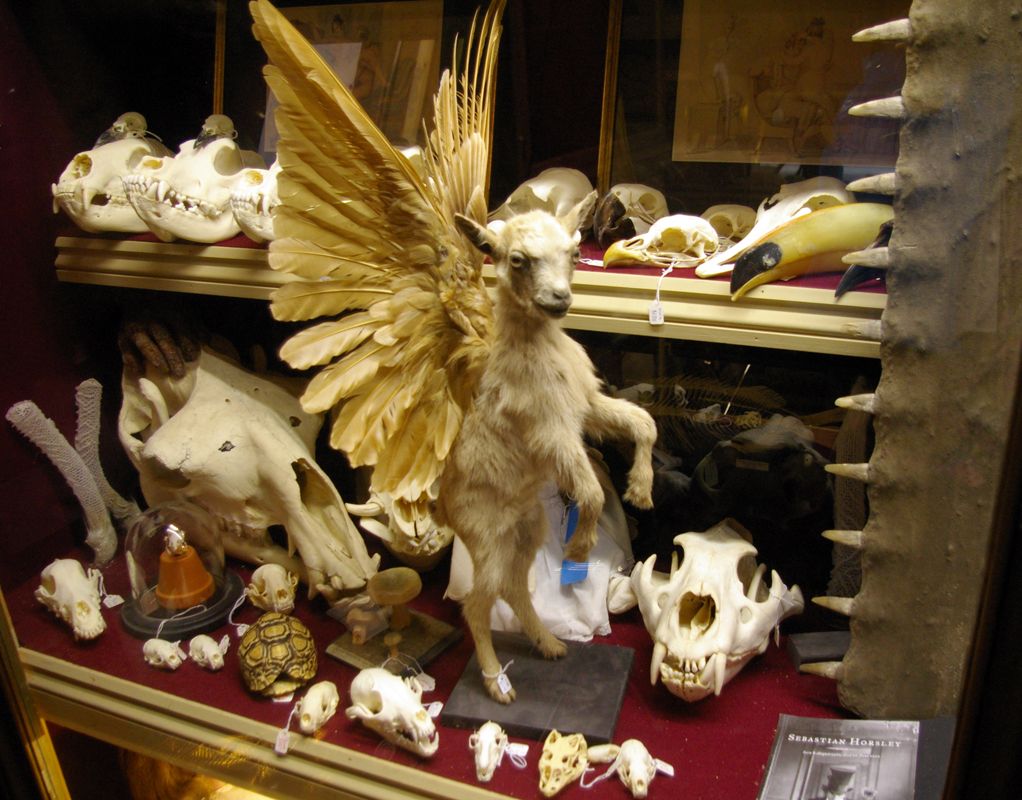
Viktor Wynd’s collection spans dodo bones, Victorian pornography, Amy Winehouse’s handbag, shrunken heads, celebrity faeces in jars, unicorn horns, and a collection of taxidermy animals that defies conventional categories. The museum is deliberately chaotic and deliberately provocative, and the experience of wandering through it has the quality of a dream where the categories that normally separate things have temporarily dissolved.
Entry requires buying a cocktail at the bar above, which is a reasonable arrangement.
Credit: Atlas Obscura
Grant Museum of Zoology
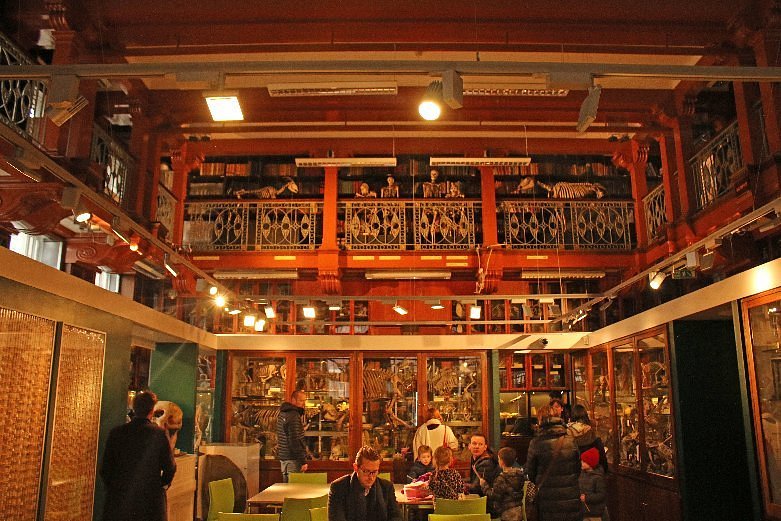
The Grant Museum of Zoology at UCL is the last remaining Victorian university zoological museum in London. It’s a single Victorian room containing approximately 67,000 specimens in cases that cover every wall from floor to ceiling.
The collection includes the skeleton of a Quagga (the half-zebra, half-horse extinct species), a jar of moles, and the dissected head of a hippopotamus that you can look directly into. The Micrarium – a small dark room lit with backlit microscope slides of hundreds of different specimens – is the most specifically extraordinary element: a meditation on biological diversity at a scale the eye cannot normally see.
Free to enter. Small enough to visit in under an hour.
Credit: Tripadvisor
Gardens & Green Spaces
The Kyoto Garden in Holland Park
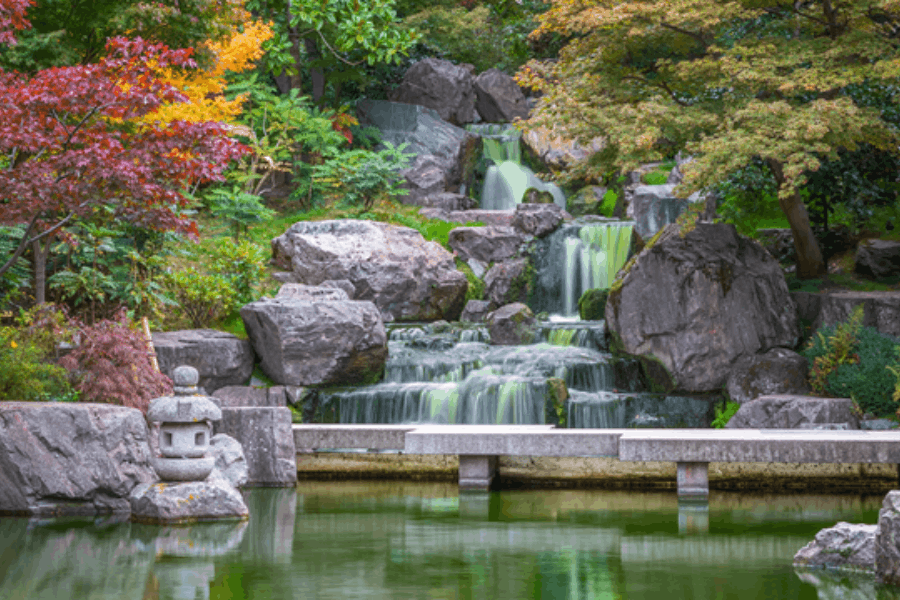
Hidden within Holland Park in Kensington, the Kyoto Garden is a formal Japanese garden donated by the City of Kyoto in 1991 as a mark of friendship between the two cities. It contains stone lanterns, koi carp, waterfalls, carefully shaped trees, and the specific quality of silence that Japanese garden design produces even in the middle of a busy city.
The peacocks that roam Holland Park wander freely through the garden, which adds an element of visual drama that is entirely accidental and entirely welcome. Free to enter, year-round.
Credit: Visit London
The Phoenix Garden
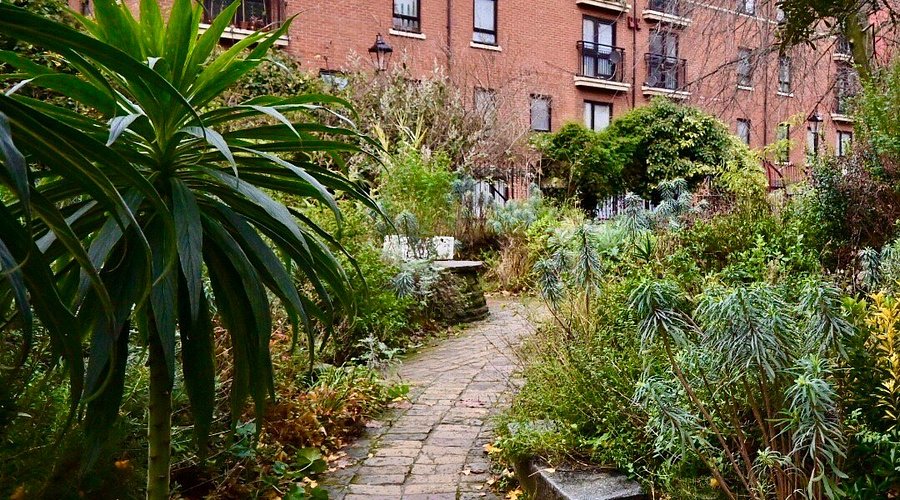
Behind the Phoenix Cinema in Stoke Newington, the Phoenix Garden is one of London’s finest community gardens. It’s a half-acre space created on derelict land in 1984 by residents who planted it with wildflowers, vegetables, and trees that have now matured into a genuine urban woodland.
The garden is maintained entirely by volunteers, managed as a nature reserve, and open free of charge throughout the year. In the middle of a street that most visitors to London would never walk down, it has the quality of a private discovery.
Credit: Tripadvisor
Queen’s Park
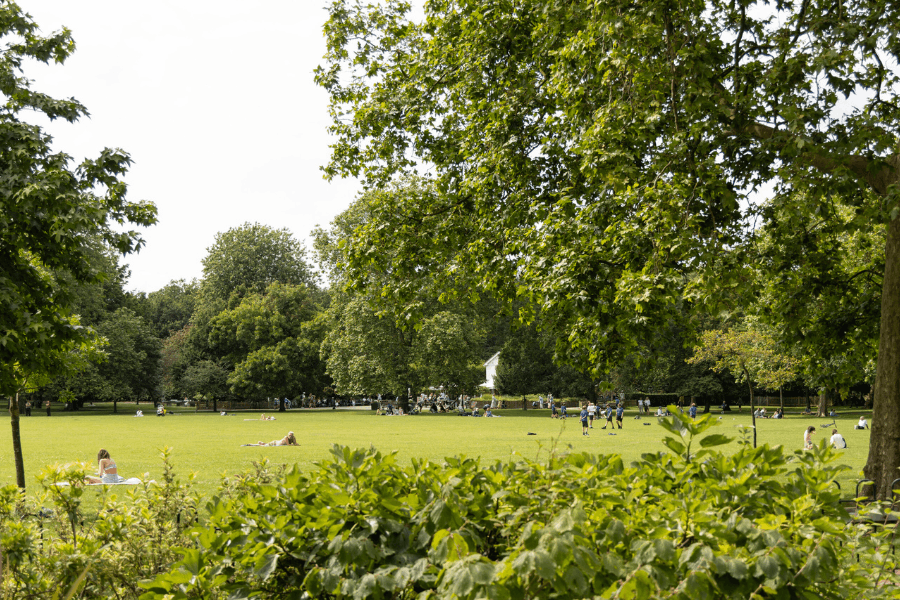
Queen’s Park in Kilburn is one of London’s finest neighbourhood parks and one of its most consistently overlooked. It’s a compact Victorian park with a walled garden, a paddling pool, a putting green, a farm with goats, and the specific warmth of a park that genuinely belongs to its neighbourhood.
The nearby streets of Kilburn and West Hampstead have the independent food and coffee culture that Victoria Park and Hackney had before they were discovered; Queen’s Park itself is quieter and more local than any of London’s more famous green spaces of similar size.
Credit: Domus Nova
History & the Unusual
The Roman Amphitheatre Under the Guildhall
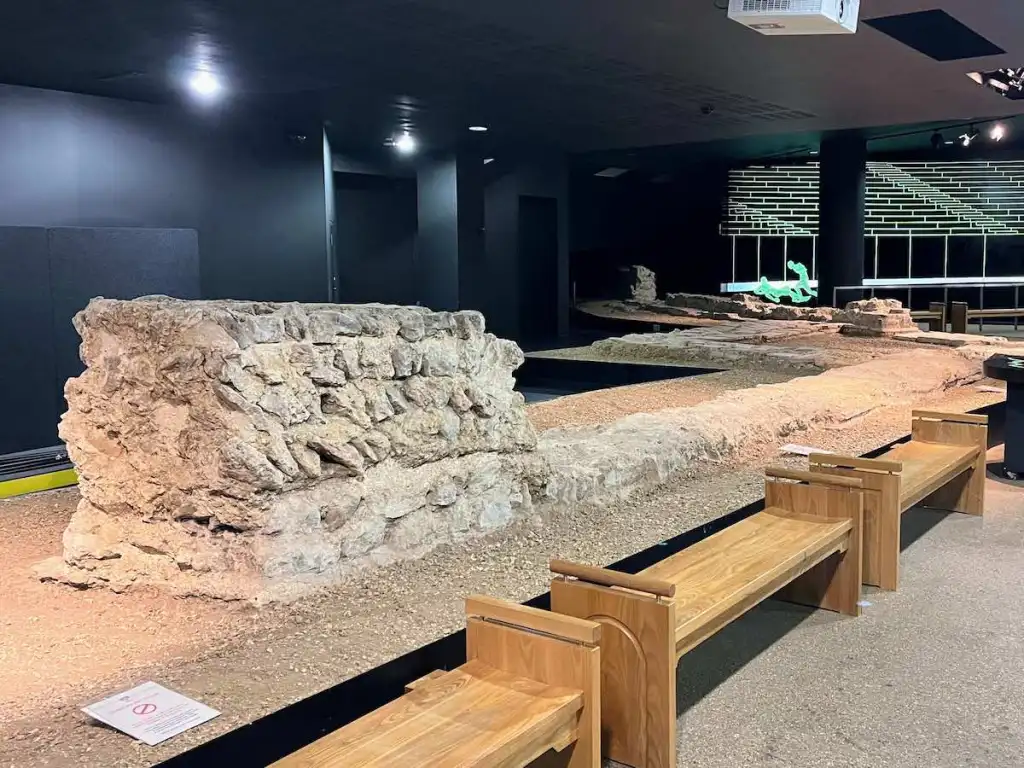
Beneath the Guildhall Yard in the City of London, the remains of a Roman amphitheatre built around 70 AD are preserved in a permanent, dramatically lit underground exhibition that can be accessed for free through the Guildhall Art Gallery.
The amphitheatre was capable of holding approximately 6,000 spectators and would have hosted gladiatorial contests and animal fights – the civic entertainment infrastructure of Roman Londinium. The existence of the amphitheatre was unknown until 1988, when construction work revealed the first sections of the curved outer wall. The Guildhall Yard above it is paved with a dark circle that marks the arena’s outer edge.
Credit: Living London History
Dennis Severs’ House
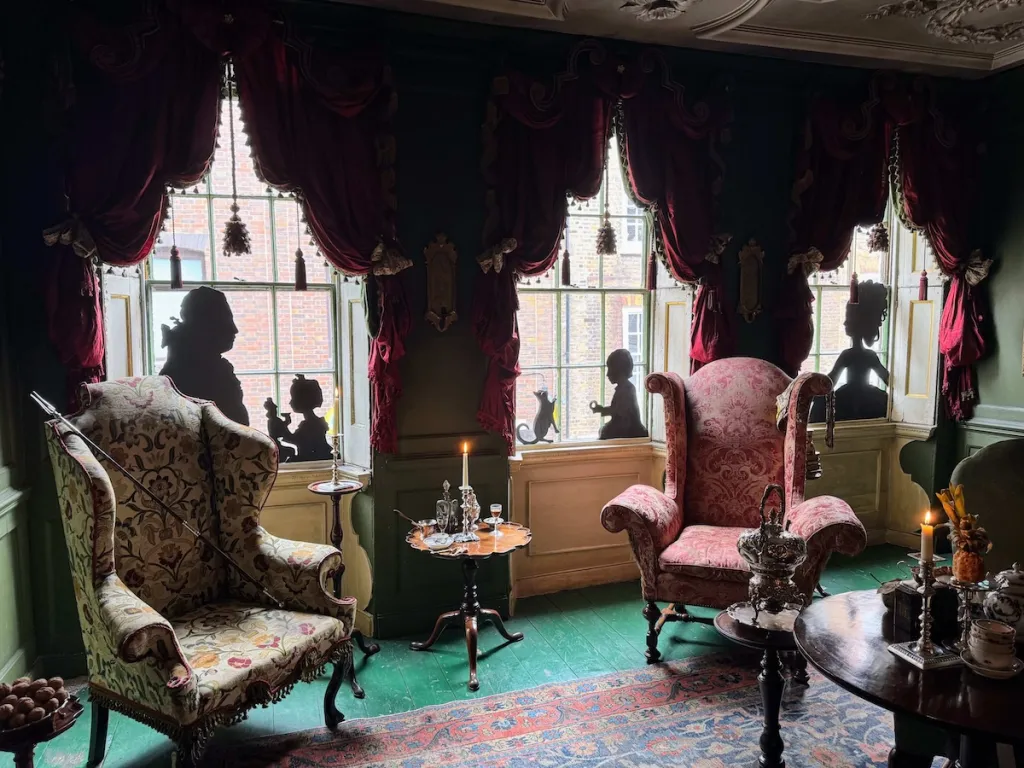
On Folgate Street in Spitalfields, Dennis Severs’ House is one of London’s most unusual cultural experiences – an 18th-century silk weaver’s house preserved not as a museum but as a “still-life drama”: ten rooms presented as if the Huguenot silk-weaving Jervis family who inhabited them from 1724 to 1919 had just stepped out.
Half-eaten meals sit on the kitchen table. A fire burns in the grate. A cat has apparently just jumped off an armchair. Wigs lie on dressing tables. Smells of tobacco, food, and candle wax drift through the rooms. Severs, an American artist who lived in the house from 1979 until he died in 1999, spent twenty years creating this experience, which he described as being about sensory history rather than factual history.
Silent candlelight visits on Monday evenings are the most atmospheric. The experience is unlike anything else in London.
Credit: Living London History
The Brunel Museum and Thames Tunnel
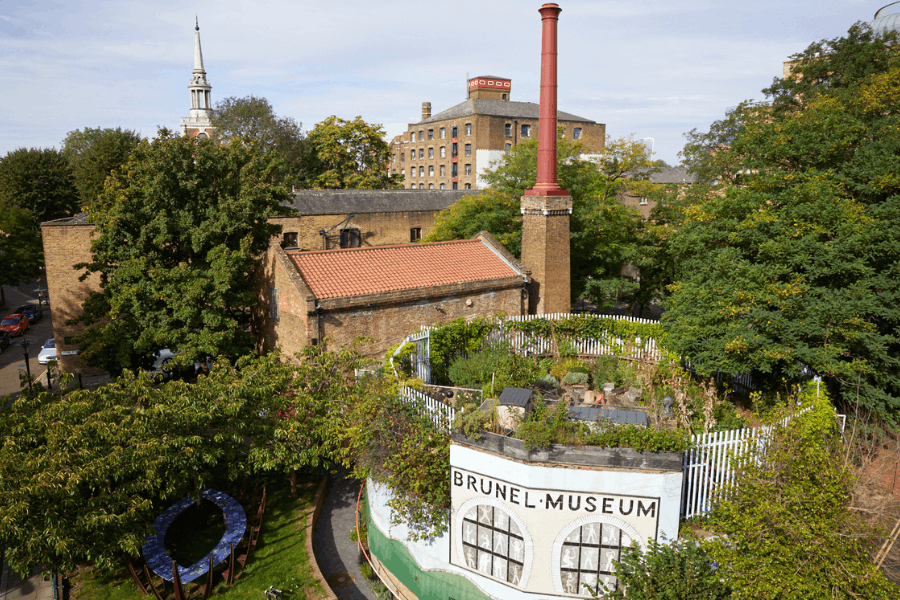
In Rotherhithe, the Brunel Museum occupies the shaft of the world’s first underwater tunnel. The Thames Tunnel was built by Marc Isambard Brunel and his son Isambard Kingdom Brunel between 1825 and 1843 in an engineering feat that killed dozens of workers and nearly killed both Brunels themselves when the tunnel flooded multiple times during construction.
The tunnel itself now carries the East London Line of the Overground. But the original massive brick cylinder that was also used as a venue for tunnel banquets and concerts when it opened is accessible on guided tours and constitutes one of the most specific and most resonant industrial heritage experiences in London.
The museum is small; the context it provides is large.
Credit: Brunel Museum
Neighbourhoods & Walks
The Alleyways of the City of London
The City of London contains within it a network of medieval alleyways, courtyards, and passages that have survived the Great Fire, the Blitz, and the commercial redevelopment of several centuries and that give the area, when you turn into them from the main streets, the character of a city you did not expect to find.
Crutched Friars, Seething Lane, Mitre Court, Magpie Alley, Hanging Sword Alley – these names alone suggest what the streets contain. The Guildhall, Leadenhall Market (a Victorian covered market still in use and genuinely beautiful), the remains of the medieval church of St Dunstan in the East (bombed in the Blitz and left as a public garden within the ruins), and dozens of Wren churches that survived the fire and are among the finest 17th-century interiors in England – all are within a walk of each other and almost entirely unknown to most visitors to the city.
Maltby Street Market
Between London Bridge and Bermondsey, the Maltby Street Market operates beneath the railway arches on Saturday and Sunday mornings and has maintained a genuinely local, genuinely independent character despite its growing reputation.
Unlike Borough Market, which is excellent but crowded and tourist-facing, Maltby Street feels discovered rather than designed for discovery. The vendors change, but among the consistents: Monty’s Deli for pastrami on rye that is genuinely one of the finest sandwiches in London; Waffle On for Belgian waffles; Kappacasein for the raclette and grilled cheese that have built the most fervent following in London’s street food community; and Cave Direct for natural wines by the glass. The arches themselves are beautiful.
Eltham Palace
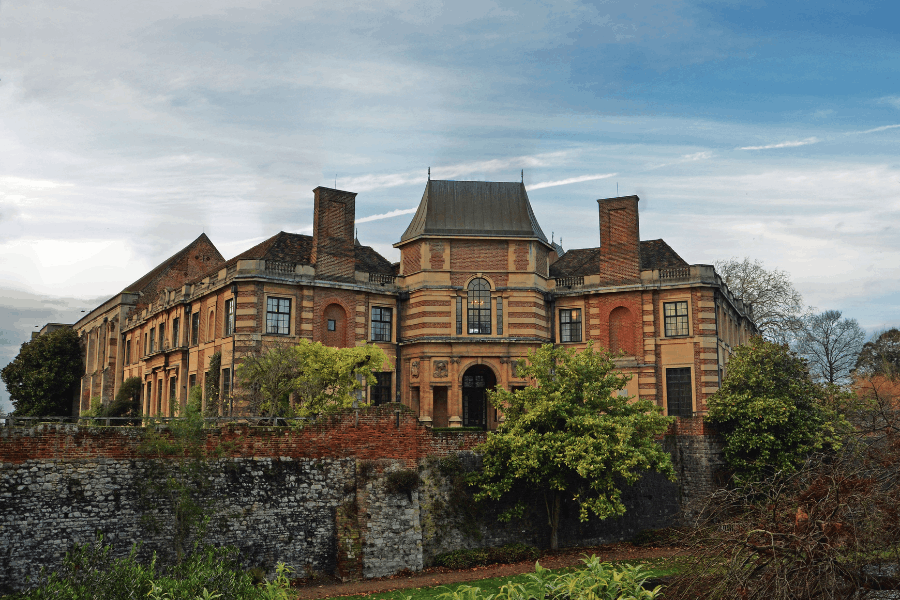
In southeast London, there’s a journey that most visitors to the city never make. Eltham Palace is one of the strangest and most satisfying buildings in England: a medieval royal palace of Henry VIII, its Great Hall dating from 1479, whose interior was comprehensively transformed in 1933 by textile magnate Stephen Courtauld into one of the finest Art Deco domestic interiors in Britain.
The contrast between the 15th-century hammerbeam roof of the Great Hall and the circular entrance hall with its Scandinavian marquetry and concealed lighting, or between the medieval moat and the 1930s bathroom fittings imported from Sweden, is not jarring, it is exhilarating. The house was designed by Rolf Engströmer and John Seely for Courtauld and his wife, Virginia, who reportedly had a pet ring-tailed lemur called Mah-Jongg, whose specially heated suite is still preserved in the building.
Credit: Eltham Palace – Wikipedia
Leake Street Arches
Beneath Waterloo Station, the Leake Street Arches have developed over the past decade from a pure graffiti tunnel into a creative complex of bars, restaurants, and event spaces alongside the ever-changing legal graffiti wall that remains London’s most democratically creative public space.
The Vaults are an immersive theatre company that uses the arches for productions and it is the most ambitious cultural use of the space. The combination of excellent graffiti, independent bars, and the specific atmosphere of a Victorian railway arch that has been handed back to the city creates one of London’s most genuinely alternative evenings.

Credit: Visit London
Practical Notes
Many of London’s finest hidden gems are free. The Soane Museum, the Grant Museum, the Kyoto Garden, the Roman Amphitheatre, and the City’s medieval alleyways cost nothing to enter and provide some of the most distinctive experiences available in London.
The City of London on weekends is the most accessible version of the medieval city. During the week, the Square Mile is packed with office workers; at weekends, it is almost empty, which means the alleyways, the Wren churches, and the hidden courtyards can be explored at leisure. The few open cafés and restaurants in the area on Saturdays are often the best value of any comparable quality in London.
Conclusion
The hidden gems in London are not hiding.
They are simply waiting for visitors who have decided that London is more than its famous face, to those who want to walk into a room of 18th-century specimens, a Japanese garden behind a London park wall, a medieval alley that survived everything the 20th century threw at it, or a house preserved to feel like a family just stepped out.
That London is everywhere, all the time, entirely available to anyone who turns the corner it requires.
To explore London’s extraordinary hidden corners, neighbourhoods, and culture as part of a private curated visit, discover our private London tours.