Buckingham Palace stands as the working heart of the British monarchy. Not only a tourist attraction but a living institution where ceremonial traditions unfold, where the King conducts official business, and where the machinery of modern monarchy operates daily behind those famous Portland stone walls. This is residence, workplace, and symbol simultaneously, embodying continuity and change across centuries of British history.
From the gilded splendor of the State Rooms to the surprisingly tranquil 39-acre garden hidden behind the palace walls, from the Changing of the Guard ceremony that draws crowds daily to the intimate East Wing spaces where visitors glimpse the famous balcony, Buckingham Palace offers experiences that connect you directly to British royal tradition.
Key Takeaways
- Buckingham Palace serves as the official London residence of King Charles III and the working royal headquarters
- Public access to State Rooms occurs during the summer months when the monarch resides at Balmoral
- The palace contains 775 rooms, with 19 magnificent State Rooms open to visitors
- Special guided tours during autumn and winter provide exclusive access when the palace is otherwise closed
- The Changing of the Guard ceremony happens regularly at the palace forecourt
The State Rooms
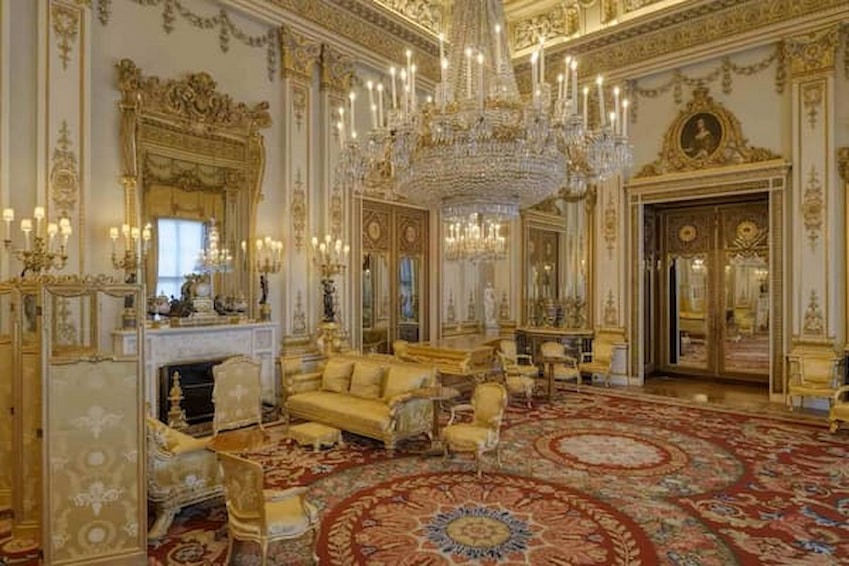
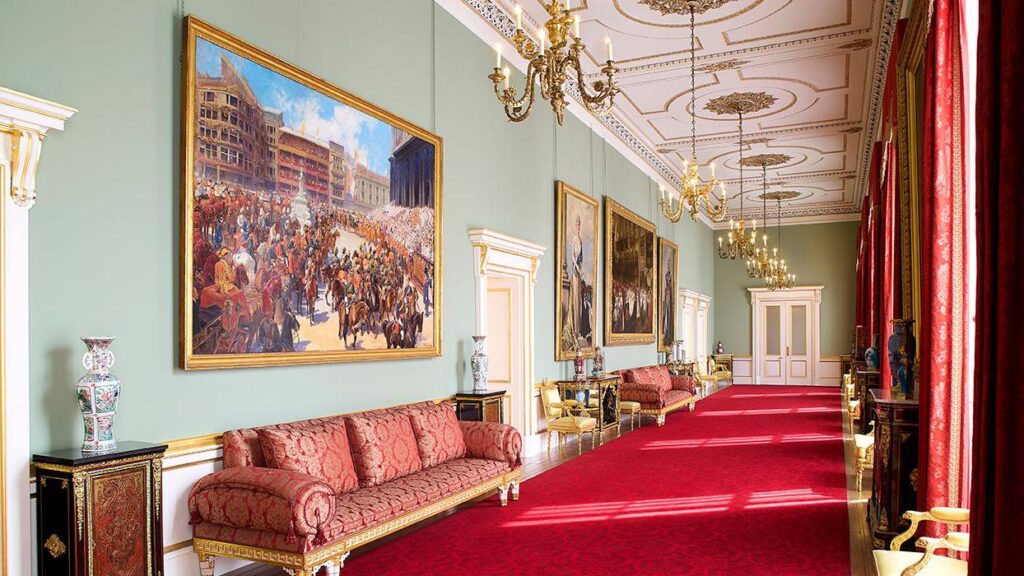
The State Rooms form the ceremonial heart of Buckingham Palace, providing magnificent settings for official entertaining by His Majesty The King. These 19 rooms open to the public showcase treasures from the Royal Collection, masterpieces by Rembrandt, Rubens, and Canaletto, exquisite Sèvres porcelain, and some of the finest English and French furniture in the world. The gilded ceilings, glittering chandeliers, and opulent decoration create spaces where history and contemporary royal life intersect.
Walking through these rooms means treading where state banquets unfold, diplomatic receptions take place, and investiture ceremonies bestow honors on deserving citizens. The Grand Staircase, designed by John Nash, sets the tone with its monumental scale and royal portraits. The Throne Room contains the chairs used for coronation photographs, while the State Dining Room demonstrates how royal hospitality operates at the highest level. The Picture Gallery, stretching the length of the palace’s garden front, houses masterpieces arranged in a double-hung Victorian style that creates a breathtaking visual impact.
Credit: City Sightseeing
The Palace Garden
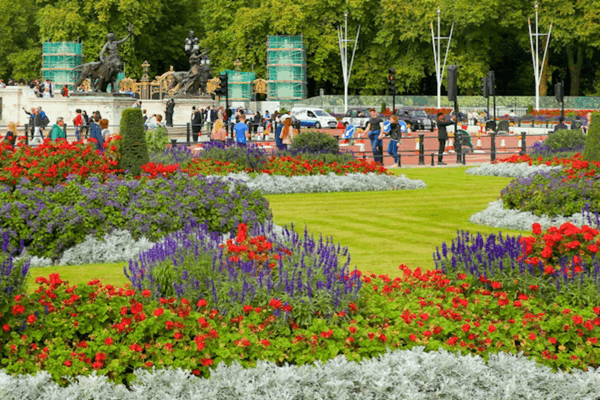
The Palace Garden spans 39 acres in central London, creating a walled oasis where nature thrives amid urban density. This is where His Majesty hosts annual garden parties, where 30 species of birds nest, and where more than 350 varieties of wildflowers bloom alongside over 1,000 trees. The famous lake provides habitat for wildlife while creating picturesque views toward the palace’s west facade.
Visitors conclude their State Rooms tour with walks along the garden’s southern edge, following paths that wind past herbaceous borders maintained to standards befitting their royal setting. The Garden Café on the West Terrace serves refreshments with views across the lawns, offering moments to reflect on the opulence inside while enjoying the garden’s more natural beauty. During the summer, this garden represents one of London’s most exclusive green spaces. They are private most of the year but briefly accessible to visitors to the palace.
Credit: London Tickets
The East Wing
The East Wing contains the palace’s most iconic space. The Centre Room with its famous balcony where the Royal Family appears during major celebrations. Recently restored and opened to visitors, this wing showcases exquisite Chinese decorative pieces, the Yellow Drawing Room with its Regency opulence, and spaces that remained private for generations.
Exclusive guided tours between October and March provide access when the State Rooms are closed to the public, offering more intimate experiences with expert commentary that deepens understanding of the palace’s history and role. These tours enter through the palace’s front gates and across the Forecourt. The same approach is used by guests attending official royal events, creating that special sense of insider access that standard tours cannot replicate.
During summer, combined tickets allow visitors to see both the State Rooms and East Wing highlights, providing comprehensive palace experiences that span from Nash’s grand public spaces to the more intimate rooms facing The Mall, where royal history continues to be written.
Credit: BBC
The Royal Mews
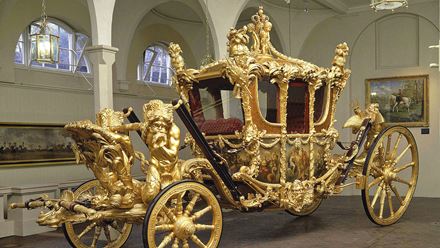
The Royal Mews houses the working stables and garage for Buckingham Palace, containing the historic coaches and carriages still used for state occasions. The Gold State Coach, built in 1762 and used for every coronation since George IV, dominates the collection with its elaborate gilded decoration and sheer scale. The Diamond Jubilee State Coach, commissioned for Elizabeth II’s 60th anniversary, demonstrates how royal tradition continues evolving with modern touches.
Beyond coaches, the Mews reveals the working reality of royal transport, like the horses in training, the cars maintained for official use, and the skilled teams who ensure everything operates flawlessly for state occasions. The uniformed coachmen and grooms who appear during royal ceremonies work here daily, maintaining standards that have defined royal presentation for centuries.
Visiting the Mews provides a practical contrast to the State Rooms’ ceremonial splendor. This is where the machinery of pageantry lives, where preparations for grand events occur, and where the connection between historical tradition and contemporary practice becomes tangible through horses being groomed and coaches being polished.
Credit: London
The King’s Gallery
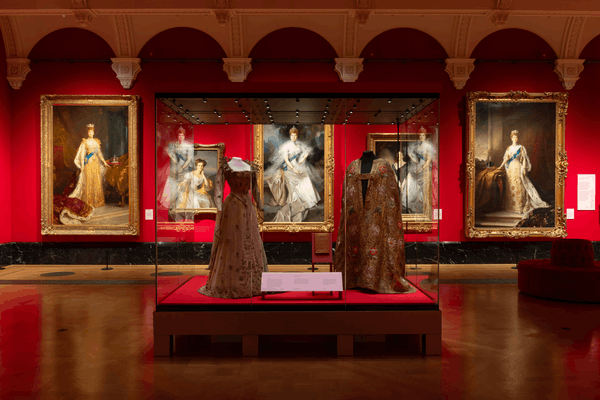
The King’s Gallery presents changing exhibitions from the Royal Collection, offering focused looks at specific artists, periods, or themes that would be impossible in the State Rooms, where context and ceremonial function dictate display. These exhibitions showcase the extraordinary breadth and depth of the Royal Collection masterpieces acquired over centuries by successive monarchs whose tastes and interests created one of the world’s greatest art collections.
Recent exhibitions have explored the artistic patronage of Charles III, Leonardo da Vinci’s remarkable achievements, and the decorative arts traditions that enriched British royal palaces. The gallery operates year-round, unlike the State Rooms, providing opportunities to engage with royal artistic heritage year-round. The rotating nature ensures repeat visits reveal new treasures and perspectives.
The gallery building itself, designed by John Simpson in a modern classical style, demonstrates how contemporary architecture can complement historic structures while creating spaces specifically suited to displaying art. This isn’t repurposed palace rooms but a purpose-built exhibition space that honors both the collection and visitor experience.
Credit: The London Pass
Changing of the Guard
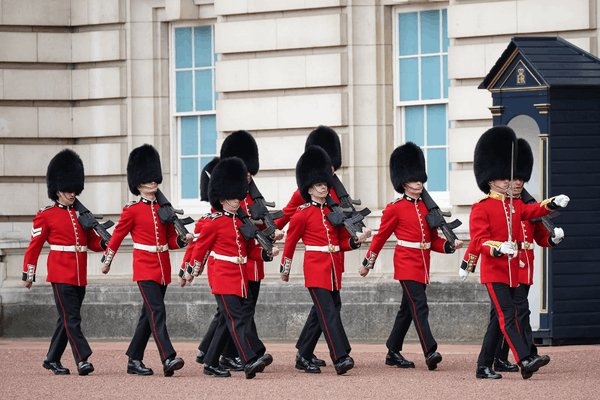
The Changing of the Guard unfolds at the palace forecourt with military precision and theatrical flair, making it one of London’s most photographed traditions. The ceremony involves the Old Guard handing responsibility for protecting Buckingham Palace to the New Guard, accompanied by regimental bands whose music provides a soundtrack to the precise marching and formal protocols.
The ceremony typically happens at 11:00 AM on Mondays, Wednesdays, Fridays, and Sundays during the summer, with different schedules in winter. The best viewing positions along the palace railings fill early, though the scale ensures most spectators find satisfying vantage points. The guards’ scarlet tunics and bearskin hats create that distinctly British visual that represents royal pageantry to global audiences.
While technically a military ritual protecting the sovereign, the Changing of the Guard has evolved into a carefully choreographed performance that balances authentic tradition with tourist-friendly accessibility. The guards maintain their famously impassive expressions despite crowds, cameras, and occasional disruptions, embodying that British quality of carrying on regardless, a demonstration of discipline that itself becomes part of the spectacle.
Credit: Town & Country
Practical Visitor Information
Buckingham Palace opens to the public during the summer months from mid-July through late September when His Majesty typically resides at Balmoral. Tickets must be pre-booked online, with timed-entry slots preventing overcrowding while ensuring everyone can experience the State Rooms properly. The standard visit takes approximately 2.5 hours, including State Rooms and garden walk, though thorough viewers could easily spend longer appreciating details.
Security screening operates airport-style, with similar restrictions on large bags and items that cannot be carried through. Photography and filming are prohibited inside the State Rooms to protect delicate furnishings and maintain the atmosphere, though the gardens welcome cameras enthusiastically. Multimedia guides included with admission provide context in multiple languages, significantly enhancing understanding of what you’re viewing.
The palace’s accessibility has improved dramatically, with wheelchair access, step-free routes, and various accommodations ensuring visitors with different needs can experience the State Rooms fully. The Royal Collection Trust manages visits and operates as a registered charity. Ticket income directly supports conservation of the Royal Collection and maintenance of these historic buildings.
Conclusion
Buckingham Palace reveals layers of British identity and royal tradition. From the State Rooms’ gilded magnificence to the garden’s surprising tranquility, from the Royal Mews’ working stables to The King’s Gallery’s rotating exhibitions, the palace offers experiences that connect visitors to the ongoing monarchy rather than preserved history.
Whether you seek the grandeur of ceremonial spaces where state occasions unfold, the intimacy of East Wing tours providing special access, or simply the spectacle of the Changing of the Guard ceremony that epitomizes British pageantry, Buckingham Palace delivers encounters with tradition that remains vibrantly alive. This isn’t a museum piece but a living institution, and that vitality, the sense that history continues being made here, creates much of the palace’s enduring appeal.
If you’d like to explore royal London beyond Buckingham Palace, discovering historic palaces, understanding British traditions, and experiencing London with insights that transform tourism into a genuine cultural connection, consider our private London experiences crafted to reveal the city with elegance, expert knowledge, and moments that make every visit memorable.
FAQ
How many bedrooms are in Buckingham Palace?
Buckingham Palace has 52 royal and guest bedrooms, along with 188 staff bedrooms. In total, the palace contains 775 rooms, including state rooms, offices, and bathrooms, making it one of the largest working royal residences in the world.
Can the public go into Buckingham Palace?
Yes, the public can visit Buckingham Palace during the Summer Opening, usually from July to September, when the State Rooms are open to ticket holders. Guided tours are also available on selected dates, but the palace remains a working royal residence.
Where is Buckingham Palace located in London?
Buckingham Palace is located in Westminster, central London, near St James’s Park and The Mall. It serves as the official London residence of the British monarch and is one of the city’s most famous landmarks.
What’s the difference between Buckingham House and Buckingham Palace?
Buckingham House was the original townhouse built in 1703 for the Duke of Buckingham. It was later purchased by King George III and, in the 19th century, expanded and renamed Buckingham Palace, becoming the official royal residence.