England holds its history in a way no other country quite does. It holds its history in stone and silence, in gilded rooms and ancient gardens, in corridors where kings made decisions that shaped the world. The palaces in England are the physical expression of that history: grand, layered, sometimes intimate, and always worth slowing down for.
This is a country where a Tudor great hall stands alongside an Art Deco mansion. Where the world’s oldest occupied castle opens its gates to visitors each morning. Where a moated Kent castle holds the prayer books of a queen whose fate changed the course of a nation. Whether you are drawn to the ceremony of royal London, the splendour of Baroque Oxfordshire, or the quiet elegance of a royal retreat in Norfolk, this guide will take you there.
Key Takeaways
- The palaces in England span over a thousand years of royal history, from Norman fortresses to elegant Victorian retreats.
- London is home to the greatest concentration of royal palaces, but the finest experiences are often found beyond the capital.
- Several palaces are managed by Historic Royal Palaces and the Royal Collection Trust, with dedicated visitor programmes throughout the year.
- Many palaces offer far more than grand rooms, such as gardens, exhibitions, art collections, and immersive historical experiences, making each a full day.
- For a deeply curated way to experience England’s royal heritage, pair a palace visit with a guided journey through its city or landscape.
The Palaces in England Worth Visiting
Buckingham Palace
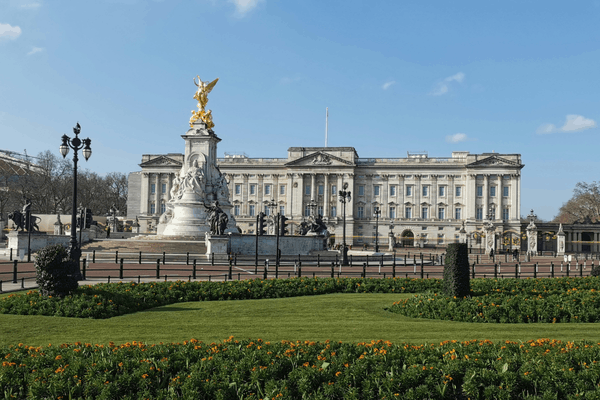
The most recognised palace in England, Buckingham Palace is the official London residence of the King and the symbolic heart of the British monarchy. Its familiar cream façade, iron gates, and the daily Changing of the Guard ceremony have made it one of the most visited landmarks in the world.
The State Rooms open each summer for a period of weeks, offering an extraordinary view into the formal life of the monarchy: Throne Room, Picture Gallery, and rooms hung with works from one of the world’s great royal art collections. The adjacent Royal Mews holds the historic State coaches and carriages used on ceremonial occasions. A visit to Buckingham Palace rewards patience and curiosity in equal measure.
Credit: Francais a Londres
Windsor Castle
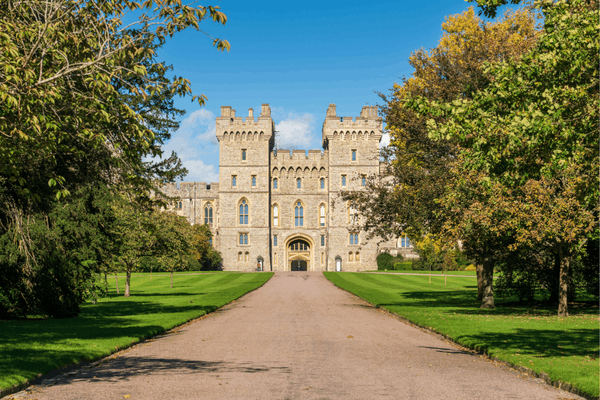
The oldest and largest occupied castle in the world, Windsor, has been a royal home for over 950 years and a residence of every English monarch since William the Conqueror. It sits above the Thames in Berkshire with quiet authority, its round tower, long terraces, and St George’s Chapel forming one of the most compelling skylines in England.
Inside, the State Apartments contain works by Rembrandt, Rubens, and Van Dyck, alongside historic armour, porcelain, and furniture accumulated across centuries of royal patronage. St George’s Chapel is the final resting place of many monarchs and a place of profound architectural beauty. Windsor is open year-round and ranks among the most rewarding of all the palaces in England to explore at length.
Credit: Tomasz Zielonka
Hampton Court Palace
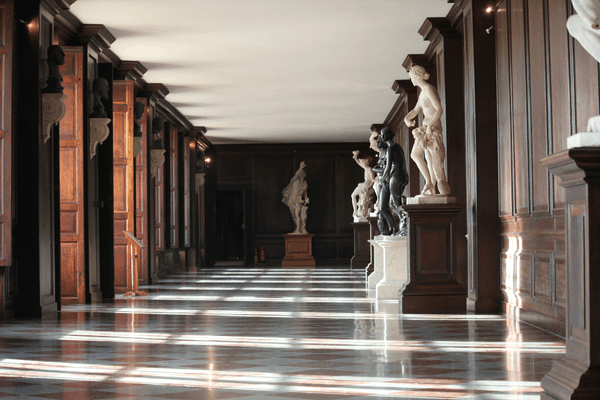
Hampton Court is Tudor England at its most spectacular. Built by Cardinal Wolsey in the early 16th century and seized by Henry VIII, who proceeded to make it one of the grandest palaces in Europe. It spreads across the Surrey banks of the Thames with a scale and confidence that has never diminished.
The palace contains six distinct historical layers, from Tudor kitchens and Henry’s State Apartments to the Baroque interiors added by Sir Christopher Wren for William III. The gardens are extraordinary: formal parterres, the famous hedge maze planted around 1700, and a kitchen garden that has been producing food for centuries. Historic Royal Palaces describes it as one of the finest working palaces in existence. It is, without question, one of the essential palaces in England.
Credit: Moddy Bangpan
Kensington Palace
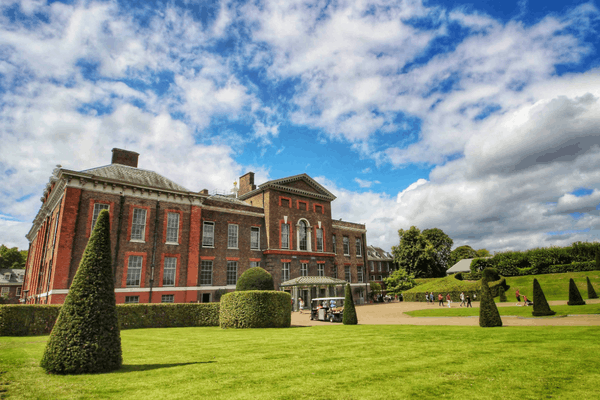
Kensington Palace has housed British royalty since the late 17th century, when William III commissioned Sir Christopher Wren to transform what was then a modest Jacobean house into a royal residence. It remains the London home of several working members of the Royal Family today.
For visitors, the palace offers beautifully presented State Rooms, immersive exhibitions on royal fashion and history, and in 2026, a landmark new exhibition on Sophia Duleep Singh, Indian princess and suffragette icon. The Orangery, dating from 1704, offers afternoon tea against one of the most serene backdrops in London. Among the palaces in England that reward multiple visits, Kensington is consistently among the liveliest.
Credit: Martin Zenker
The Tower of London
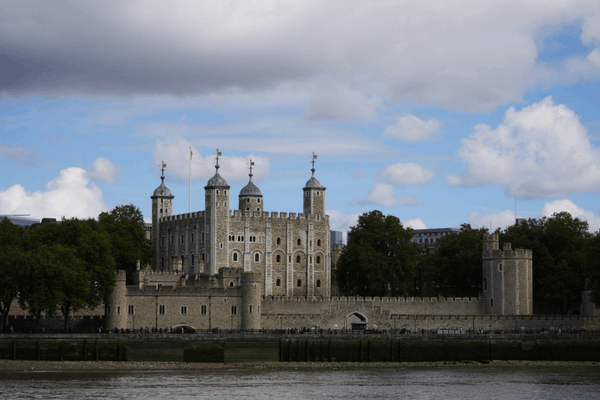
His Majesty’s Royal Palace and Fortress of the Tower of London is, technically, the most senior royal palace in England. Its full title is rarely used, but its authority is never in doubt. Built by William the Conqueror in 1066 to control the city, it served as a royal residence, a prison, and a place of execution across five centuries of English history.
Today, it is home to the Crown Jewels, including the Imperial State Crown worn at the Coronation, which is the most visited and most closely guarded collection in the country. The Medieval Palace, reopened in 2025 with a reimagined display, explores the lives of medieval kings and queens with extraordinary immersive storytelling. No list of the palaces in England is complete without it.
Credit: jens schwan
Blenheim Palace
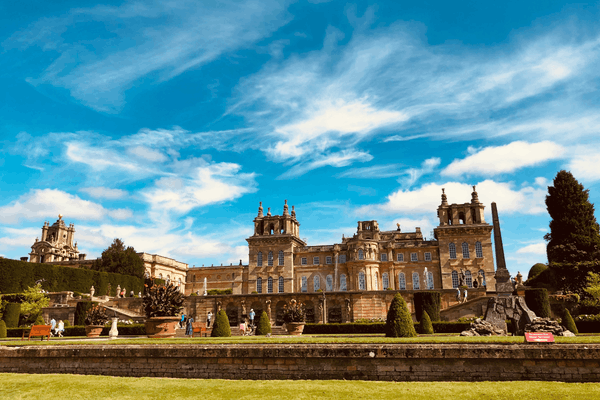
The only non-royal, non-ecclesiastical residence in England to be styled a palace, Blenheim is a statement of Baroque ambition unlike anything else in the country. Designed by Sir John Vanbrugh and built between 1705 and 1722 as a gift from Queen Anne to the first Duke of Marlborough, it was designated a UNESCO World Heritage Site in 1987 – an honour it wears without effort.
The palace’s rooms are hung with tapestries and paintings celebrating the Duke’s military victories. The grounds, designed in part by Capability Brown, stretch across thousands of acres of Oxfordshire parkland. Blenheim is also the birthplace of Winston Churchill, and a dedicated exhibition tells his story with warmth and depth. Among the palaces in England outside London, it is simply unmissable.
Credit: Qihao Wang
Hever Castle
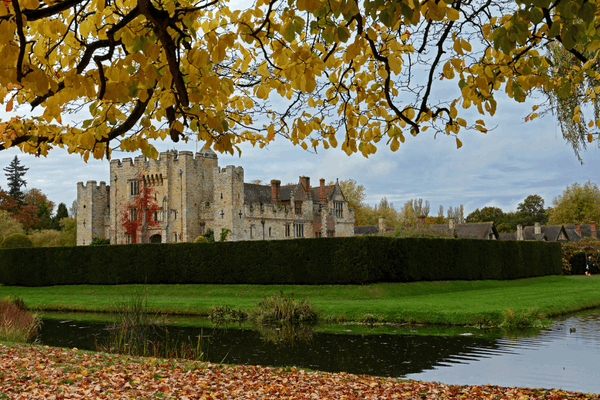
Hever Castle in Kent is the kind of place that earns genuine affection rather than mere admiration. A moated 13th-century castle surrounded by 125 acres of award-winning gardens, it is most celebrated as the childhood home of Anne Boleyn. She’s the woman whose story altered the course of English history and gave birth to the Church of England.
The castle’s panelled rooms hold one of the finest collections of Tudor portraits outside the National Portrait Gallery, alongside Anne Boleyn’s own prayer books bearing her signature. The recently opened Boleyn Apartment offers what is described as the only surviving suite of rooms anywhere in the world that the Boleyn family definitely occupied. Among the historic palaces in England tied to the Tudor story, Hever is the most intimate and the most moving.
Credit: Paul Arky
Eltham Palace
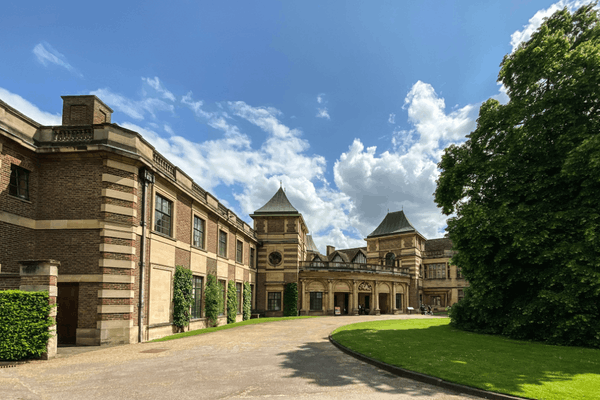
Eltham Palace is one of the most genuinely surprising places in England. What appears at first to be a 1930s Art Deco mansion (all circular entrance hall, gold-plated bathrooms, and glamorous entertaining rooms) turns out to share its footprint with the medieval Great Hall of a former royal palace where Henry VIII spent his childhood.
The contrast between centuries is deliberate and extraordinary. The eccentric Courtauld family, who commissioned the Art Deco extension in 1936, built it directly beside the 15th-century Great Hall, creating a single building that spans six hundred years of English architectural history. It is one of the most unexpected and delightful of all the palaces in England.
Credit: Linda Gerbec
Banqueting House
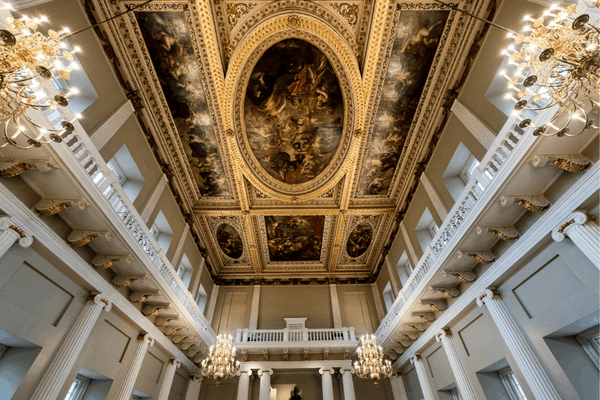
All that survives of the Palace of Whitehall, once the largest palace in Europe, is the Banqueting House, and it is extraordinary. Designed by Inigo Jones in 1622 for James I, it was the most sophisticated building in England at the time: a pure Neoclassical statement in a city still dominated by Jacobean timber.
The ceiling was painted by Peter Paul Rubens and remains in its original setting. He painted nine vast canvases celebrating the Stuart dynasty in tones of gold, crimson, and deep blue. It was from a window of this room that King Charles I walked to his execution in 1649. It is a place of extraordinary resonance, and one of the most powerful of all the palaces in England to stand inside and consider.
Credit: Serg Bataev
Kew Palace
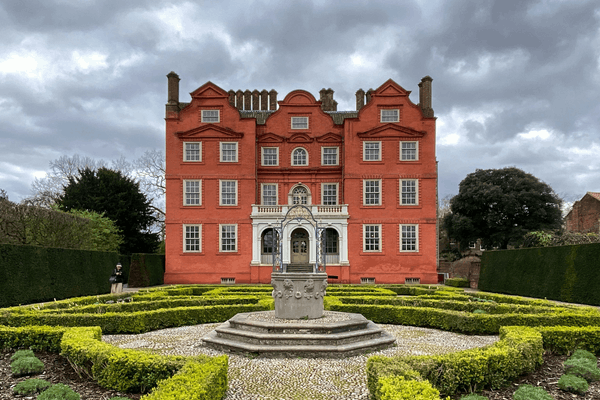
The smallest of the royal palaces in England, Kew Palace sits within the grounds of the Royal Botanic Gardens and carries a quiet, domestic intimacy that the grander palaces can rarely match. Built in 1631 for a London silk merchant and acquired by the royal family in the 1720s, it became a favoured retreat of George III and Queen Charlotte.
The rooms are modest by royal standards, and all the more affecting for it. The recently restored gardens reflect the royal family’s personal tastes rather than ceremonial grandeur. A visit to Kew Palace pairs naturally with an afternoon in the Royal Botanic Gardens, creating one of the most quietly beautiful days in London.
Credit: Linda Gerbec
St James’s Palace
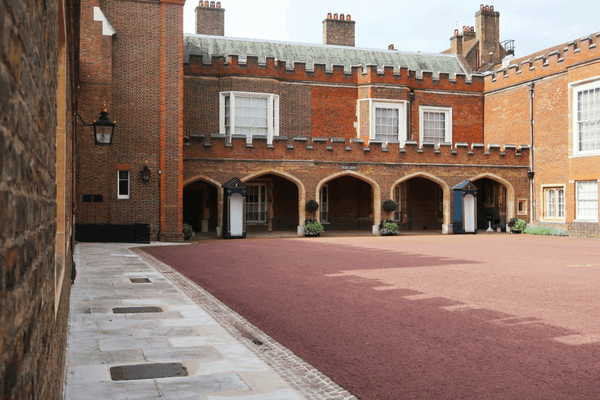
The most senior working royal palace in London and the official residence of the Court, St James’s Palace, was built by Henry VIII between 1531 and 1536 and retains its Tudor gatehouse almost unchanged. It is not generally open to the public, which only adds to its mystique.
Foreign ambassadors are still formally accredited to the Court of St James’s. It’s a protocol that has survived every change of monarchy and constitution for five hundred years. The chapel and certain rooms occasionally open during London Open House and selected events. Among the palaces in England that reward simply knowing their history as you stand before them, St James’s is foremost.
Credit: Emran Yousof
Sandringham House
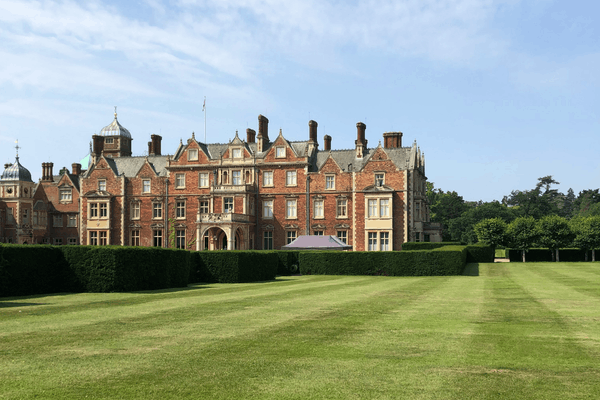
Sandringham is the most personal of England’s royal residences. It’s a country house in Norfolk built for Edward, Prince of Wales in 1870, and used by successive generations of the Royal Family as a private retreat rather than a ceremonial stage. It was here that King George V and King George VI both died. It has been a family home in the truest sense.
The ground-floor rooms, where the Royal Family still gathers each Christmas, are open to visitors during certain months. The gardens are exceptional, the museum in the former stables is rich with royal memorabilia, and the estate’s 20,000 acres include one of the finest country parks in East Anglia. Sandringham offers a glimpse of royal life stripped of ceremony, and it is all the more compelling for it.
Credit: Alexis MacMillan
Osborne House
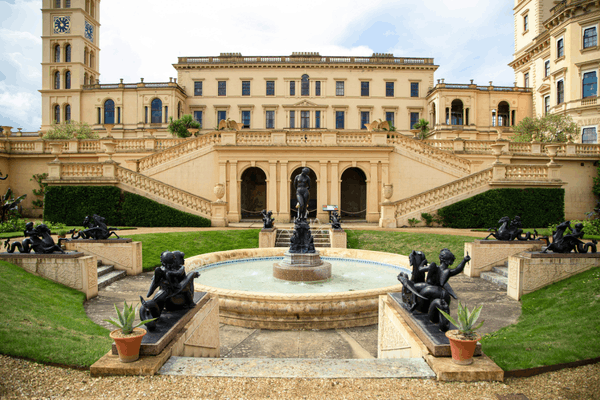
Osborne House on the Isle of Wight was designed by Prince Albert as a private sanctuary for Queen Victoria and their nine children, modelled on an Italian villa and built between 1845 and 1851. It was a place of genuine happiness and the couple’s own creation, away from the demands of court. It became the place where Victoria died in 1901, having spent her final years there.
The rooms remain largely as Victoria left them, personal in a way that few royal houses achieve. The Queen’s bedroom, the family nursery, and Albert’s private rooms are a study in Victorian domestic life at its most tender. Among the palaces in England associated with Victoria, Osborne is the most revealing.
Credit: Robert Anderson
Palace of Holyroodhouse
Strictly speaking, Holyroodhouse belongs to Scotland rather than England, but as the King’s official Scottish residence and one of the great palaces in the United Kingdom, it warrants its place here. Set at the foot of Edinburgh’s Royal Mile, with Arthur’s Seat rising dramatically behind it, the palace has been the seat of Scottish royalty since the 12th century.
Mary, Queen of Scots, lived here. The rooms where her secretary was murdered before her eyes still stand. The State Apartments are among the most richly atmospheric of any royal residence open to the public. For visitors travelling between England and Scotland, it is an unmissable extension of the royal palace story.
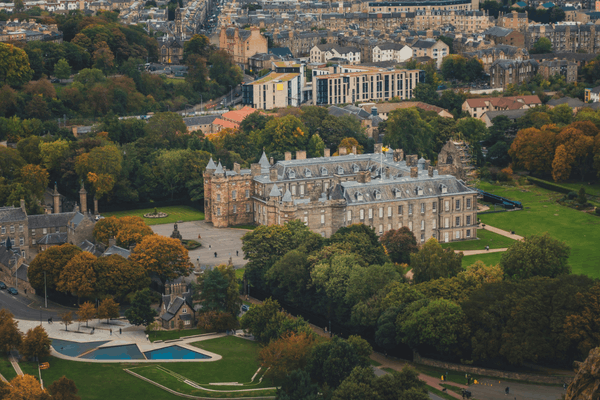
Credit: Marc Markstein
Frogmore House
Set within the private Home Park at Windsor, Frogmore House is one of the quieter palaces in England and one of the most intimate. Built in 1684 and extensively remodelled in the late 18th century, it has served as a private retreat for the Royal Family across generations and is today perhaps best known as the burial site of the Duke and Duchess of Windsor.
The gardens are informal, romantic, and remarkably peaceful, and they were a particular passion of Queen Charlotte, who used them as a botanical garden. Frogmore opens to the public on a small number of days each year, and those days are worth planning around.
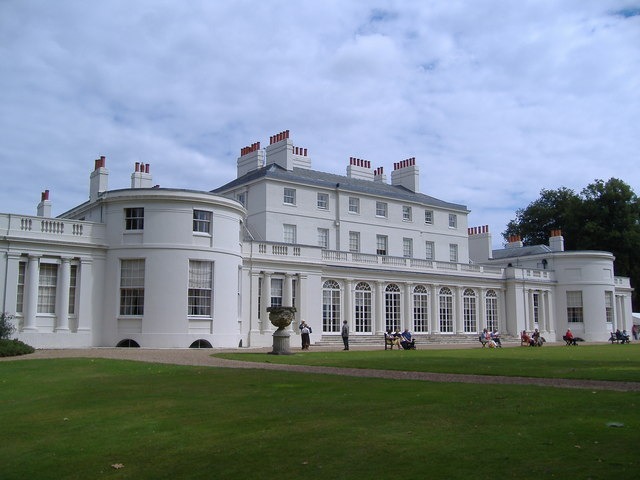
Credit: Wikipedia
Clarence House
Clarence House, situated just off the Mall and adjacent to St James’s Palace, was built between 1825 and 1827 by John Nash for the Duke of Clarence – later William IV. It has since been home to a succession of royals, most recently King Charles III before his accession.
The principal rooms are open to visitors during August, when they display works from the Royal Collection alongside personal pieces from successive royal residents. The connection between Clarence House and the adjacent Garden at Buckingham Palace makes this corner of royal London one of the most easily explored on a single visit.
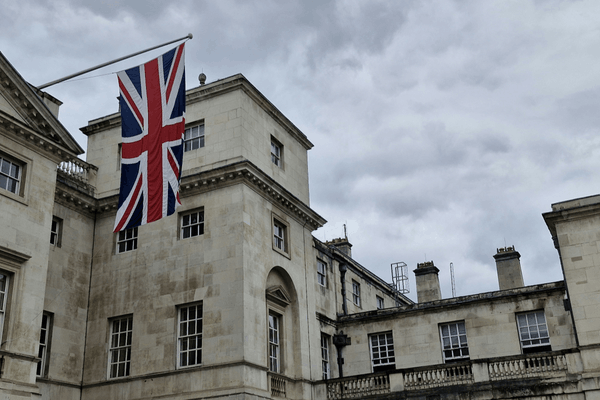
Credit: Jonny Pettman
Apsley House
Known as “Number One, London” – a name it earned as the first house encountered after the toll gates at the entrance to the city – Apsley House was the London home of the first Duke of Wellington. It is not a royal palace in the strict sense, but its position at Hyde Park Corner, its extraordinary art collection, and its intimate connection to the political life of the 19th-century court place it firmly within the story of England’s grandest historic residences.
The collection includes works by Velázquez, Rubens, and Goya, alongside silver and porcelain gifts from grateful European sovereigns. English Heritage manages the house and its permanent collection with exceptional care.
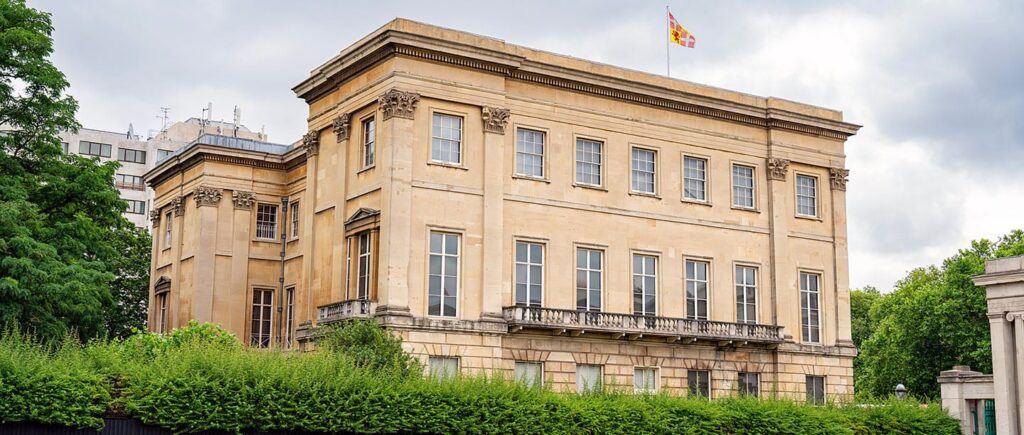
Credit: English Heritage
Chatsworth House
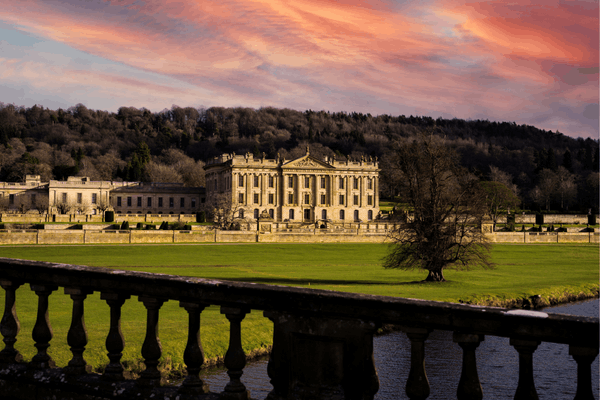
Chatsworth is not a royal palace, but it is one of the most magnificent houses in England and a fixture on any serious itinerary of the country’s great historic residences. The seat of the Dukes of Devonshire, set in the Derbyshire Peak District above the River Derwent, it houses one of the finest private art collections in the world, and the gardens, cascades, and parkland rank among the greatest designed landscapes in England.
Chatsworth is among the essential royal heritage experiences for a reason. The scale, the quality, and the sheer beauty of the place make it one of the most memorable days available anywhere in England.
Credit: Ryan Grice
Conclusion
The palaces in England are not simply buildings. They are the places where history was made, where monarchs were born and died, where art was collected, where power was displayed and sometimes lost. Each one carries a different weight, a different story, and a different kind of beauty.
From the ceremony of Buckingham Palace and the medieval grandeur of Windsor, to the Tudor intimacy of Hever Castle and the Art Deco surprise of Eltham, England’s royal residences reward the visitor who arrives with curiosity and leaves plenty of time to linger.
If you’d like to explore England’s royal heritage alongside its architecture, neighbourhoods, and hidden stories, discover our bespoke London tours, crafted to show you the city and the country with intention and depth.
FAQ
What are the six historic royal palaces?
The six Historic Royal Palaces in England managed by Historic Royal Palaces are the Tower of London, Hampton Court Palace, Kensington Palace, Banqueting House, Kew Palace, and Hillsborough Castle.
What are the names of the royal palaces?
Some of the most famous royal palaces in the United Kingdom include Buckingham Palace, Windsor Castle, Kensington Palace, Hampton Court Palace, and Holyrood Palace.
What is the oldest palace in England?
One of the oldest royal palaces in England is the Tower of London, founded in 1066 after the Norman Conquest. Originally built as a fortress by William the Conqueror, it later served as a royal residence, treasury, and prison.
What is the most beautiful castle in England?
Many consider Windsor Castle one of the most beautiful castles in England. It is the largest inhabited castle in the world and features impressive state apartments, historic chapels, and scenic grounds overlooking the River Thames.