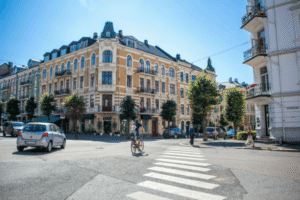
Oslo is an exceptional base. Norway’s capital sits at the convergence of an inland sea, a vast forested plateau, and a network of train and ferry connections that makes reaching the country’s most beautiful landscapes straightforward and often genuinely pleasant in the journey itself. Within two hours in almost any direction, Oslo gives way to fjords, medieval fortress towns, Olympic mountains, Viking burial mounds, and island archipelagos where Norwegians spend their summer days swimming from rocks and eating shrimp directly from the bag.
This guide covers the best day trips from Oslo, from the fjord islands that are reachable within twenty minutes on a public ferry, to the dramatic Norway in a Nutshell journey that stretches the definition of a day trip to its very limit and rewards the effort entirely.
Key Takeaways
- Oslo’s excellent public transport network – trains, buses, and ferries – makes most of the best day trips accessible without a car, though having one opens up additional options.
- The main train operator is Vy, with tickets bookable in advance online; local transport including metro, bus, and inner fjord ferries runs on the Ruter network.
- Most day trips from Oslo are feasible year-round, though experiences vary significantly by season – summer brings long daylight hours and waterfront activity; winter brings skiing, snow landscapes, and the possibility of Northern Lights.
- The Oslofjord islands, Drøbak, and Nordmarka forest require the least planning and offer the most immediate access to Norwegian nature.
- For the most ambitious day trips – the fjords of western Norway, Gaustatoppen mountain – starting early and booking transport in advance is essential.
The Oslofjord Islands
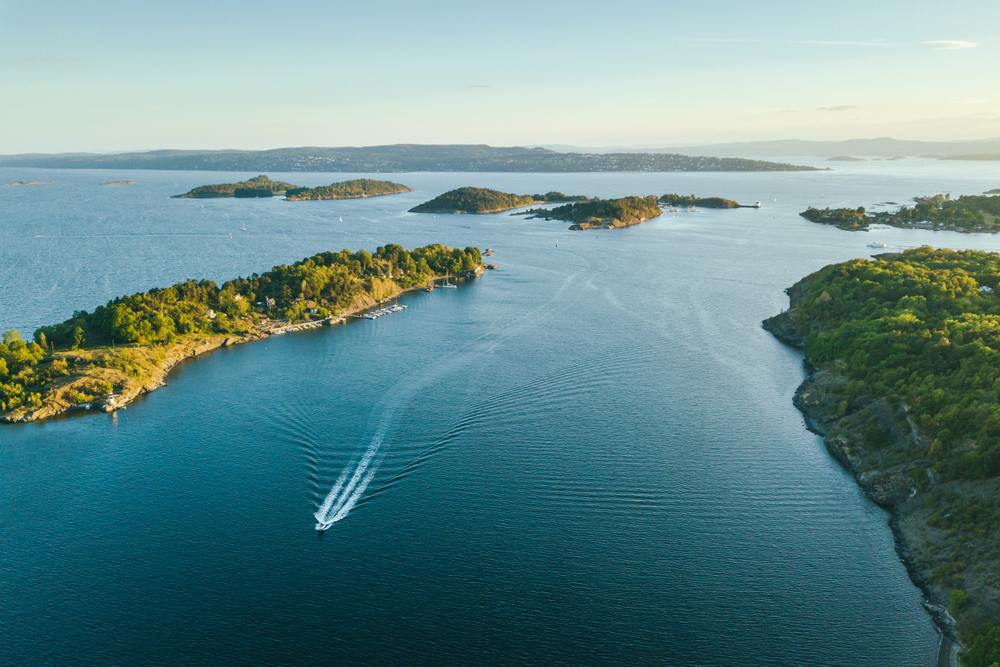
For the shortest possible journey to Norwegian nature, the Oslofjord islands are without comparison. Public ferries depart from Aker Brygge and the City Hall pier every ten to fifteen minutes in summer, connecting Oslo directly to Hovedøya, Gressholmen, Lindøya, Nakholmen, and Langøyene – a cluster of small, car-free islands scattered across the inner fjord, each with its own character and all within twenty to forty-five minutes of the city centre.
Hovedøya is the closest and the most historically layered: the ruins of a 12th-century Cistercian monastery stand in the island’s interior, surrounded by paths through nature reserve woodland that lead down to swimming rocks and the Klosterkroa café, where Skagen sandwiches, waffles, and prawns are served beside the water. Lindøya is famous for its 300-odd traditional timber cottages – painted in the vivid red, yellow, and green of classic Norwegian hytte architecture, and has the quality of a small village that has somehow materialised in the middle of the fjord. Langøyene is the largest and the most beach-oriented, with the most space for swimming, sunbathing, and camping.
Island-hopping is entirely practical: a day Ruter ticket covers all the ferries, allowing you to move between islands at will. In summer this is one of the most popular activities for Oslo residents; arriving before midday significantly improves the chances of finding a good spot.
Getting there: Ferries from Aker Brygge and Rådhusbrygge pier, departures every 10 to 15 minutes in summer. Covered by standard Ruter tickets.
Credit: Campervan Norway
The Oslofjord Coast
Drøbak and Oscarsborg Fortress
South of Oslo along the Oslofjord’s western shore, Drøbak is the quintessential Norwegian summer town: old wooden houses painted in white and warm pastels, a harbour edged with boats, a waterfront promenade built for slow walking, and the best fresh shrimp on the fjord. The town is also, unexpectedly, the official home of Norwegian Father Christmas – Julenissen’s permanent Christmas house on the main square receives children’s letters from around the world and is staffed and operational year-round, which gives Drøbak an agreeably whimsical quality regardless of season.
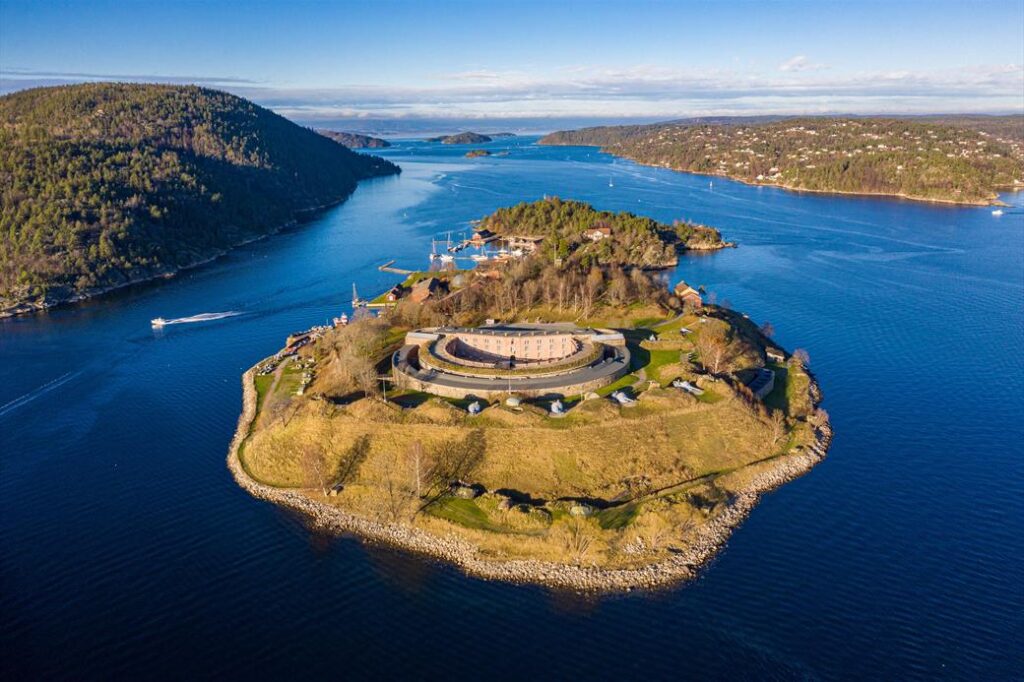
Just offshore lies Oscarsborg Fortress. It’s an island stronghold that holds one of the most significant moments in Norwegian modern history. On 9 April 1940, during the German invasion, Norwegian forces stationed at Oscarsborg fired on the German cruiser Blücher, sinking it in the fjord. The delay that this caused allowed Norway’s king, government, and the country’s gold reserves to escape northward before Oslo fell. The fortress is now open to visitors, who can explore the gun batteries, underground tunnels, and museums, and reach it via a short ferry ride from Drøbak’s harbour.
Getting there: Bus 500 or 541 from Oslo Bus Terminal to Drøbak, approximately 50–60 minutes. Ferry to Oscarsborg Fortress from Drøbak harbour.
Credit: Visit Oslo
Tønsberg
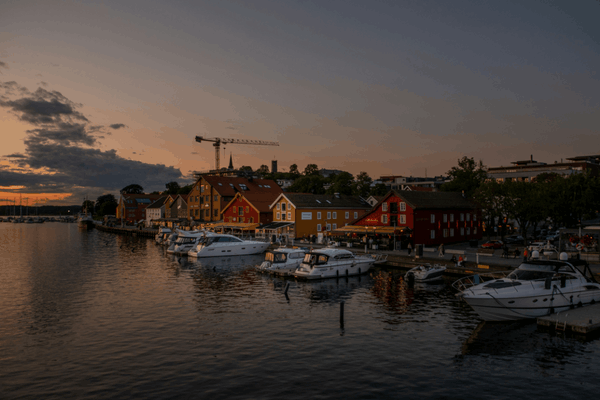
At the southern end of the Oslofjord, Tønsberg holds a claim that it wears with quiet pride: it is the oldest town in Norway, with roots in the Viking Age, established by the 9th century and a seat of power through much of the medieval period. The town’s most dramatic element is Slottsfjellet (Castle Mountain), which is a steep promontory crowned with the remains of a medieval fortress and a 19th-century tower, which can be climbed in fifteen minutes and rewards the effort with sweeping views over the fjord and the surrounding islands.
At the foot of the hill lies the Saga Oseberg which is a full-scale replica of the magnificent 9th-century Viking ship found at the Oseberg burial mound nearby. This beauty is moored at the docks and can be boarded. The original ship is in Oslo, but the replica conveys the scale and sophistication of Viking shipbuilding with immediate and visceral effect. Tønsberg’s waterfront is lively in summer and the harbour area retains genuine character from its long seafaring history. The gateway to Færder National Park is also close by.
Getting there: Train from Oslo S to Tønsberg, approximately 1 hour 15 minutes. Frequent departures throughout the day.
Credit: Gunnar Ridderström
Historic Towns
Fredrikstad Old Town
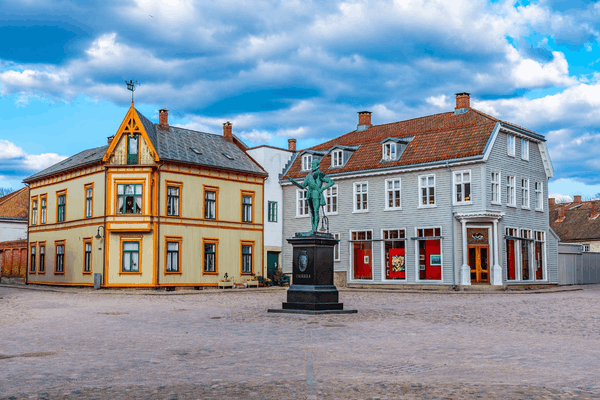
Fredrikstad’s Gamlebyen (Old Town) is one of the great surprises of Norway for visitors who arrive expecting to find a modest historic quarter and instead encounter the best-preserved star-fortress town in all of Scandinavia. Built by Danish King Frederik II in 1567 following a fire that destroyed an earlier settlement, Fredrikstad was designed as a military stronghold at the mouth of the Glomma river, and it all survived almost intact. Within the walls: cobblestone streets, galleries, independent craft shops, bakeries, and a pace of life entirely different from modern Norway.
The journey from Oslo S takes just over an hour by train. From the station, a short walk or bike ride reaches the river, from which a free ferry crosses to the Old Town – a short crossing that adds a pleasant and very local flavour to the arrival. On weekends, small markets and antique shops add another dimension to the wander.
Getting there: Train from Oslo S to Fredrikstad, approximately 1 hour 10 minutes. Free ferry from the main town across the river to Gamlebyen.
Credit: Life in Norway
Kongsberg
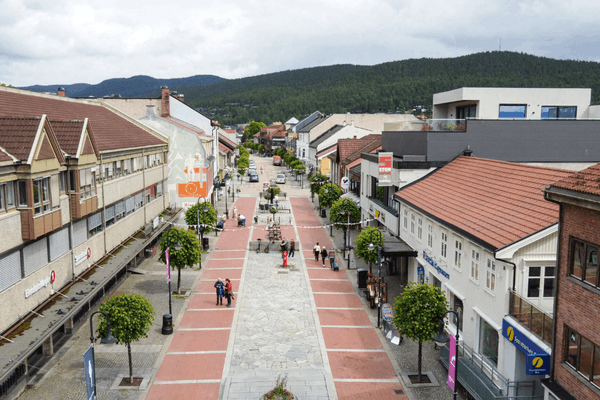
An hour southwest of Oslo by train, Kongsberg was founded in 1624 when silver was discovered in the surrounding mountains, and the Royal Norwegian Mint still operates here, though the mines themselves closed in 1958. Today, the old mines are open for underground tours in summer, taking visitors deep into the shafts and chambers where thousands of miners worked for over three centuries. The Kongsberg Silver Mines remain one of the most distinctive day trip experiences in the Oslo region, combining genuine underground drama with an absorbing history of royal patronage and industrial ambition.
The town itself is attractive, with a fine 18th-century church, and a setting that shifts to a ski resort in winter, making it a completely different proposition in the colder months. It was built when Kongsberg was one of Norway’s largest cities.
Getting there: Train from Oslo S to Kongsberg, approximately 1 hour. Frequent departures.
Credit: Kongsberg.no
Nature and Outdoor Escapes
Nordmarka
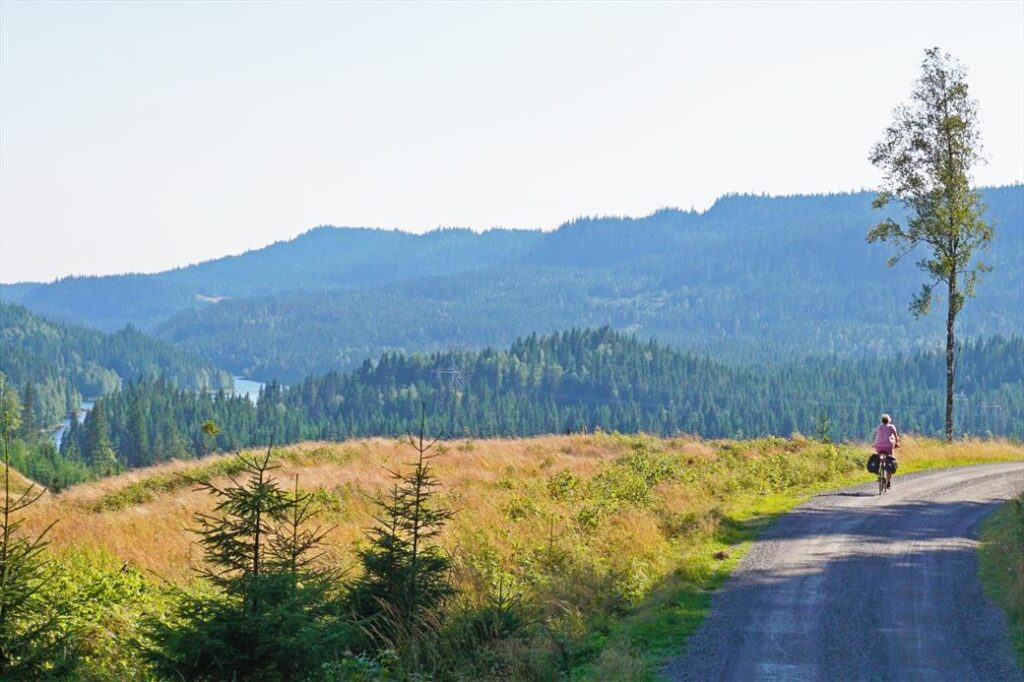
Immediately north of Oslo, the Nordmarka forest is one of the largest and most accessible areas of wilderness attached to any European capital with 1,700 square kilometres of lakes, trails, pine and birch forest, and granite outcrops that the people of Oslo treat as an extension of their living space. In summer, the forest is a landscape of swimming lakes, hiking paths, and the quiet of pine-filtered afternoon light. In winter, it becomes the world’s most comprehensive urban cross-country skiing network: hundreds of kilometres of groomed trails connecting from the city’s metro stations directly to the backcountry.
Holmenkollen is a home to Norway’s famous ski jump, with views over Oslo and the fjord. It sits on the forest’s southern edge and is accessible by metro from the city centre in twenty minutes. From here, trails extend north into the deeper forest for as long as your legs will take you. The combination of the ski jump observation deck, the Ski Museum, and the forest trails beyond it makes this one of the most rewarding half-day or full-day excursions available without leaving Oslo’s transport network.
Getting there: Metro Line 1 from central Oslo to Holmenkollen or Frognerseteren, approximately 25–35 minutes.
Credit: Visit Oslo
Sognsvann and the Marka Lakes
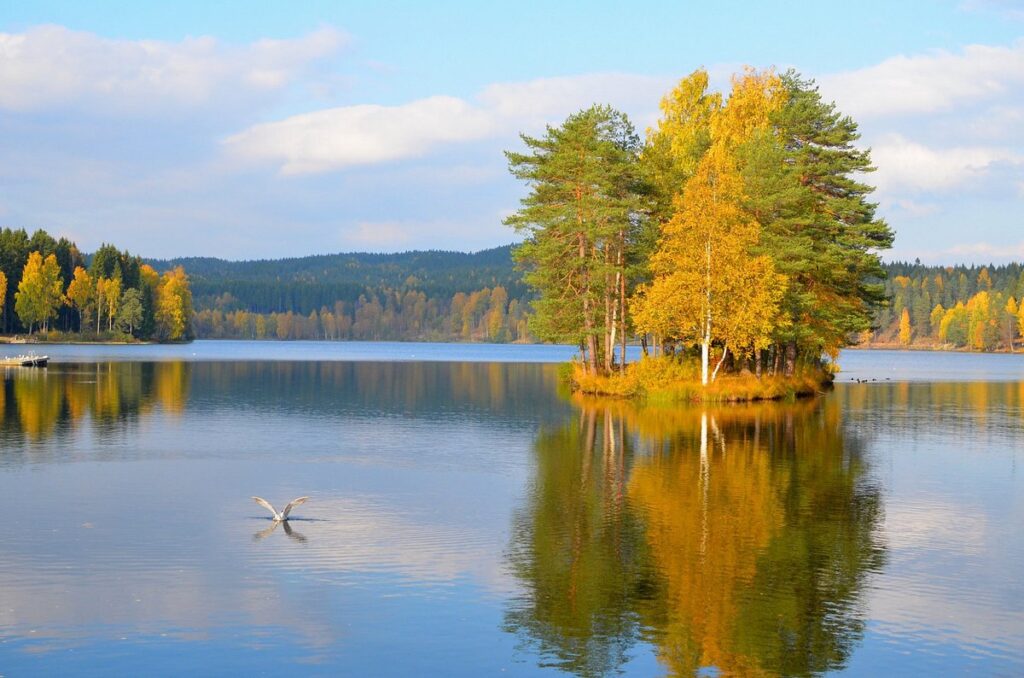
For a gentler and more immediate nature experience, Sognsvann lake is reachable in fifteen minutes from the city centre on the metro. It is also where Oslo residents come to swim in summer and ski in winter. The lake is the starting point for a network of easy walking and skiing trails into Nordmarka, and on warm days the grassy banks fill with swimmers, families, and people who have brought wine and are in no particular hurry. There are few better introductions to the Norwegian relationship between urban life and the outdoors.
Getting there: Metro Line 5 from central Oslo to Sognsvann, approximately 20 minutes.
Credit: Tripadvisor
Culture and Art
Kistefos Museum and Hadeland Glassverk
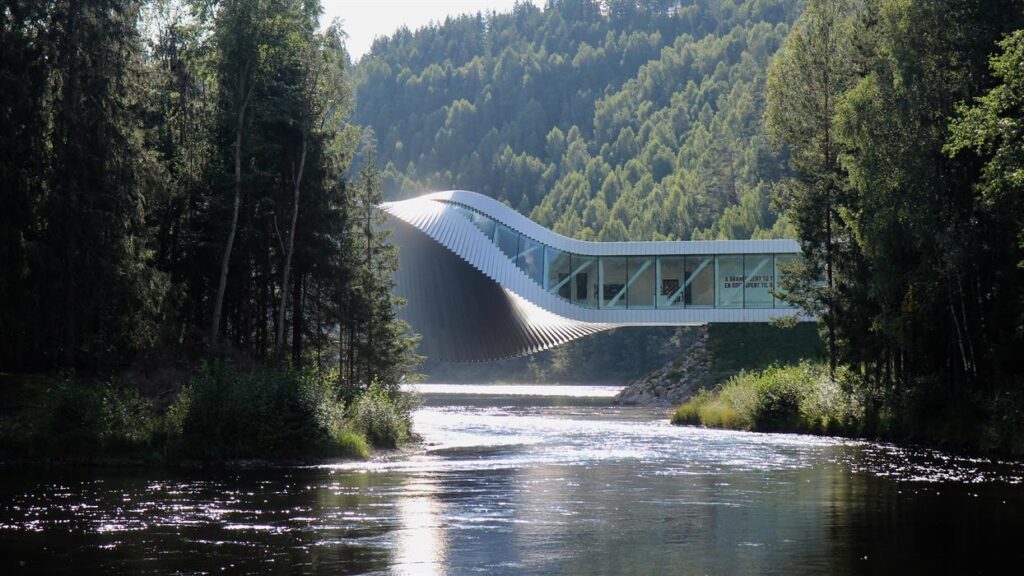
North of Oslo, set beside the Randselva river at the site of a 19th-century wood pulp factory, the Kistefos Museum has become one of the most talked-about art destinations in Norway. The sculpture park spans both banks of the river and features works by some of the world’s most significant contemporary artists in a setting of extraordinary natural beauty. At the centre of it all is The Twist. It’s a striking gallery designed by BIG (Bjarke Ingels Group) that doubles as a bridge across the river, rotating 90 degrees along its length and sitting over the water with the Randselva flowing beneath it. The combination of world-class art and extraordinary architecture in a forested river valley makes Kistefos genuinely difficult to categorise.
The nearby Hadeland Glassverk, established in 1762 and one of the oldest glass manufacturers in Scandinavia, is a natural pairing: visitors can watch glassblowers at work and try the craft themselves. The two destinations combine into a full and memorable day.
Getting there: Bus from Oslo Bus Terminal toward Brandbu or Jaren, approximately 1.5 to 2 hours depending on route. Car allows more flexibility for combining both sites.
Credit: Visit Oslo
Lillehammer
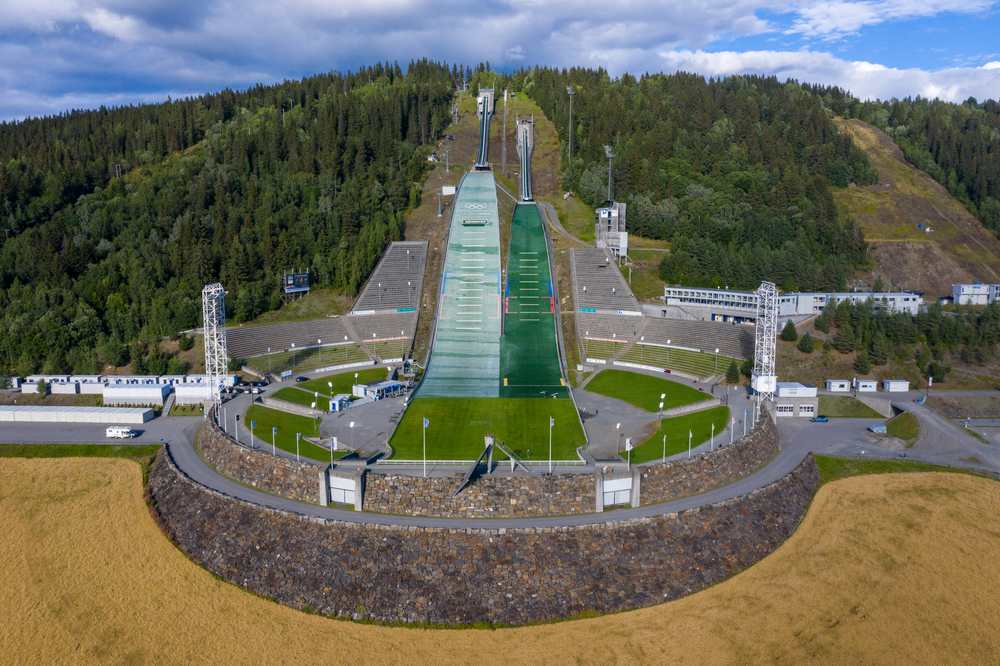
Two hours north of Oslo by direct train, Lillehammer sits above the northern shore of Lake Mjøsa (Norway’s largest lake) in a setting of considerable beauty. The town’s international profile rests on the 1994 Winter Olympics, and the legacy of those Games is tangible: the bobsleigh run, the ski jump, and the Hafjell ski resort are all open to visitors and open for activity, with guided bobsleigh experiences available in summer and full winter sports in the colder months.
For cultural weight, Maihaugen is the defining attraction: an open-air museum with more than 200 historic buildings – farmsteads, workshops, a stave church, and town houses from different periods of Norwegian history – arranged across a hillside above the town. Maihaugen is one of the largest open-air museums in Scandinavia and easily absorbs a full morning. The main street, Storgata, makes an excellent backdrop for a midday coffee before the return journey.
Getting there: Train from Oslo S to Lillehammer, approximately 2 hours. Regular direct services throughout the day.
Credit: Campervan Norway
Hardangerfjord
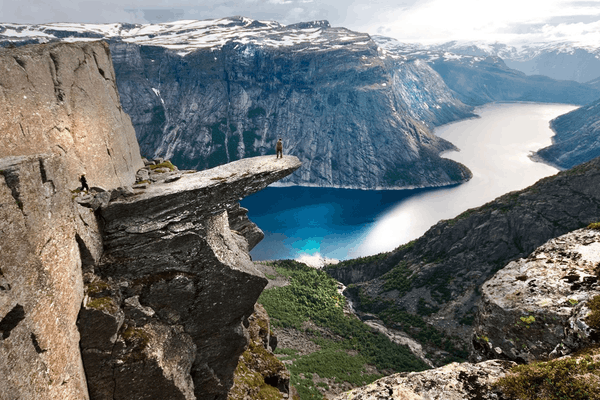
Hardangerfjord is one of Norway’s three most visited fjords, alongside Sognefjord and Geirangerfjord. It is a different and in some ways more surprising journey than the classic Nærøyfjord route. The fjord is broader and in places more gentle, famous for its apple and cherry orchards that blossom in spring, its national parks, and the extraordinary waterfalls that line its shores. In summer, the fruit orchards in bloom give the fjord valleys a quality quite unlike the austere drama of the western fjords.
Reaching Hardangerfjord requires either a car or a train-and-bus combination through Voss or Bergen, making it the most logistically demanding of the fjord day trips. Those with access to a car will find it most rewarding as the drive through Numedal valley and across the Hardangervidda mountain plateau to the fjord is a journey in itself.
Getting there: By car, approximately 3–3.5 hours from Oslo via the E134. By public transport, train to Voss followed by regional bus; plan 4+ hours each way.
Credit: Visit Norway
Practical Notes for Day Trips from Oslo
Plan around transport. For destinations served by Vy trains, booking in advance on vy.no secures the best fares and guarantees seats on popular routes. For local transport within the Oslo region, the Ruter app covers metro, tram, bus, and inner fjord ferries on a single ticket system.
Start early for the fjords. The Norway in a Nutshell and Hardangerfjord day trips require departures from Oslo between 7am and 8am to complete comfortably and return the same evening. The other day trips on this list are much more flexible.
Seasons change the experience significantly. The Oslofjord islands and coastal towns are at their best from June to August. Nordmarka and Holmenkollen are year-round but transform into a world-class cross-country skiing destination from December through March. Kistefos and Fredrikstad reward visits in any season but are particularly pleasant in the quieter shoulder months of May and September.
Clothing. Norwegian weather at any altitude or season demands layers and waterproof outerwear. The fjord valleys are warmer than Oslo in summer; the mountain crossings on the Bergen Railway can be several degrees colder even in July.
Conclusion
The day trips from Oslo reflect, in miniature, everything that makes Norway one of the world’s most compelling travel destinations: nature of extraordinary scale and accessibility, a history that runs from Viking Age burial mounds to medieval fortress towns to a living culture of outdoor life that is embedded in daily existence rather than presented as recreation. Oslo itself is a city worth spending several days in. But the country it opens onto within a twenty-minute ferry ride or two hours by train, is where Norway’s essential character reveals itself most fully.
To experience Oslo and the surrounding landscapes as part of a curated, private journey through Norway and the Nordic region, explore our private Oslo tours, designed to take you deeper into one of Europe’s most extraordinary countries.
FAQ
What is the prettiest town in Norway?
One of the most beautiful towns in Norway is Bergen, known for its colorful wooden houses, fjords, and mountain backdrop. Other stunning places include Flåm and Ålesund.
Is 3 days in Oslo too much?
No, 3 days in Oslo is actually ideal. It gives you time to see museums, the waterfront, parks, and take a short fjord trip or day excursion without rushing.
What is the scenic train journey from Oslo?
The most famous scenic route is the Bergen Railway, which runs from Oslo to Bergen. It crosses mountains, plateaus, and fjords, and is considered one of Europe’s most beautiful train journeys.
What’s close to Oslo?
Near Oslo, you can visit:
- Drammen – riverside city
- Drøbak – charming seaside village
- Oslofjord – islands, kayaking, and beaches
These are all easy day trips from the capital.