Oslo has a habit of surprising people who arrive expecting simply what they have read about. The Opera House, the Viking Ship Museum, Vigeland Sculpture Park – all of these are worth your time, and none of them are secrets.
But alongside them, threaded through the city’s neighbourhoods and forests and harbour edges, is a parallel Oslo that belongs more fully to the people who live there: a mausoleum where darkness is the point and silence is mandatory; a sculpture park that most visitors walk straight past on the way to a more famous hill; a medieval church that has been standing since the 12th century at the edge of a birch forest; a coffee roastery where the cup is treated with the same intellectual rigour that the best Oslo kitchens bring to food.
This guide is for Oslo that does not make the front page. The hidden gems in Oslo are not hidden in the sense of being difficult to find, but hidden in the sense that the city’s most famous faces tend to draw attention away from them. Pay attention to these instead, and Oslo will give you more than you were expecting.
Key Takeaways
- Oslo’s most rewarding hidden gems range from an extraordinary art mausoleum and a medieval church to fjord-side floating saunas and a river walk that connects the city’s most interesting neighbourhoods.
- Most hidden gems in Oslo are free or very low-cost to visit, making them ideal complements to the city’s more expensive main attractions.
- Grünerløkka, Grønland, Gamlebyen, and the Akerselva riverbank are the neighbourhoods and areas that reward unhurried exploration most consistently.
- Many of Oslo’s best-kept secrets are accessible by public transport, including the T-bane (metro) and tram network.
- Oslo’s relationship with its outdoor spaces – the Oslofjord, Nordmarka forest, and the parks threading through the city – is the characteristic that sets it most distinctly apart from other European capitals.
Art, Architecture & Culture
The Emanuel Vigeland Mausoleum
Of all the hidden gems in Oslo, the Emanuel Vigeland Mausoleum is the most genuinely unexpected. Gustav Vigeland was a sculptor of the famous Vigeland Sculpture Park and is one of Oslo’s most celebrated cultural figures. His younger brother Emanuel is almost entirely unknown outside Norway, which makes the experience of entering his self-designed tomb all the more startling.
Emanuel Vigeland constructed the building in 1926, intending it as a studio and gallery. He later decided that it would also serve as his mausoleum, bricked up all the windows, and spent twenty years covering the interior walls and barrel-vaulted ceiling with an 800-square-metre fresco called Vita which is an explicit and unflinching depiction of human life from conception to death. The room is almost completely dark on entry.
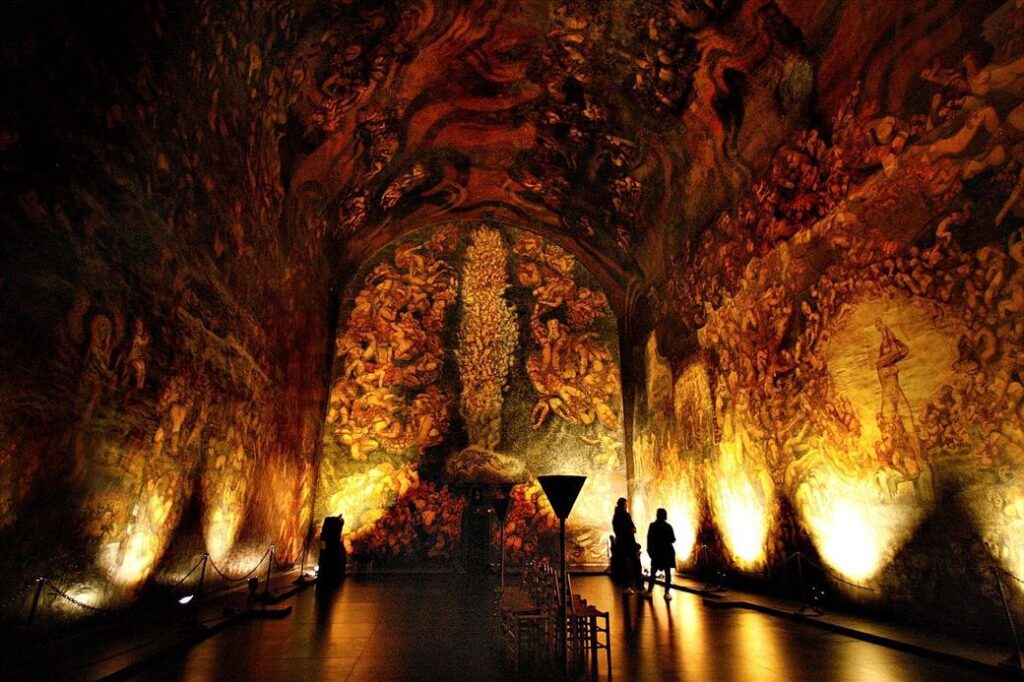
Credit: Emanuel Vigeland Museum
Eyes take up to twenty minutes to adjust. As the images begin to emerge from the shadows, naked figures entwined in birth, love, age, and death in scenes simultaneously erotic and solemn. The effect is profound in a way that photographs cannot convey. The acoustics amplify the experience: the smallest footstep echoes for up to fourteen seconds across the barrel-vaulted ceiling, making silence not merely appropriate but necessary.
There is one more detail worth knowing. Above the low iron entrance door sits the urn containing Emanuel Vigeland’s ashes. The door requires you to bow your head to exit. It is rumoured that Emanuel, who spent his life overshadowed by his famous brother, designed this specifically so that every visitor would bow to him on their way out. The gesture is either poignant or darkly comic, depending on your mood, and entirely in keeping with one of the most extraordinary rooms in Norway.
Ekebergparken Sculpture Park
Just south of the city centre, on a forested hillside overlooking Oslo and the Oslofjord, Ekebergparken is the sculpture park that most visitors never find because they do not know how to look for it.
The park spans 60 acres of woodland and open hillside dotted with works by some of the most significant artists of the past century like Salvador Dalí, Auguste Rodin, Camille Claudel, James Turrell, and many others. They’re woven into the landscape in a way that rewards wandering rather than systematic viewing. Works appear unexpectedly around bends in the trail, through gaps in the trees, or reflected in pools at angles that shift with the light.
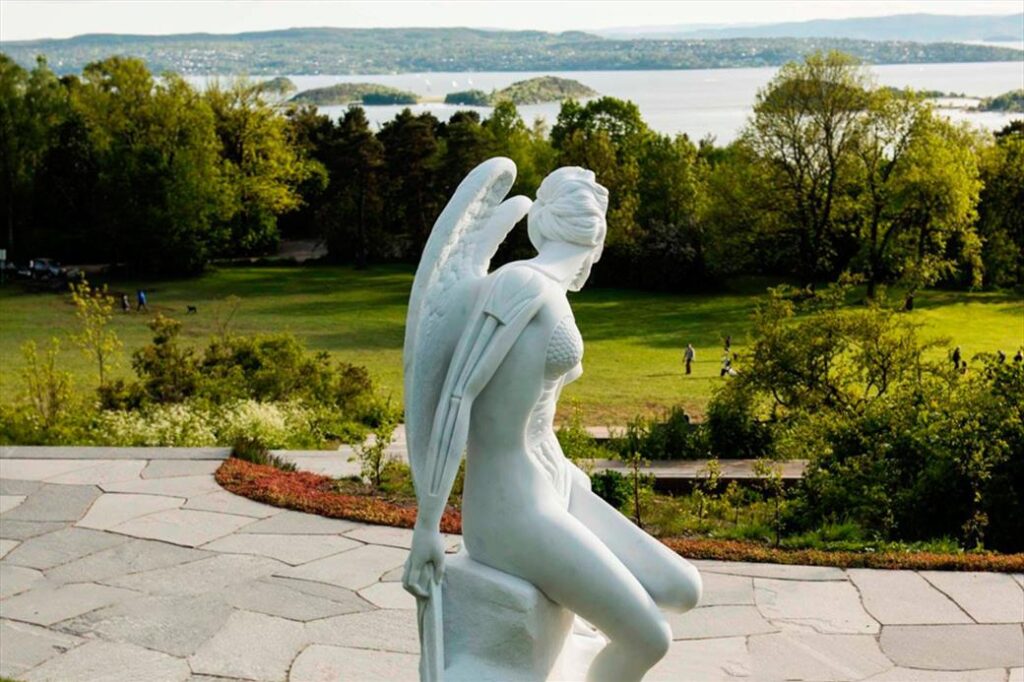
Credit: Ekebergparken Sculpture Park
The park also carries its own historical depth: archaeologists have found evidence of human activity here dating back 10,000 years, including petroglyphs that make Ekebergparken one of the oldest continuously used cultural landscapes in Norway. Edvard Munch, who lived nearby for a period, is said to have experienced the inspiration for The Scream from a viewpoint on this very hillside. The view from the top is one of the finest in Oslo, and the park is free to enter.
Gamle Aker Church
On a low hill in the neighbourhood of Nordre Aker, Gamle Aker Church is the oldest building in Oslo still in everyday use – a Romanesque stone church dating from approximately 1150 AD, built from local limestone and still in active use as a parish church. It stands in a churchyard filled with old headstones, surrounded by birch trees, with a quality of stillness that makes it feel entirely removed from the city around it.
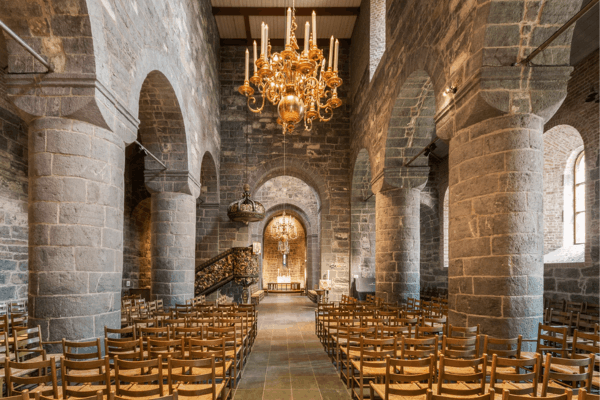
Credit: Gamle Aker kirke – St. Hanshaugen sokn
For context: this church was already old when Oslo was established as the nation’s capital. It has stood through the Reformation, several fires that destroyed much of the surrounding city, and over eight centuries of Norwegian history. Most visitors to Oslo walk past Vigeland Park without knowing that a genuine medieval church sits a short distance to the northeast, open to visitors and entirely free. Gamle Aker is one of the most atmospheric and least crowded of all the hidden gems in Oslo.
The Akerselva River Walk
Oslo’s most rewarding urban walk follows the Akerselva river. It’s a 10-kilometre trail that runs from Maridalsvannet lake in the north through the Vulkan and Grünerløkka neighbourhoods before reaching the Oslofjord.
The river was the engine of Oslo’s industrial development in the 19th century, its banks lined with textile mills and factories, many of which have been converted into restaurants, galleries, music venues, and the Mathallen food hall. Walking the Akerselva is the most direct way to understand how Oslo’s neighbourhoods connect to each other and how the city’s industrial past has been absorbed into its cultural present.
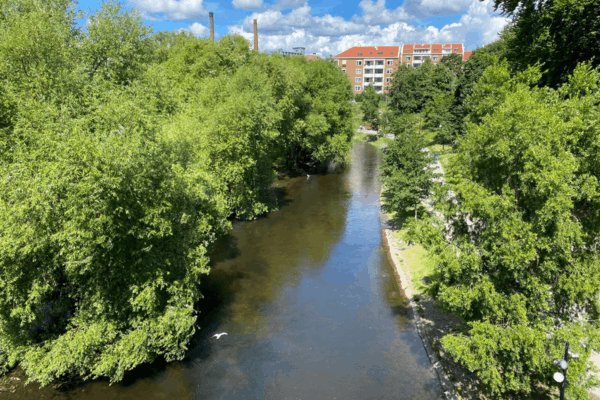
Credit: Visit Løkka
From the Mathallen area south to the fjord, the walk passes murals, small bridges, forested stretches, and the Ankerbrua bridge. It’s one of the best spots in the city for watching the river in full spring flow. From the Mathallen north toward Maridalen, the path grows wilder and more forested, eventually reaching the source lake where Oslo’s drinking water originates. The full walk is accessible to most fitness levels and takes approximately three hours at a relaxed pace, with the Grünerløkka neighbourhood providing natural stopping points for coffee and food along the way.
Mathallen Food Hall
In the Vulkan district on the western bank of the Akerselva, Mathallen is Oslo’s finest food hall. It’s a converted industrial building now housing a concentrated collection of artisan food producers, restaurants, and market stalls.
It remains far less crowded than the city’s main tourist areas despite the quality of what is available: freshly baked sourdough, smoked fish, Norwegian charcuterie, specialty coffee, hand-made pasta, and an ever-changing rotation of food vendors representing Norwegian, Nordic, and international food traditions.
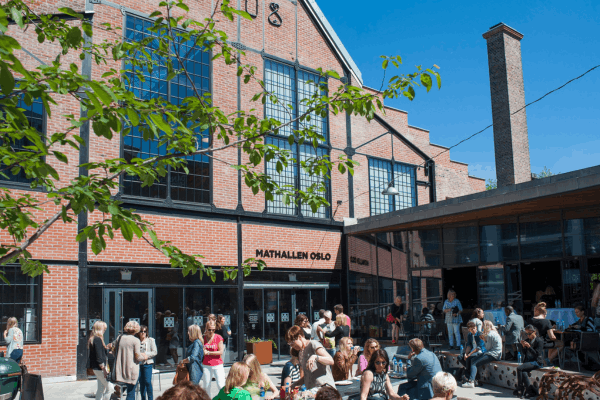
Credit: Mathallen Oslo
Mathallen also hosts cooking classes, tastings, and culinary events throughout the year, giving it the character of a community food institution rather than a tourist attraction. The covered hall, with its exposed industrial ironwork and high windows, is a genuinely beautiful space. It is one of the hidden gems in Oslo that has been partially discovered but still rewards a visit without crowds most days of the week.
Tim Wendelboe Coffee
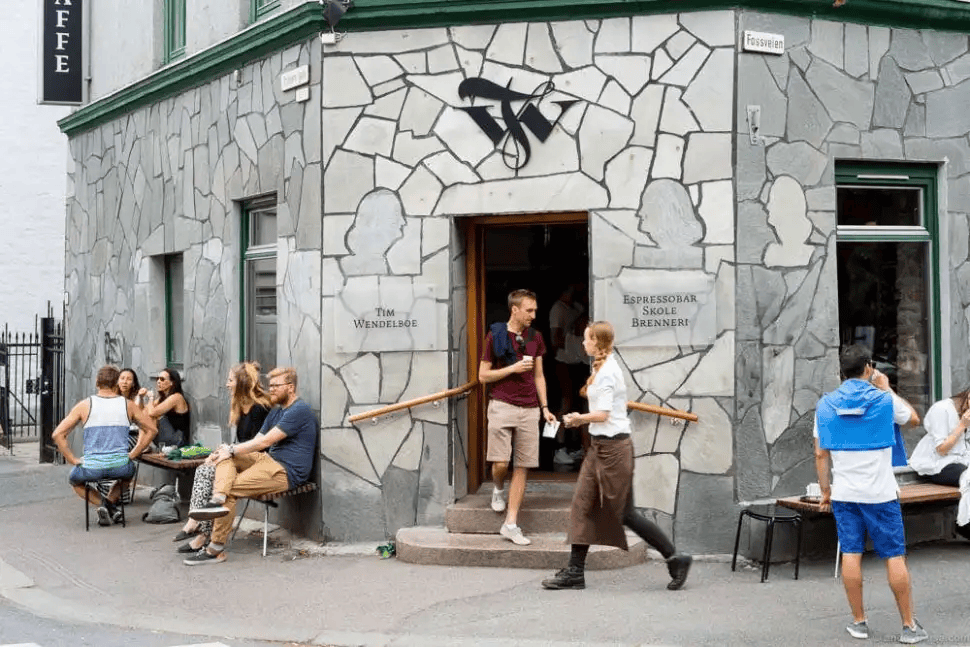
Norway produces some of the world’s most celebrated specialty coffee, and the roaster most responsible for that reputation is Tim Wendelboe. It’s a tiny café and roastery in Grünerløkka that has won more World Barista Championship awards than almost any comparable establishment anywhere. The café itself is deliberately modest: a small room with a long counter, exposed bags of green coffee, and a team who approach the cup with the same rigour that the best Oslo restaurants bring to food.

Credit: Tim Wendelboe Coffee
Tim Wendelboe sources directly from coffee farms in Ethiopia, Colombia, and elsewhere, visiting them personally and publishing detailed information about each harvest. The espresso is among the finest in the world by any serious measure, and the café’s unpretentious neighbourhood setting makes the contrast between the ambition and the surroundings part of the point. A stop here is, for anyone who cares about coffee, one of the most rewarding hidden gems in Oslo.
Neighbourhoods & Streets
Grünerløkka
Grünerløkka is not entirely a secret as it appears in most Oslo guides, but it is so consistently underestimated by visitors who spend their days in the city centre that it functions as a hidden gem in practice.
The neighbourhood runs along the east bank of the Akerselva north of the city centre, and its character is the most distinctly un-touristy in Oslo: independent bookshops and vinyl record stores, small galleries, vintage clothing shops, neighbourhood bars with outdoor seating that fills from the first warm day of spring, street art on almost every wall, and a bakery culture that is among the best in Scandinavia.
The pace is different here from the polished waterfront of Aker Brygge or the international-facing streets of the city centre. Grünerløkka belongs to its residents, and the experience of walking through it on a weekday morning, stopping at a bakery for an open sandwich, reading the murals on Thorvald Meyers gate, gives you a more genuine picture of everyday Oslo life than most of the city’s main attractions.
Grønland
Two stops east of the central station on the metro, Grønland is Oslo’s most culturally diverse neighbourhood – a compact area of Pakistani, Somali, Vietnamese, and Middle Eastern restaurants, grocery shops, and markets that offers an Oslo entirely different from the Nordic-design aesthetic of the more famous parts of the city. The neighbourhood’s covered market, Grønland Basar, is the city’s most lively and authentic market space, selling everything from fresh lamb and spices to textiles and household goods.
For visitors who want to eat well and cheaply in Oslo, Grønland is the answer. The neighbourhood’s restaurants serve food that is simultaneously better value and more authentic than almost anything available in the tourist areas, and the experience of spending an afternoon here gives Oslo a depth and complexity that the city’s international reputation sometimes obscures. It is one of the most rewarding hidden gems in Oslo for travellers curious about how a city of this size absorbs and reflects the world beyond its borders.
Smalgangen Alley and Gamlebyen
In the Gamlebyen (Old Town) neighbourhood on the eastern side of the city, Smalgangen is a narrow lane running between medieval ruins and old buildings. It’s one of the most atmospheric streets in Oslo and almost entirely unknown to visitors.
The surrounding Gamlebyen contains the remains of Oslo’s medieval city, abandoned after a fire in 1624 when the town was moved and renamed Christiania under Danish rule. Ruins of a medieval church, a bishop’s palace, and other structures survive in the open landscape of the Middelalderparken, a park that preserves and presents the remains of the original city.
Walking through Gamlebyen with the medieval ruins on one side and modern residential Oslo on the other produces a quality of time-layering that is surprisingly powerful in a city whose international image is predominantly modern and contemporary. It is one of the most historically significant areas in Norway and one of the least visited.
Nature & the Fjord
The Oslofjord Floating Saunas
The floating sauna is one of Oslo’s most characteristically Norwegian experiences, and one that most international visitors never encounter simply because it does not appear prominently in the standard guide. Several operators run floating wood-fired saunas on the Oslofjord.
They are small vessels that drift gently around the harbour while their occupants alternate between the intense heat of the sauna cabin and the shock of plunging into the fjord water below. The combination of steam, cold water, and views of the Oslo skyline from the water is one of the most pleasurable ways to spend an afternoon in the city, and on a clear winter day, with snow on the surrounding hillsides, it is genuinely unforgettable.
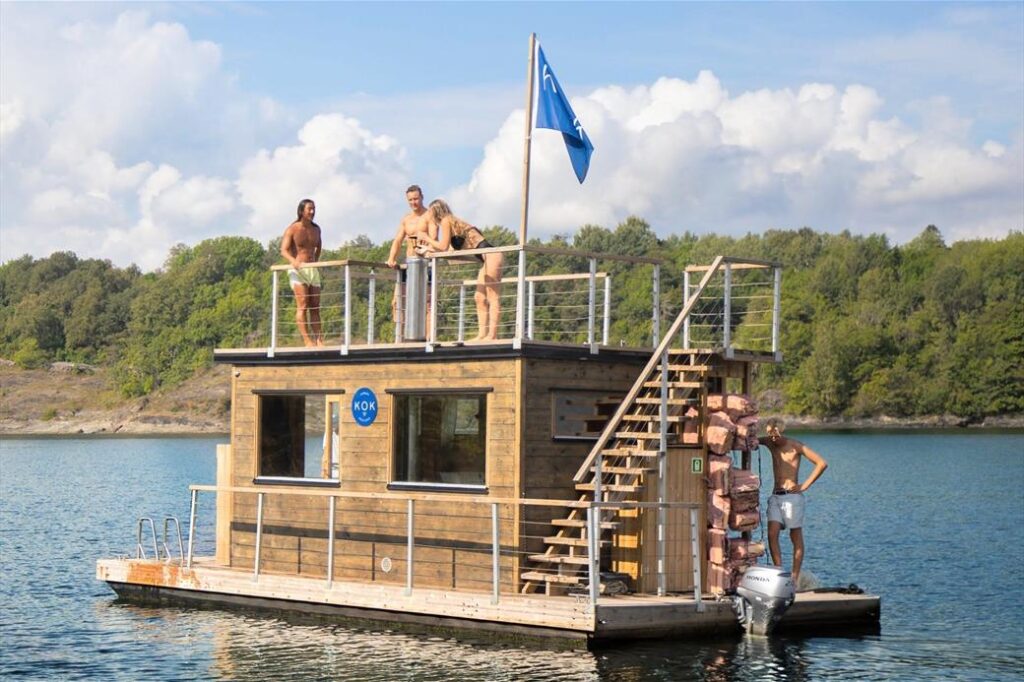
Credit: KOK Oslo
Private sauna bookings are available throughout the year. Shared sauna sessions offer a more affordable version of the same experience and are the most Norwegian way to approach it. Sauna culture here has none of the silence-mandatory formality of Finnish tradition; conversation is expected and company is part of the point.
Sørengautstikkeren – The Harbour Swimming Area
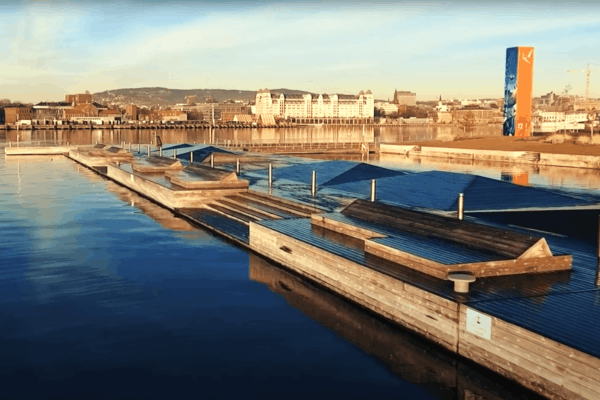
The Sørenga neighbourhood east of the Opera House is Oslo’s most ambitious recent waterfront development is a striking new residential and cultural district built on a former container port, with a public outdoor swimming area that has become one of the most popular summer destinations for Oslo residents.
The Sørengautstikkeren pier extends into the fjord with a series of platforms, ladders, and diving boards at various heights, and the swimming area includes shallow sections for children, deeper areas for serious swimmers, and long stretches of wooden deck for sunbathing.
Credit: Kebony Global
The fjord water in Oslo is clean enough to swim in, one of the more remarkable facts about a capital city, and on summer weekends the pier is a vivid expression of the Norwegian relationship with outdoor life. It is free to use, accessible from the Opera House on a ten-minute walk, and one of the most enjoyable hidden gems in Oslo for any visitor who happens to be there in warm weather.
Hovedøya Island
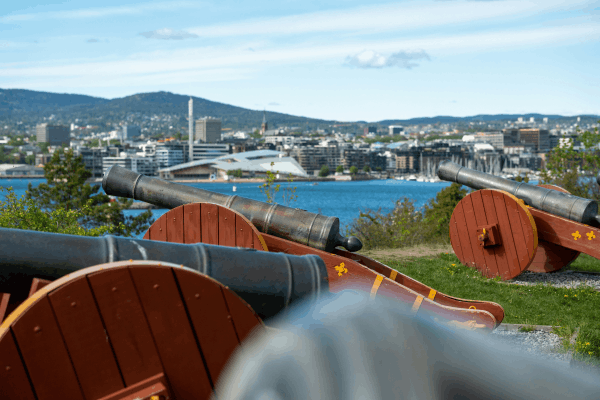
A fifteen-minute ferry ride from Aker Brygge pier, Hovedøya is the closest of the Oslofjord islands and carries within its small perimeter a remarkable density of history and natural beauty. The ruins of a 12th-century Cistercian monastery and the oldest monastic remains in Norway, stand in the island’s interior. A nature reserve forest surrounds the ruins and leads down to rocky swimming spots, wildflower meadows in summer, and views across the fjord to the city.
Credit: Bjørn-Magnus Kristiansen
On summer weekdays, the island is quiet. The same cannot be said for summer weekends, when Oslo residents arrive in considerable numbers to swim, picnic, and do precisely nothing in the Norwegian fashion, which is to say, with great commitment and outdoor expertise. The ferry runs from Aker Brygge on the Ruter network, covered by standard tickets. No cars are permitted on the island.
Torshovdalen Park
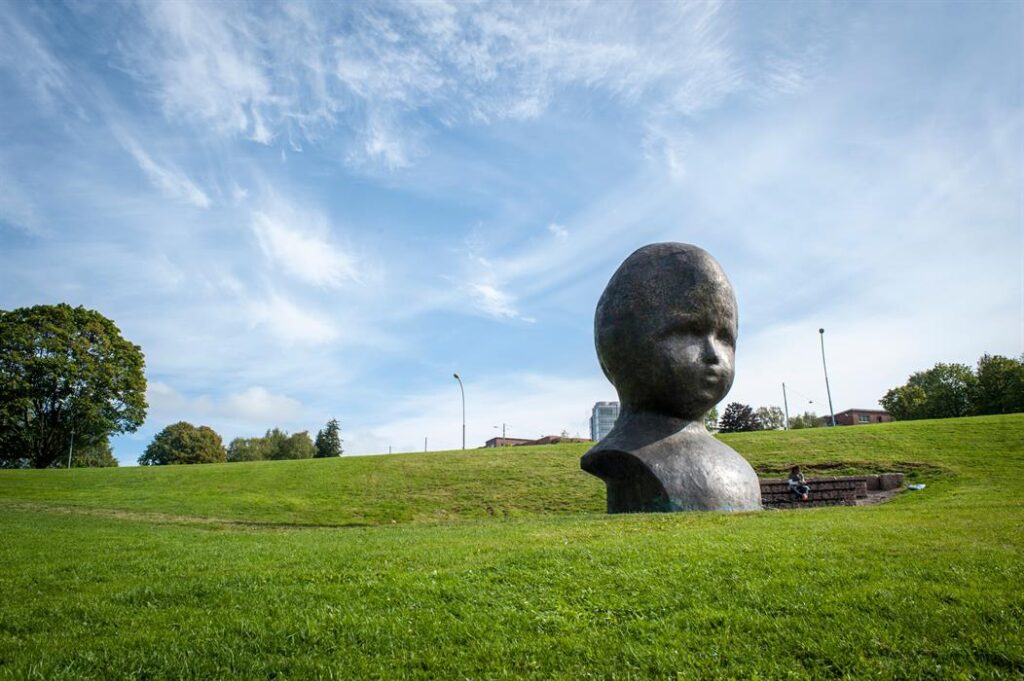
In the Torshov neighbourhood north of Grünerløkka, Torshovdalen is a quiet, green river valley that functions as the local park for the surrounding residential streets and is almost entirely unknown to visitors. A small stream runs through the valley, which is planted with birch and mature deciduous trees, and wooden footbridges connect the paths along both banks. In summer it is full of wildflowers and the sound of running water; in winter the valley fills with cross-country skiers on groomed tracks.
Credit: Torshovdalen
Torshovdalen has none of the formality of Oslo’s famous parks. It is simply a very good neighbourhood park in a city that takes its parks seriously, and that quality of everyday civic beauty rather than curated attraction, is precisely what makes it one of the most genuine hidden gems in Oslo.
Food & Drink
Fiskeriet Youngtorget
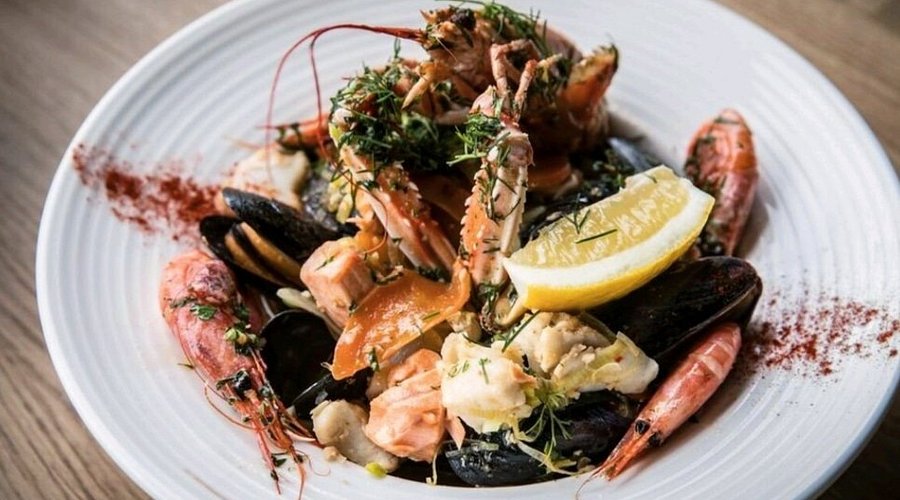
On Youngtorget square in the heart of the city, Fiskeriet is a fishmonger, fish and chips counter, and restaurant combined. It’s a busy, unpretentious space where some of the finest Norwegian salmon, cod, and shellfish in Oslo is sold across a counter and eaten on the spot with bread, butter, and the sauce of your choice.
The queue at lunchtime tells you what you need to know about the quality. The fresh salmon in particular is as good an expression of Norwegian food culture as anything available in a more formal setting.
Credit: Tripadvisor
Tim Wendelboe and the Specialty Coffee Scene in Grünerløkka
Beyond Tim Wendelboe, Grünerløkka and the surrounding neighbourhoods have developed a specialty coffee culture that is among the most serious in Europe.
A Japanese-owned café-bar on Uranienborg terrace Fuglen Oslo serves coffee by day and cocktails and vintage design in the evening, with a carefully curated selection of specialty roasters and a warm, design-conscious space that has made it one of the most beloved cafés in the city. It is one of several spots in Oslo where coffee has been elevated to the level of cultural experience, and the entire neighbourhood rewards a slow morning spent moving between them.
Credit: Anders Husa
Blå Music Club
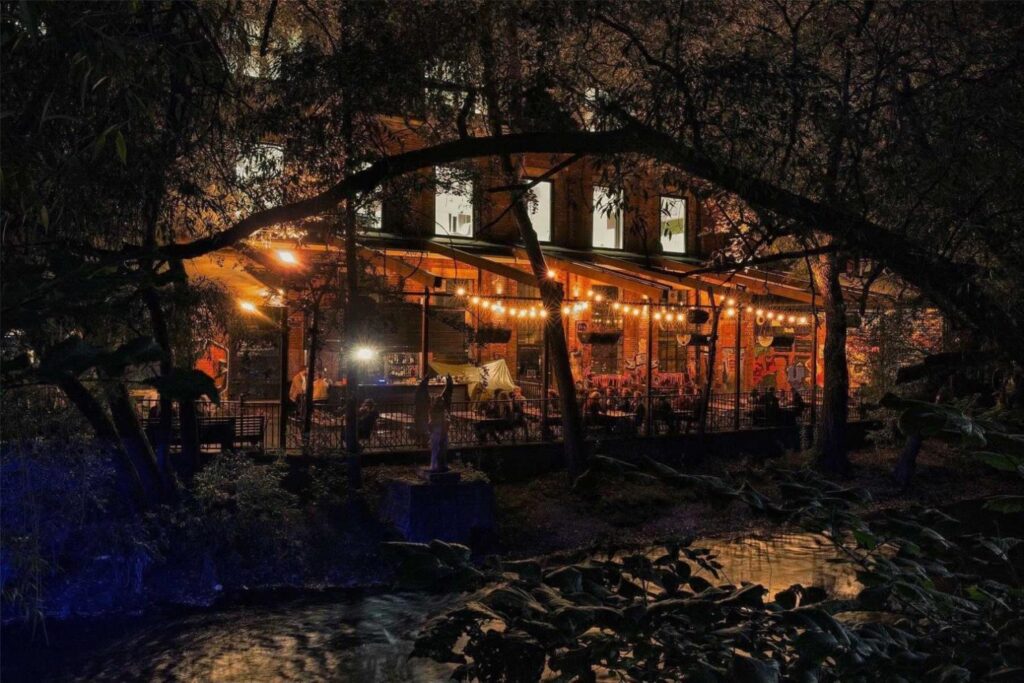
On the Akerselva river in Grünerløkka, Blå is Oslo’s most important independent music venue. It’s a riverside club hosting live jazz, electronic music, and experimental performances in a format that feels entirely of the neighbourhood: informal, adventurous, and unpretentious.
The outdoor riverside terrace is one of the best places to spend a summer evening in Oslo, and the programming reflects a genuine commitment to music that goes beyond what a tourist-oriented venue would attempt.
Blå is not hard to find, but it is rarely suggested by the main tourist channels, which means the crowd remains predominantly local, which is, in most cities, exactly the right company.
Credit: Blå | Liveurope
Vippa Food Hall
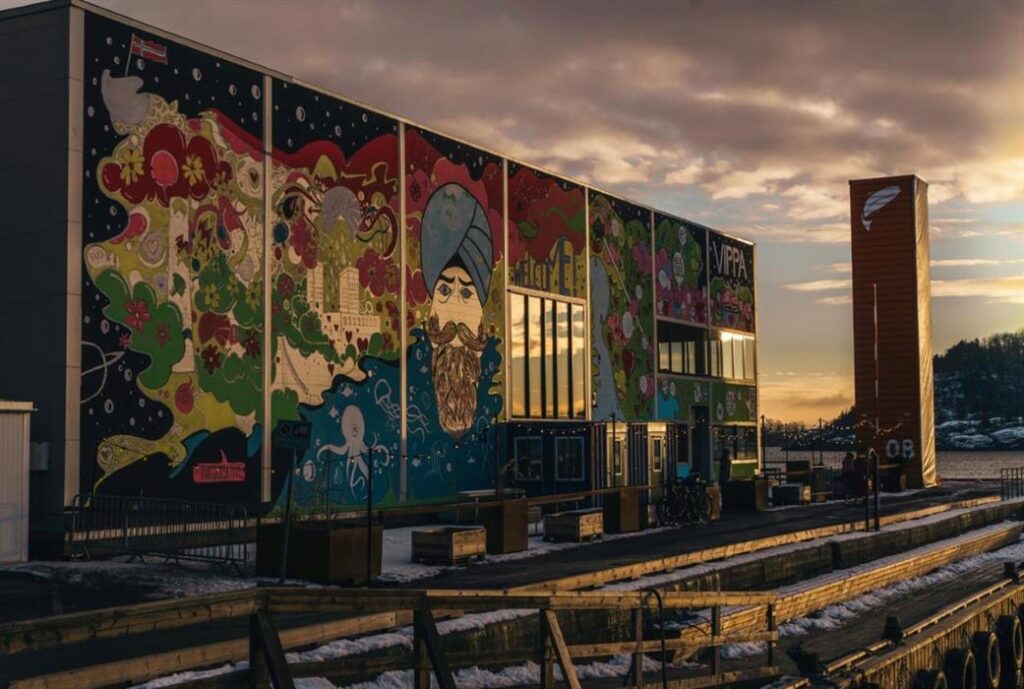
Near the cruise ship terminal at Akershusstranda, Vippa is a food hall in a converted warehouse that brings together a rotating collection of small food businesses – many of them run by immigrants and refugees – under one roof.
The format is deliberately inclusive: you might eat Vietnamese bánh mì next to a Norwegian fish soup next to an Ethiopian injera platter. The setting is industrial and warm simultaneously, with harbour views and a terrace that comes into its own in summer.
Vippa is one of the most interesting places to eat in Oslo not despite its eclecticism but because of it. It reflects the city as it actually is rather than the city as it is often presented.
Credit: Vippa Oslo
Conclusion
The hidden gems in Oslo reward the kind of traveller who is willing to walk slightly further from the main drag, take a short ferry ride, or simply slow down enough to notice what is around them. Oslo is not a city that performs itself for visitors. It is a city that lives at its own pace, with its own priorities, and reveals itself gradually to those who pay attention.
From the haunting darkness of the Emanuel Vigeland Mausoleum to the floating saunas on the fjord, from the Akerselva river walk to the medieval ruins of Gamlebyen, the hidden gems in Oslo are not departures from the city’s essential character but its most direct expressions of it.
To experience Oslo’s finest neighbourhoods, hidden corners, and cultural depth as part of a private, curated journey through Norway, discover our private Oslo tours crafted to take you well beyond the itinerary.