London’s royal history is not contained in books or museums.
It is embedded in the physical fabric of the city. It’s based in a medieval fortress that has stood on the north bank of the Thames since William the Conqueror ordered its construction after the Battle of Hastings, in a Baroque palace rebuilt by Christopher Wren for King William III that gave its gardens to the public, in a riverside Tudor palace where Henry VIII held court and Mary I signed the death warrants of Protestant martyrs, and in the Georgian townhouse that was converted into the official royal residence of a monarchy that has occupied it for nearly three centuries.
The palaces in London are not frozen in their history. Several are still in active royal use: Buckingham Palace hosts state ceremonies that are broadcast worldwide; Kensington Palace is home to the Prince and Princess of Wales; St James’s Palace remains the senior royal palace in precedence, to which foreign ambassadors are formally accredited. This guide covers the palaces in and around London that are most worth visiting, with the details you need to plan each one.
Key Takeaways
- London and the surrounding area have more than a dozen royal palaces and former palaces, of which six are managed by Historic Royal Palaces – the self-funded charity responsible for the Tower of London, Hampton Court, Kensington Palace, Kew Palace, Banqueting House, and Hillsborough Castle.
- Windsor Castle and Buckingham Palace are managed separately by the Royal Collection Trust.
- The Tower of London is widely considered the most complete and most rewarding single royal palace visit in London, combining nearly 1,000 years of history with the Crown Jewels, Yeoman Warder tours, and a dramatic Thames-side setting.
- Buckingham Palace’s State Rooms are open to visitors in summer only, typically from mid-July to late September; the King’s Gallery and Royal Mews are open year-round.
- Windsor Castle, Hampton Court Palace, and Kensington Palace are open year-round.
In Central London
Buckingham Palace
Buckingham Palace is the most recognisable royal building in the world and the official London residence of the British monarch, and it is, in many ways, the least accessible, in the sense that what most people see is the external facade, the forecourt, and the famous balcony from which the royal family appears on major national occasions.
The palace was originally Buckingham House, purchased by King George III in 1761 as a private residence. It was transformed into a formal royal palace during the reigns of George IV and William IV, and Queen Victoria became the first monarch to use it as the official London residence in 1837. The familiar East Front is the facade facing the Mall. It was designed by Sir Aston Webb in 1913, replacing an earlier structure that had been criticised as too drab for the empire’s ceremonial centrepiece.
Credit: Diogo Nunes
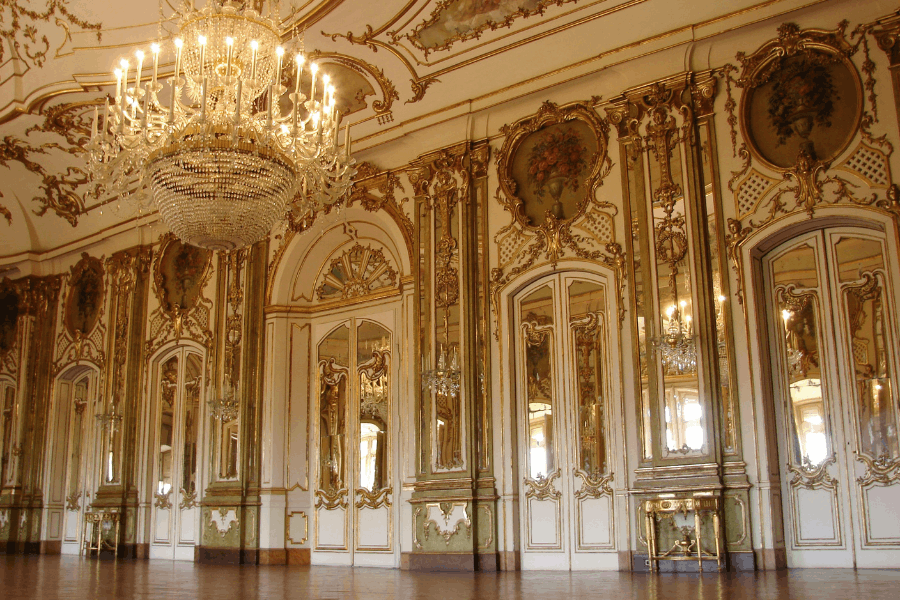
The 19 in total State Rooms, including the Throne Room, the Ballroom, the Picture Gallery, and the White Drawing Room, are open to the public for approximately ten weeks each summer, typically from mid-July to late September. This summer opening provides the most complete interior experience of any royal palace in London: rooms used for state banquets, investiture ceremonies, and diplomatic receptions, containing some of the finest paintings, furniture, and decorative art in the Royal Collection.
The King’s Gallery, which houses a rotating programme of exhibitions drawn from the Royal Collection, is open year-round and provides access to masterworks by Rembrandt, Vermeer, da Vinci, and Rubens alongside decorative objects of extraordinary quality.
The Changing of the Guard ceremony takes place at the palace forecourt and is one of London’s most watched daily events. It’s a formal handover of the palace guard that involves full ceremonial dress, a military band, and the kind of precision that generations of practice produce.
The Royal Mews are the working stables and carriage house. It is open year-round and provides access to the Gold State Coach, the Scottish State Coach, and other ceremonial vehicles alongside the horses that draw them.
The Tower of London
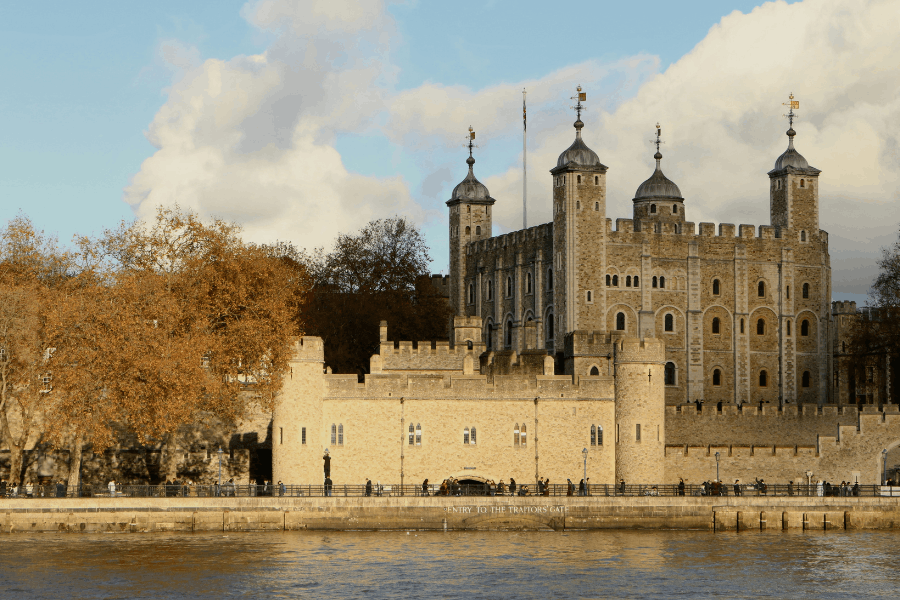
The Tower of London is a city within a city, within a complex of towers, courtyards, chapels, and walls that has been accumulating history since William the Conqueror ordered the construction of the White Tower around 1078.
Over its nearly thousand years, the Tower has served as a royal palace, a fortress, a prison, an execution site, a treasury, a menagerie, and a mint. Anne Boleyn, Catherine Howard, Lady Jane Grey, and Sir Thomas More were all executed here. Sir Walter Raleigh spent years imprisoned in the Bloody Tower, writing his History of the World. The princes in the Tower like Edward V and his brother Richard disappeared within the complex in 1483 and were never reliably heard from again.
Credit: Juhi Sewchurran
Today, the Tower’s most visited attraction is the Crown Jewels: the collection of royal regalia used in coronation ceremonies, including the Imperial State Crown (containing 2,868 diamonds, 17 sapphires, 11 emeralds, and 269 pearls), the Sovereign’s Orb, and the Coronation Spoon – the oldest surviving piece of English royal regalia, dating from the 12th century. The jewels are displayed on a moving walkway that allows visitors close views without creating bottlenecks.
The Yeoman Warder tours, led by the ceremonial guardians of the Tower, known popularly as Beefeaters, are the most characterful way to understand the building’s history. The tours are included with entry and run throughout the day; the guides are almost uniformly excellent storytellers.
The White Tower itself, the original Norman keep, contains one of the finest collections of royal armour in the world, including suits made for Henry VIII at various stages of his life and the full collection of the Royal Armouries.
Kensington Palace
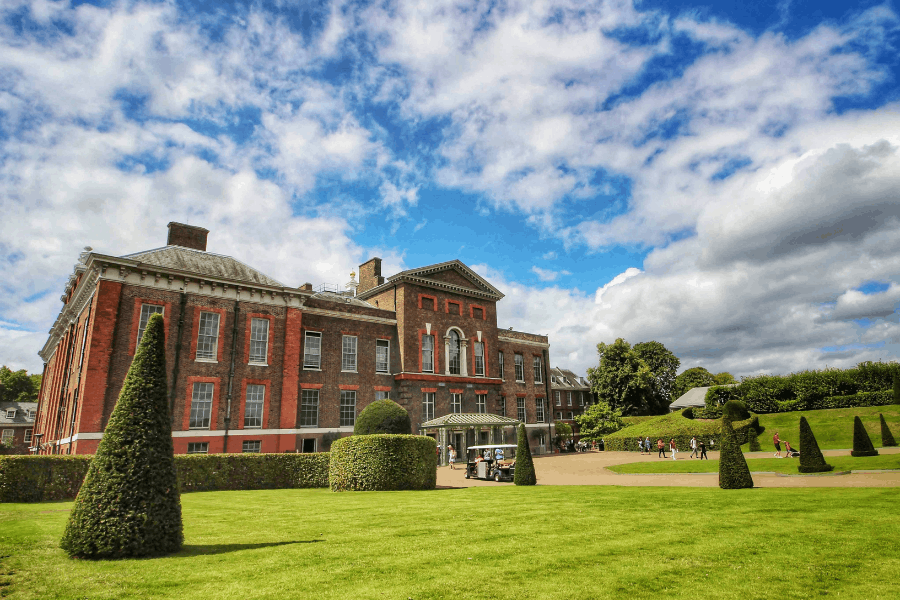
In the western part of Kensington Gardens, Kensington Palace has been a royal residence since King William III purchased Nottingham House in 1689 and commissioned Christopher Wren to convert it into a palace suitable for a monarch whose asthma made the air of Whitehall unendurable.
It is the most intimate of London’s major royal palaces and the one most directly connected to the private lives of the royal family in the public imagination. Princess Diana lived here from her marriage to Charles in 1981 until she died in 1997, and the palace became the focal point for the extraordinary public mourning that followed. The Duke and Duchess of Sussex had apartments here before relocating to the United States; the Prince and Princess of Wales now use apartments at the palace as their official London residence.
Credit: Martin Zenker
The public areas include the King’s State Apartments, with their painted ceilings by William Kent, and the Queen’s State Apartments, which retain a slightly earlier, more domestic quality. The Princess Diana exhibition is a permanent feature of the visitor offer and draws those for whom the memory of Diana is the primary connection to the palace.
The Sunken Garden, immediately to the east of the palace, was originally planted in 1908 and is one of the most beautifully maintained formal gardens in London, particularly in its tulip and summer bedding seasons.
Banqueting House
The Banqueting House on Whitehall is the only surviving element of the Palace of Whitehall, which was the principal royal palace in London from 1530 until it burned down in 1698. It is not large, and it is not complex, but what it contains is one of the greatest painted ceilings in the world.
Commissioned by Charles I and painted by Peter Paul Rubens between 1634 and 1636, the Rubens ceiling depicts the apotheosis of James I. It’s a Baroque programme of allegorical figures and celestial machinery that fills the double-height hall with colour and theological ambition.
Charles, I walked through this room for the last time in 1649 when he was led to the scaffold that had been erected outside on Whitehall for his execution. Looking up at the ceiling he had commissioned, then stepping out to his death, is one of the most theatrical and most historically charged moments in British royal history.
The building is open for guided visits and hosts corporate and cultural events; the ceiling can be properly seen on a clear day when the light fills the hall.
Credit: Ruben Hanssen
St James’s Palace
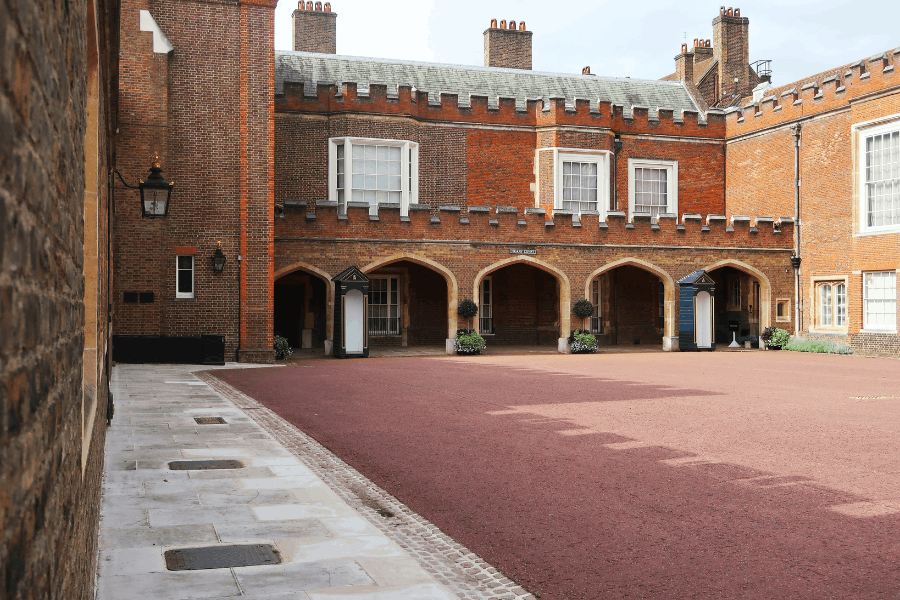
St James’s Palace is a Tudor red-brick palace on the Mall, built by Henry VIII on the site of a medieval leper hospital and remains the senior royal palace in London in terms of precedence, even though the monarch no longer lives there.
Foreign ambassadors to the Court of St James’s are still formally accredited there; state proclamations are still read from its Friary Court. The palace is not open to the public in the conventional sense. It serves as the official residence of Princess Anne and of various members of the household but the exterior, accessible from the Mall and Stable Yard Road, is one of the finest surviving examples of Tudor brickwork in central London.
The adjacent Chapel Royal, which faces St James’s Street, is a working royal chapel that occasionally opens for public worship.
Credit: Emran Yousof
Beyond Central London
Hampton Court Palace
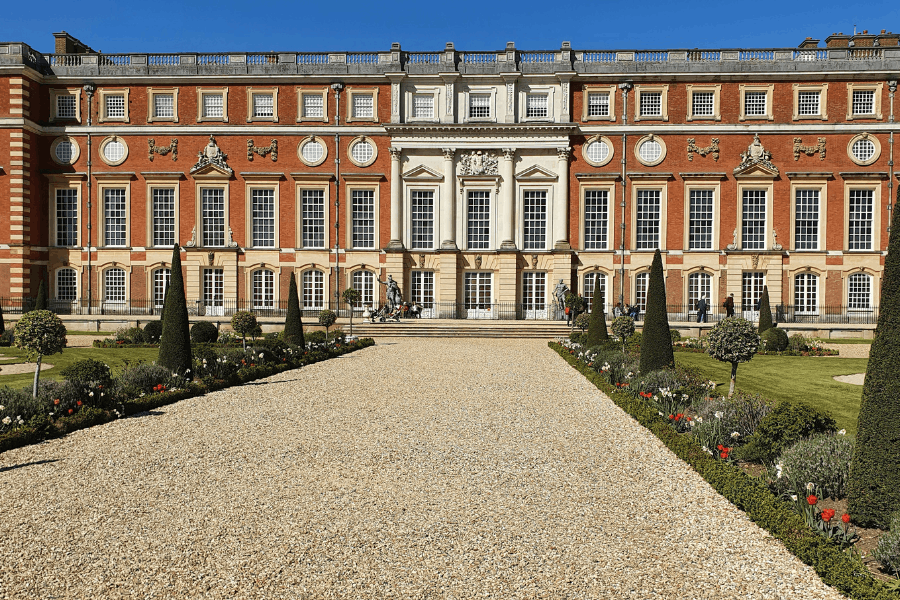
On the north bank of the Thames at East Molesey, approximately 13 miles west of central London, Hampton Court is the finest and most complete Tudor royal palace in England and the palace most directly associated with the reign and personality of Henry VIII, who seized it from Cardinal Wolsey in 1529 and made it the grandest royal court in Europe.
The palace presents two distinct architectural personalities: the Tudor buildings of Henry VIII’s time, including the Great Hall with its magnificent hammerbeam roof, the Tudor Kitchens (the largest surviving Tudor kitchen complex in the world, capable of feeding the entire 800-person court), and Henry’s own apartments; and the Baroque south and east wings rebuilt for William III by Christopher Wren in the late 17th century.
Credit: Dennis Norman
The gardens are as significant as the interior: the Great Fountain Garden, designed for William III, the Tiltyard, the Kitchen Garden, and the famous Maze which is the oldest surviving hedge maze in England, planted around 1700 and still one of the finest. They all contribute to a visit that can easily absorb a full day.
Hampton Court is accessible by train from London Waterloo (approximately 35 minutes) and by boat from Westminster Pier during the summer season.
Windsor Castle
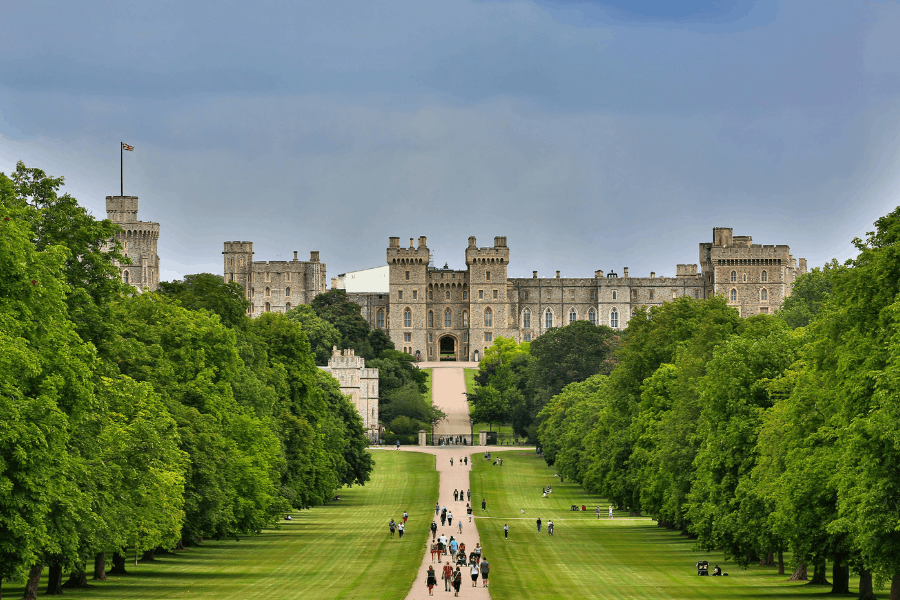
Windsor Castle is the oldest and largest occupied castle in the world. It’s a royal residence in continuous use since William the Conqueror built the first fortifications on the Thames escarpment above Windsor in the 1070s.
Today, it is King Charles III’s preferred weekend residence, and the combination of nine centuries of continuous royal occupation with the scale and grandeur of the current buildings gives Windsor a weight and a majesty that Buckingham Palace’s more recent history cannot match.
Credit: Simon Hurry
The State Apartments are decorated with works by Rubens, Holbein, and Van Dyck alongside tapestries, armour, and the extraordinary Grand Reception Room and are among the finest royal interiors in Europe. St George’s Chapel, completed in 1528, is the chapel of the Order of the Garter (England’s oldest order of chivalry, founded by Edward III in 1348) and the burial place of ten British monarchs, including King George VI, Queen Elizabeth II, and Prince Philip. The Choir stalls, with their carved wooden misericords and the banners of the Garter Knights above, are among the most beautiful medieval interiors in England.
Windsor is 30 minutes from London Waterloo by direct train and can be visited as a day trip.
Kew Palace
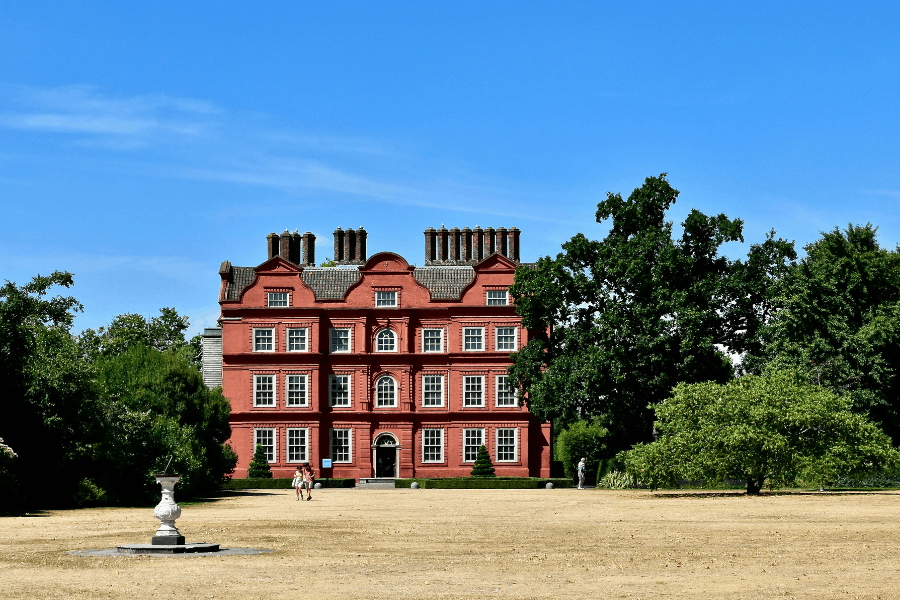
Hidden within the Royal Botanic Gardens at Kew, Kew Palace is the smallest and least visited of the Historic Royal Palaces. It’s also one of the most atmospheric.
The Dutch-gabled red-brick building dates from 1631 and was used as a royal retreat from the late 17th century onward, most extensively by King George III, who retreated here with his family during his periods of mental illness.
The rooms are modest by royal palace standards. This is a domestic rather than a ceremonial space but the intimacy of the interior and the quality of the Royal Botanic Gardens surrounding it give Kew Palace a charm that the grander palaces cannot quite provide.
Entry to Kew Palace requires a separate ticket from Kew Gardens admission. The combination of the gardens and the palace makes a full day’s outing.
Credit: Geoff Oliver
Palace of Westminster
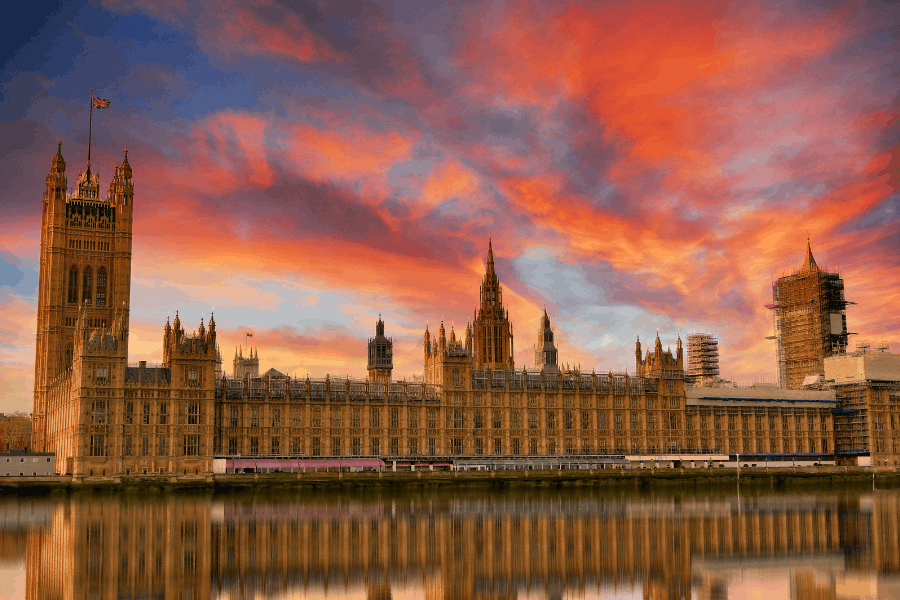
The Palace of Westminster, which houses both Houses of Parliament, is a royal palace in the constitutional sense and was the primary royal residence from the 11th century until it burned down in 1834.
The current Victorian Gothic building was designed by Charles Barry and Augustus Pugin following the fire and completed in 1870. Westminster Hall is the only major surviving element of the medieval palace that dates from 1097 and is the finest medieval secular interior in Britain, with a hammer-beam oak roof completed in 1399.
Parliamentary tours are available on Saturdays and during Parliamentary recesses; the tours include both chambers, Westminster Hall, and the principal state rooms. The Palace of Westminster is not a standard “palace visit”. It requires booking and operates on a different model from the Historic Royal Palaces but for those interested in British constitutional history, it is the building in London that most directly embodies it.
Credit: Peter Kostov
Practical Notes
The Historic Royal Palaces membership covers unlimited free entry to the Tower of London, Hampton Court Palace, Kensington Palace, Banqueting House, and Kew Palace, and represents significant value for visitors planning to visit more than two of these in the same trip or on multiple visits across the year.
The Royal Collection Trust manages Buckingham Palace and Windsor Castle separately; tickets for both are available from their official websites.
Buckingham Palace is only partially accessible year-round. The State Rooms open in summer only; the King’s Gallery and Royal Mews are the year-round options for those visiting outside the summer season.
Windsor Castle is the most complete royal palace experience. The combination of St George’s Chapel, the State Apartments, and the historic grounds makes Windsor consistently the most recommended single royal palace visit in the London area.
Conclusion
The palaces in London are not relics.
They are working buildings and places where the history of the monarchy is not performed for visitors but is simply present, embedded in the stones and the rooms and the objects that have accumulated across a thousand years of occupation. To walk through Hampton Court’s Tudor kitchens or stand in the Banqueting House below Rubens’s ceiling or watch the Crown Jewels turn on their moving walkway is to encounter history at a physical proximity that no other kind of cultural experience provides.
London’s palaces reward the visitor who gives them time rather than ticking them off a list. Each one has something in it that will not be anticipated.
To experience London’s royal history, culture, and extraordinary architecture as part of a curated private visit, discover our private London tours.
FAQ
What are the 5 royal palaces in London?
The main royal residences in London are: Buckingham Palace, Kensington Palace, St James’s Palace, Hampton Court Palace, and Tower of London (used historically as a royal palace).
Where do Charles and Camilla live most of the time?
King Charles III and Queen Camilla primarily live at Clarence House in London, although they also spend time at Buckingham Palace for official duties.
What is the most famous palace in London?
The most famous palace in London is Buckingham Palace, the official London residence of the British monarch and a major tourist attraction.
Which is the oldest palace in London?
The oldest royal palace in London is St James’s Palace, built in the 16th century and still used for ceremonial royal functions today.